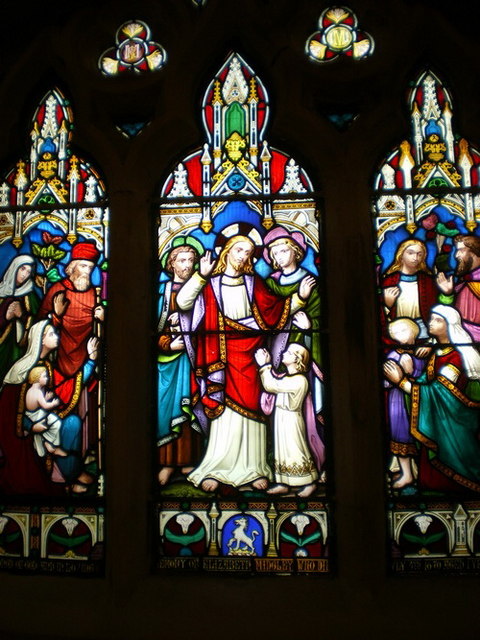
The First Miracle

On the third day there was a wedding in Cana of Galilee. The mother of Jesus was there. Both Jesus and His disciples were invited to the wedding. When the wine ran out, the mother of Jesus said to Him, “They have no wine.”
Jesus said to her, “Woman, what does this have to do with Me? My hour has not yet come.” His mother said to the servants, “Whatever He says to you, do it.” Six water pots made of stone were sitting there, used for ceremonial cleansing by the Jews, containing twenty to thirty gallons each.
Jesus said to them, “Fill the water pots with water.” And they filled them up to the brim.
Then He said to them, “Now draw some out, and take it to the master of the feast.”
And they took it. When the master of the feast tasted the water that had been turned into wine, and did not know where it came from (though the servants who drew the water knew), the master of the feast called the bridegroom, and he said to him, “Every man serves the good wine first, and after men have drunk freely, then the poor wine is served. But you have kept the good wine until now.”

John 2:1–10

I assume that all have read this in their Bible. I also assume many have heard it as part of a sermon or teaching. I post it for you as a quick reference and in case someone has not read it.

In the past, I have not paid any real particular attention to it. At least, not until I started reading Beautiful Outlaw by John Eldredge. This account was used to demonstrate the extravagant generosity of Jesus. I had not even considered that thought in the thinking part of my mind, but I guess it would lurk somewhere in the background. As the Spirit of God would have it, looking deeper into what happened at that wedding He revealed something I had not encountered anywhere else. Come with me and see.

The First Sign

This, the first of His signs, Jesus did in Cana of Galilee, and He revealed His glory, and His disciples believed in Him.

John 2:11

As John recounts in his Gospel what had happened, he closes this punctual account by saying it was the first of Jesus’ signs. This part of the narrative follows the calling of His first disciples. John’s intent is to promote belief in Jesus by telling of His words and the signs He did.

Jesus performed many other signs in the presence of His disciples, which are not written in this book. But these are written that you might believe that Jesus is the Christ, the Son of God, and that believing you may have life in His name.

John 20:30–31

When reading the Gospel of John, pay close attention to the unfolding revelation. He opens with a testimony of Who Jesus is that parallels and expounds on Genesis 1. Later, we encounter John the Baptizer and his ministry of preparing the world for Jesus. Like Elijah speaking truth, John the Baptizer testifies to the ministry of Jesus, just as the apostle John records.

The Lamb of God

The next day John saw Jesus coming toward him and said, “Look, the Lamb of God, who takes away the sin of the world. This is He of whom I said, ‘After me comes a Man who is preferred before me, for He was before me.’ I did not know Him, but for this reason I came baptizing with water: so that He might be revealed to Israel.”

John 1:29–31

The apostle John is unique in recording the words of John the Baptizer. “Behold the Lamb of God” that takes away sin. In a way, he points to this first sign at Cana, which then points to another sign.

Let’s go back to Cana.

On the third day there was a wedding in Cana of Galilee. The mother of Jesus was there. Both Jesus and His disciples were invited to the wedding. When the wine ran out, the mother of Jesus said to Him, “They have no wine.”

John 2:1–3

John recounts the first week of the ministry of Jesus. After being baptized and calling the first disciples, his small troupe is invited to a wedding. Already, we ought to pay attention to the timing mentioned. John is writing in retrospect, recording this decades after the events occurred. He has hindsight of the events in Jesus’ life, it is likely that there is something more to the phrase than just the narrative on the third day. It is something to keep in mind.

As we continue with the account, trouble arises when the open bar runs dry. Mary (Jesus’ mother) says that there is no more wine. There is then nothing left with which to continue the celebration.

A Mother Knows

Jesus said to her, “Woman, what does this have to do with Me? My hour has not yet come.”

John 2:4

This makes me smile. Not just what seems like abrupt language. What did she expect Him to do?

What did she know?

Even more intriguing… How did she know He could help?

I think the Bible helps us to know.

He will be great, and will be called the Son of the Highest. And the Lord God will give Him the throne of His father David, and He will reign over the house of Jacob forever. And of His kingdom there will be no end.”

Luke 1:32–33

Mary had a special briefing given by a messenger from God. She knew her Son. She knew He is the Anointed One, Son of the Most High. She knew He is forever King. I think she even knew Him as God, having command over material things.

Had He done miracles before this?

We are not given any information on that except for John’s telling us this is the first of His signs. It could be a small attestation when as a preteen, He remained behind at the temple and taught. It is something to consider.

What we can determine is that Mary knew Jesus could readily help in this situation. Jesus affirms this by His response to her. We take Jesus’ response to His mother as somewhat sharp. In the language at the time, it was a respectful address. Jesus is telling her that what concerns her doesn’t concern Him. He continues by letting her know to leave Him alone, His time has not yet come.

My Hour

This is the specific phrase used. It refers to a particular time. This is a reference that leads us to the culmination of Jesus’ earthly ministry. It points us to something future.

As John’s narrative unfolds, Jesus uses this word hour to point to a yet future time. He uses it in speaking with the woman at the well in John 4:21; 23. He uses it again to point to a future time period in John 5:25; 28. (The list continues: John 7:30, 8:20, 12:23; 27, 13:1, 16:32, & 17:1.) John explains the hour:

Now before the Passover Feast, Jesus knew that His hour had come to depart from this world to the Father. Having loved His own who were in the world, He loved them to the end.

John 13:1

In my opinion, from reading John’s Gospel, the hour refers to the time period that begins around Jesus’ death and stretches to His return to Earth and the Millennial Kingdom. The hour will be marked with resurrection, I would say multiple resurrections. Yet, I digress.

For the purpose of this sign, my hour refers to the cross as the beginning of it. John is exclusive in his extensive writing of the words and actions of Jesus in the period of time leading to the cross.

That Seeming Reluctance

Did you pick up on the reluctance Jesus demonstrated toward His mother?

Do you think it is significant as a parallel in His hour?

Then Jesus came with them to a place called Gethsemane and said to the disciples, “Sit here while I go and pray close by.” He took with Him Peter and the two sons of Zebedee and began to be sorrowful and troubled. Then He said to them, “My soul is very sorrowful, even to death. Wait here, and keep watch with Me.”
He went a little farther, and falling on His face, He prayed, “O My Father, if it is possible, let this cup pass from Me. Nevertheless, not as I will, but as You will.”

Matthew 26:36–39

It is not necessarily the same way, but I think the reluctance to do His mother’s will belies a very human emotional response. That emotion is amplified many times as demonstrated in His hour. In speaking with His Father, He wanted to find a way out. Nevertheless, as the Man, He honored His father by doing what His father wanted, just as He honored His mother’s will.

His mother said to the servants, “Whatever He says to you, do it.”

John 2:5

It is these few things that leads me to see some things that I think are hidden signs in this sign.

The Specifics

Six water pots made of stone were sitting there, used for ceremonial cleansing by the Jews, containing twenty to thirty gallons each.
Jesus said to them, “Fill the water pots with water.” And they filled them up to the brim.
Then He said to them, “Now draw some out, and take it to the master of the feast.”
And they took it. When the master of the feast tasted the water that had been turned into wine, and did not know where it came from (though the servants who drew the water knew), the master of the feast called the bridegroom, and he said to him, “Every man serves the good wine first, and after men have drunk freely, then the poor wine is served. But you have kept the good wine until now.”

John 2:6–10

Six water pots are filled to the brim. Each can hold a determinate amount of water. I’m not going to go through to the end.

The amount of wine that Jesus made would be the equivalent to 120 to 180 gallons. That is a lot of wine. The master says about the wine, that it is the good stuff and kept until now.

The Sign in the Sign

Consider the specific information given. There are six containers. It is considered by many scholars that six is the number of man. Seven is completion and the number of God, six is just short of that perfection. Humans were made on the sixth day. The number six here points to a human man.

Wine is considered the blood of the grape. Biblically, wine is often a representation of blood. We use the blood of the grape in the Lord’s Supper to remind us of the blood Jesus shed. The wine here ought to also remind us of the shed blood at the cross.

The containers being filled to the brim signify there is no more room for anything else. Think of sufficiency, as the blood of Jesus is sufficient, leaving no room for anything else. More important, had Jesus added something to change the chemical composition of the water, it would easily be detected by overflowing the brim.

Let us consider the quantity mentioned. The amount of wine that Jesus made would be the equivalent of 600 to 900 modern wine bottles. Again, that’s a lot of wine. Especially after the open bar has been emptied out. I don’t think it’s a far stretch to say that the amount of wine Jesus made was far more than sufficient to satisfy all of the guests. Weddings at this time lasted for days, even in the relative austerity the hosts would provide adequate provisions for the length of the celebration.

The wine Jesus made was also considered the best. Like the master of the feast said, the best is usually served first. In this account, the best is saved for last. The best speaks to the efficiency.

The Mediator of the New

This first earthly sign of Jesus was pointing to a future-fulfilling sign. The one when the Lamb of God would have His blood shed for the sins of humanity. It would be a Man. It would be a finite and sufficient amount. None more would be necessary. It would also be an efficient amount to more than satisfy the needs of all. And it would be better than all of the blood of animals shed for sins that came before.

Consider what another writer declares:

Then indeed, the first covenant had ordinances for divine services and an earthly sanctuary. A tabernacle was made. In the first part of the tabernacle, called the Holy Place, were the candlestick, the table, and the showbread. Behind the second veil was the second part of the tabernacle called the Most Holy Place, which contained the golden censer and the ark of the covenant overlaid with gold, containing the golden pot holding the manna, Aaron’s rod that budded, and the tablets of the covenant. Above the ark were the cherubim of glory overshadowing the mercy seat. Concerning these things we cannot now speak in detail.
Now when these things were thus ordained, the priests would regularly go into the first part, conducting the services of God. But only the high priest went into the second part once a year, not without blood, which he offered for himself and for the sins of the people, committed in ignorance. The Holy Spirit was signifying through this that the way into the Most Holy Place was not yet revealed, because the first part of the tabernacle was still standing. This is an illustration for the present time, showing that the gifts and sacrifices offered could not perfect the conscience of those who worshipped, since they are concerned only with foods and drinks, ceremonial cleansings, and fleshly ordinances imposed until the time of reformation. But Christ, when He came as a High Priest of the good things to come, by a greater and more perfect tabernacle, not made with hands, that is to say, not of this creation, neither by the blood of goats and calves, but by His own blood, He entered the Most Holy Place once for all, having obtained eternal redemption. For if the blood of bulls and goats, and the ashes of a heifer, sprinkling the unclean, sanctifies so that the flesh is purified, how much more shall the blood of Christ, who through the eternal Spirit offered Himself without blemish to God, cleanse your conscience from dead works to serve the living God?

Hebrews 9:1–14

There is no room for another.

For this reason He is the Mediator of a new covenant, since a death has occurred for the redemption of the sins that were committed under the first covenant, so that those who are called might receive the promise of eternal inheritance.

Hebrews 9:15

Knowing all of this, one can be assured beyond doubt, that the work of Jesus is sufficient and efficient to cleanse the conscience from sin for any that ask. The way to approach God is no longer veiled to anyone. Jesus’ blood, and only His blood alone, made the Way.

And just like at the wedding, there was no license for the attendees to be drunk. Jesus was not even concerned of that. There was more than enough for each invited guest to enjoy.

Invited Guests

Jesus and His troupe were among the invited guests at the wedding. As with the hosts of the wedding, God invites people to His wedding feast. Where is that invitation?

Jesus spoke to them again by parables, saying, “The kingdom of heaven is like a certain king who arranged a marriage for his son, and sent out his servants to call those who were invited to the wedding, but they would not come.
“Again, he sent out other servants, saying, ‘Tell those who are invited: See, I have prepared my supper. My oxen and fattened calves are killed, and everything is ready. Come to the wedding banquet.’
“But they made light of it and went their ways, one to his farm, another to his business; the rest took his servants, treated them spitefully, and killed them. When the king heard about it, he was angry. He sent in his army and destroyed those murderers and burned up their city.
“Then he said to his servants, ‘The wedding is ready, but those who were invited were not worthy. Go therefore to the streets, and invite to the wedding banquet as many as you find.’ So those servants went out into the streets and gathered together as many as they found, both bad and good. So the wedding hall was filled with guests.
“But when the king came in to see the guests, he saw a man who was not wearing wedding garments. 12 He said to him, ‘Friend, how did you get in here without wedding garments?’ And he was speechless.
“Then the king told the attendants, ‘Bind him hand and foot, take him away, and cast him into outer darkness, where there will be weeping and gnashing of teeth.’
“For many are called, but few are chosen.”

Matthew 22:1–14

I make the case that simply by being born of Adam’s race just as Jesus… You, like I am, are invited to the feast. God wanted you in His creation. It follows He wants you in His presence in heaven.

Being an invited guest, you can enter His presence anywhere at anytime. (Really, you’re already there because of that blood Jesus shed. And there is no place anyone can go to escape Him.) Just talk to Him.

He’s listening.
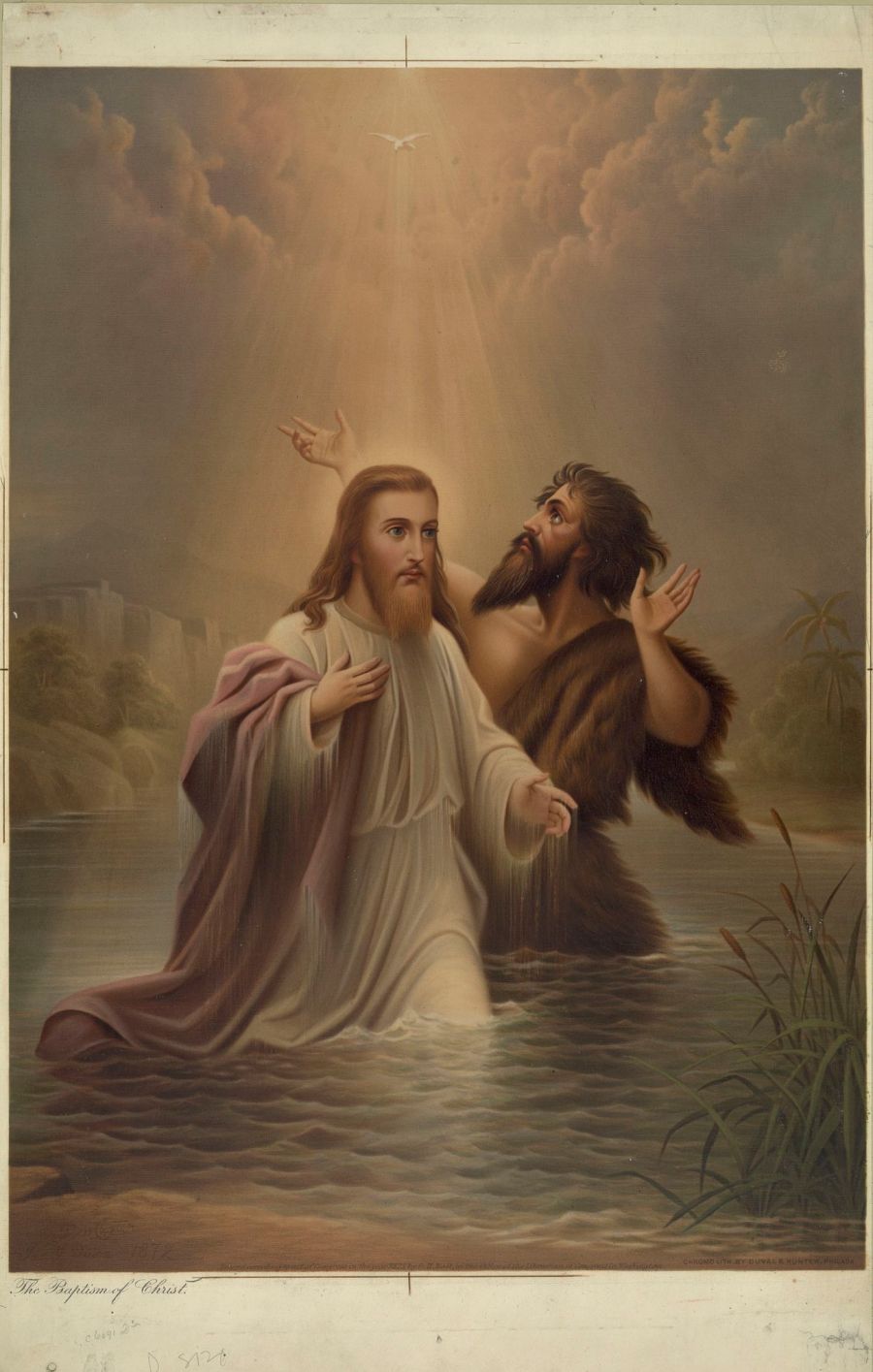
Proving a Son of God

In our excursion, we have witnessed the Bible identify the stars as angels and angels as messengers and the army of heaven. In that, we also took the time to examine another way angels are identified by their appointed service. These are some of the sons of God. The Bible also tells us that they failed to be faithful in their assigned duties. Surprisingly, the Bible also reveals how God intends to fix that failure forever.

As circular as it may sound, the Bible proves the Bible. What I mean to say is that each of the doctrines one holds from the Bible is proven true by other doctrines. And each of these doctrines proves others to be true. Paul opens his epistle to the Romans with some interesting language that demonstrates this

Paul, a servant of Jesus Christ, called to be an apostle and set apart for the gospel of God, which He promised beforehand through His prophets in the Holy Scriptures, concerning His Son, Jesus Christ our Lord, who was born of the seed of David according to the flesh and declared to be the Son of God with power, according to the Spirit of holiness, by the resurrection from the dead.

Romans 1:1–4

As we’ve focused on angels and their identification in the Tanakh as sons of God, we also see the expansion of what it means to be a son of God. Sons of God are creations of God.

There are sticking points, and one of them is going to be Jesus. Jesus taking on the physical form of humanity shows that something happened that God is God and God is man. That is a work of God defined by how Mary became with child. I don’t know the workings of that, but know that God did it. I’m not saying God created Jesus as a person. Or that God the Son came to be at conception. The Bible describes Jesus as unique. Some translations use the words only begotten Son. I think in the biblical usage of the phrase son of God, Jesus especially fits being born of the seed of David. Only God could do that.

It’s that last phrase I want to examine. Jesus is, “declared to be the Son of God with power … by the resurrection from the dead.”

Paul is saying that the resurrection proves one a son of God. The Tanakh showed us who the sons of God were, what they were tasked to accomplish, and their abject failure.

Our Enemies Are Real

The hybrid progeny of these sons of God spoken of in Genesis 6 decimated the creation. The problem was so bad that only eight humans escaped the judgment. They rode it out above the flood waters with animals personally selected by God. All living things left on the earth were wiped out.

Imagine the scenario from the perspective of the fallen sons of God. They had to watch their own progeny drown in the flood waters. Perhaps that is fanciful speculation. But then, maybe it is not.

Suppose that the souls of those hybrid humans that perished in the flood are the disembodied demons that attack and beset humanity today. This is not my imagination, but it is the work of many scholars, one in particular. (See this article in Christianity Today.)

Those that brought death to humans now watch as their progeny die. Their spirits become disembodied, and without a proper place have no home. Just as Jesus said:

“When an unclean spirit goes out of a man, it passes through dry places seeking rest, but finds none. Then it says, ‘I will return to my house from which I came.’ And when it comes, it finds it empty, swept, and put in order. Then it goes and brings with itself seven other spirits more evil than itself, and they enter and dwell there. And the last state of that man is worse than the first. So shall it be also with this evil generation.”

Matthew 12:43–45

These spirits have no place. They seek places… Bodies… Whether human or not, just to have a place. Remember Legion who asked permission to go into a herd of pigs. Those were unclean animals… And what happened to the herd of pigs?

We don’t mess with these or give them a foothold. These have no hope and tremble.

Really, It’s Resurrection!

It is the resurrection that reunites the body and soul. Paul writes extensively on the resurrection. He cites it as of the utmost importance to a Christian in 1 Corinthians 15. He makes his case plainly and succinctly. It’s the resurrection.

When Paul writes to the Colossians, resurrection is part of a major theme. He likens our life in physical bodies as dead to our old selves and made alive in Christ… As if we are resurrected already. We are dead to the elementary principles; meaning these enemies of ours have no real claim to any believer.

And you, being dead in your sins and the uncircumcision of your flesh, He has resurrected together with Him, having forgiven you all sins. He blotted out the handwriting of ordinances that was against us and contrary to us, and He took it out of the way, nailing it to the cross. And having disarmed authorities and powers, He made a show of them openly, triumphing over them by the cross.

Colossians 2:13–15

That is the freedom every believer now has. The authorities and powers are disarmed. They’ve got nothing.

Do Not Give a Place

They trick us all by deception. And not thinking clearly or knowing any better, we entertain and eventually embrace that deception. In so doing we extend rights and privileges to those enemies of ours. Paul told us how to live.

Do not give place to the devil.

Ephesians 4:27

It’s emphatic. If the Spirit is witnessing to you now of any foothold or right you may have extended to the devil… Renounce it and revoke it. Do it out loud and in Jesus’ name. The enemy has no business with any believer at all. That is the freedom given to humanity at the cross.

Put your focus on Jesus instead of what (or who) besets us.

If you then were raised with Christ, desire those things which are above, where Christ sits at the right hand of God. Set your affection on things above, not on things on earth. For you are dead, and your life is hidden with Christ in God. When Christ who is our life shall appear, then you also shall appear with Him in glory.

Colossians 3:1–4

Peter offers us help in like manner that would put us all in the same mind. One that ought to change our behavior.

Finally, be all of one mind, be loving toward one another, be gracious, and be kind. Do not repay evil for evil, or curse for curse, but on the contrary, bless, knowing that to this you are called, so that you may receive a blessing. For “He who would love life and see good days, let him keep his tongue from evil, and his lips from speaking deceit. Let him turn away from evil and do good; let him seek peace and pursue it. For the eyes of the Lord are on the righteous, and His ears are open to their prayers; but the face of the Lord is against those who do evil.”

Who is he who will harm you if you follow that which is good?

1 Peter 3:8–13

Just like Paul, we are given instructions for how to live. It is a likemindedness in the family of God. It is not good enough just to turn away from evil, but with it to pursue doing good. Look closely, Peter says to whom it is God watches and listens. Conversely, God opposes those who do evil things. If you are doing the right things, who will harm you?

Nobody. The enemies have no rights, and God has nothing against those doing right.

But even if you suffer for the sake of righteousness, you are blessed. “Do not be afraid of their terror, do not be troubled.” But sanctify the Lord God in your hearts. Always be ready to give an answer to every man who asks you for a reason for the hope that is in you, with gentleness and fear.

1 Peter 3:14–15

Even when we do the right things and suffer, the enemy still has no rights. And we do not need to fear them. Peter is speaking about those same principalities and powers of whom Paul spoke. These are fallen angels and demons which our own testimonies expose as powerless.

Have a good conscience so that evildoers who speak evil of you and falsely accuse your good conduct in Christ may be ashamed. For it is better, if it is the will of God, that you suffer for doing good than for doing evil. For Christ also has once suffered for sins, the just for the unjust, so that He might bring us to God, being put to death in the flesh, but made alive by the Spirit,

1 Peter 3:16–18

You are in great company!

by whom He also went and preached to the spirits in prison, who in times past were disobedient, when God waited patiently in the days of Noah while the ark was being prepared, in which a few, that is, eight souls, were saved through water.

1 Peter 3:19–20

Woah! What?

Jesus went to preach to the spirits in prison, what is that?

Remember Genesis 6… Angels left their domain.

Likewise, the angels who did not keep to their first domain, but forsook their own dwelling, He has kept in everlasting chains under darkness for the judgment of the great day.

Jude 6

The Greek word is oiketerion, Paul used the word in one other place to describe our bodies. It’s in 2 Corinthians 5:2. The lesson is God will destroy the unfaithful. (This is not annihilation.)

But how is it we know that this is speaking of the fallen sons of God and that they are locked away?

Just as Sodom and Gomorrah, and the surrounding cities in like manner, gave themselves to immorality and went after different flesh, they serve as an example by suffering the punishment of eternal fire.

Jude 7

The sin of those sons of God who are chained away is carnally sensual in nature,l; they sought strange or different flesh. It compares to the sin of those infamous cities who sought different forbidden sexual satisfaction.

Saved Through Water

The apostle Peter unites all of these ideas together. He has laid out an apologetic of significance that may confuse some. That is the idea of being saved through water.

Noah and his family were safely saved through the waters of the flood in the Ark. they floated above; while the giants of old perished in the waters. Those giants never came out of the waters alive.

An Important Aspect of Baptism

Figuratively this is like baptism, which also saves us now. It is not washing off the dirt from the body, but a response to God from a good conscience through the resurrection of Jesus Christ, who has gone into heaven and is at the right hand of God, with angels and authorities and powers being made subject to Him.

1 Peter 3:21–22

The word figuratively tells us Peter is going to give us a type or analog. He is not telling us that baptism saves us. He is using it as an example. It is not cleansing sins, per se. But is a response of a good conscience. That response is through the resurrection of Jesus Christ.

Baptism is a picture of death, burial, and resurrection. The antitype is the progeny of watchers that perished in the waters never to be brought out. Baptism says, “Here is another one appointed to resurrection!” It’s a pledge of belief done publicly.

On a deeper level, the ones chained in gloomy darkness watched their children die in the water, helpless to do anything. Now, they watch God’s children come alive out of that very same water, fully noting these are appointed to resurrection!

Not only do the fallen sons of God watch, but the disembodied spirits of their children also watch. When a believer is baptized, it’s like saying aloud, “Here is another one to be raised!”

It’s Proclaiming Resurrection.

Baptism points to resurrection. Resurrection validates the children of God. Baptism points directly to that validation.

Baptism is the portrayal of the epic triumph of the children of God!

In Conclusion

I don’t want to place guilt or shame on anyone, but I have an encouragement. What stops you from getting baptized?

Seriously, if you’ve not yet been baptized in water, I encourage you to get it done. You don’t need it to be saved, but it certainly celebrates Jesus in more ways than we can ever understand. It is certainly active spiritual warfare proclaiming a believer’s triumph through the resurrection of Jesus. Resurrection proves the children of God.

The old Divine Council is powerless to affect the affairs of men. They try through deception, yet God’s ultimate plans will succeed. Their efforts are futile.

The members of the new Divine Council are being identified daily by baptism… Wherever in the world it happens.

Be ready for the next post.

Sons of God in the New Testament

In the last post, we learned of the Divine Council and the members that comprise it as it is explained in the Tanakh. These are specifically called the sons of God. We also learned that the sons of God are angels.

As always, the Tanakh provides hints to a yet future reality. Such things are often labeled as prophecies. There is part of one from Daniel that lends itself as a perfect place of transition.

Daniel was given a panoramic vision of the future. Some minute detail was given and as we’ve witnessed in history, matches exactly. In that vision, there is a group of people called the wise. This seems to be a euphemism that applies to believers. The wise will instruct many, and be persecuted for what they do. This activity will continue until the end at the appointed time. It culminates here:

Those who are wise shall shine as the brightness of the expanse of heaven, and those who turn the many to righteousness as the stars forever and ever.

Daniel 12:3

Tuck this away as we move forward in our studies. Perhaps what is said might have a deeper meaning than it does now.

Son of God

Now let’s turn our focus onto the same term sons of God as written of in the New Testament. With it, our understanding is going to become even more refined.

We will begin in the first words of the New Testament. It is the first chapter of Matthew where he records a genealogy of Jesus, the Anointed One. He is the Seed of the woman that the fallen angels worked to stop. Matthew writes after the fact to establish the identity of Jesus as that Seed. The genealogy starts with Abraham and ends at Jesus through Joseph.

In like manner, Luke provides a similar genealogy of Jesus. One that differs from Matthew’s in many ways. It is found starting at Luke 3:23. Luke begins with Jesus and works His ancestors all the way back to Adam. It is how Luke describes Adam that is essential to understand.

who was the son of Enosh, who was the son of Seth, who was the son of Adam, who was the son of God.

Luke 3:38

Adam, the son of God, stands out as a contrast to what we know from the Tanakh. Luke calls Adam the son of God. It’s almost as if what is written in the Tanakh didn’t matter. Perhaps it is better understood as a clue to a new reality.

Back to the Beginning

In the beginning was the Word, and the Word was with God, and the Word was God. He was in the beginning with God. All things were created through Him, and without Him nothing was created that was created.

John 1:2–3

The introduction of Jesus in John’s Gospel contains many truths. Some are overt, in that Jesus is not a created being. Others are subtle, Jesus could not have been created because He is the One creating. The things that exist that are not God have been created by the Word, Jesus.

He is the image of the invisible God and the firstborn of every creature. For by Him all things were created that are in heaven and that are in earth, visible and invisible, whether they are thrones, or dominions, or principalities, or powers. All things were created by Him and for Him. He is before all things, and in Him all things hold together.

Colossians 1:15–17

Paul uses similar language to describe Jesus. He also tells us Jesus created spiritual beings. The Tanakh seems to use the word elohim as a catchall type for spirit being. At least, I understand it that way. Elohim are sons of God, and by the witness of the New Testament they are direct creations of God. Just as Adam is a direct creation of God. It’s not too difficult to think that the term son of God means one created by God. Can that be tested?

Born of God

He was in the world, and the world was created through Him, yet the world did not know Him. He came to His own, and His own people did not receive Him. Yet to all who received Him, He gave the power to become sons of God, to those who believed in His name, who were born not of blood, nor of the will of the flesh, nor of the will of man, but of God.

John 1:10–13

I love that text. It pretty much needs no other explanation. He came into the world, even to His own portion, the people He chose. He was rejected by those.

But… To any who received Jesus, these He gave authority to become sons of God. This was to those who believed, and are born of God. This is where the term born again has its foundation. A believer is reborn as a son of God.

It also occurs to me that the synoptic gospels (Matthew, Mark, and Luke) all use the first instance of Son of God as a title or descriptor of Jesus Christ. Luke (the Gentile) applies the same descriptor to Adam after applying it to Jesus. I think there is some highly technical meaning there, in that Jesus had to also be a Son of God like Adam.

John calls Him the unique Son of God. The term son of God couples Jesus and Adam.

John ventures from that applying the term not to Jesus, and not to Adam… But to born of God believers. Aren’t sons of God then direct creations of God?

New Creation

It’s the Bible that best explains the Bible. Angels and Adam are called sons of God. The trait they share is being direct creations of God. Believing humans have been given the right to become sons of God. Let the Spirit lead your mind ahead.

And He died for all, that those who live should not from now on live for themselves, but for Him who died for them and rose again.
So from now on we do not regard anyone according to the flesh. Yes, though we have known Christ according to the flesh, yet we do not regard Him as such from now on. Therefore, if any man is in Christ, he is a new creature. Old things have passed away. Look, all things have become new.

2 Corinthians 5:15–17

Paul brings us full circle. A born again believer is a new creation. The text I cited has the word creature. Other texts use new creation. The idea is the same. We are made new creations when we believe.

Therefore, a born again believer is a direct new creation of God. This satisfies the idea of meaning intrinsic to what a son of God is. And it answers both questions.

I don’t mean to exclude any of the ladies from this by the language used. My goal is to laser-focus the terms to avoid ambiguity. What God has given is open to all. Though the text is silent, Eve is also a daughter of God being directly created by Him from His son Adam.

Anyone who so desires to become a child of God can be one. Children of God, male and female, are newly born-direct creations.

New Heavens and New Earth

It is throughout the Bible that we learn the corruption of creation came through human doing, but not without seditious acts and interference by some of the sons of God. Certainly, we know that the members of the old Divine Council failed. Others did not procreate, yet failed in other ways. The ones that fell all failed God. They failed themselves. They failed creation itself. But that does not mean that God failed.

Interspersed through the Bible is the promise of renewal. The New Yesrament is not excluded from that. Creation is to be restored to the way God had originally intended it to be.

But, according to His promise, we are waiting for new heavens and a new earth, in which righteousness dwells.

2 Peter 3:13

That restoration is to happen at a particular appointed time.

Therefore repent and be converted, that your sins may be wiped away, that times of refreshing may come from the presence of the Lord, and that He may send the One who previously was preached to you, Jesus Christ, whom the heavens must receive until the time of restoring what God spoke through all His holy prophets since the world began.

Acts 3:19–21

It will be at the end of the age which Jesus spoke to in the Olivet Discourse (Matthew 24.) It is a recurring theme throughout the Scriptures.

The Appearance

Believers are new creations. Believers are sons of God. Paul gives us a glimpse into the future renewal of creation. But before that, he helps us to identify the sons of God. It is not only the fact of being led by the Spirit, but that we’ve received Him inside of us. This is the same language that is used throughout many passages as it pertains to being saved. It is a new birth and new creation with a new identity.

For as many as are led by the Spirit of God, these are the sons of God. For you have not received the spirit of slavery again to fear. But you have received the Spirit of adoption, by whom we cry, “Abba, Father.” The Spirit Himself bears witness with our spirits that we are the children of God, and if children, then heirs: heirs of God and joint-heirs with Christ, if indeed we suffer with Him, that we may also be glorified with Him.

Romans 8:14–17

The Holy Spirit is the Means of adoption. It is He that brings us into that intimate relationship of a father and his children. One in which we can know our Heavenly Father just as we know our own dads.

The eager expectation of the creation waits for the appearance of the sons of God. For the creation was subjected to futility, not willingly, but by the will of Him who subjected it, in hope that the creation itself also will be set free from its slavery to corruption into the glorious freedom of the children of God.

Romans 8:19–21

God has a plan. He subjected creation to futility. To use a scientific term, creation was subject to entropy. That is the tendency of things to devolve toward chaos. He did it with the hope that creation would be set free from that bondage. Not that He hoped in something, but it is for all of creation to look toward the certain freedom for now which it can only anticipate.

So, there seems to be a new Divine Council in the future. One that is to do things rightly. There will be a new group of regents set with the task to watch and judge creation.

What Shall We Be?

I know that the apostle John wrote that it has not been yet revealed what we will be, but John says we shall be like Him when He appears.

Beloved, now are we children of God, and it has not yet been revealed what we shall be. But we know that when He appears, we shall be like Him, for we shall see Him as He is.

1 John 3:2

That fascinates me that we do not know what we will be, as believers when that time comes… I think it is far beyond our imaginings. But these are some fantastically mind-blowing hints.

Concluding Thoughts

As always, when studying, so many connections come into the mind. I hope Daniel 12:3 has a bit of new meaning for you.

This whole series will culminate, I promise. What set out to be one post, then became three, then two plus two plus two. There will be one more additional post on proving a son of God before returning to the stars and angels.

Paneas and Resurrection

From that time on, Jesus began to show His disciples that He must go to Jerusalem and suffer many things from the elders and chief priests and scribes, and be killed, and be raised on the third day.

Matthew 16:21

This is the beginning of a marked change in Jesus’ ministry. His ministerial focus moves from primarily around the area of Galilee toward Jerusalem. He must go to Jerusalem. This is where the elders, scribes, and priests are. It is also home to Herod’s Temple containing the Holy Place where the presence of God is. The very place the chief priest ministered in the presence of God once a year.

For Israelis, Jerusalem is the entire center of the religious world. It is there that the maturest and most venerated leaders of the religious world were. The chief priests were those who presided over the 24 courses established by Daniel. These had charge of the temple. And finally, there are the scribes. At that time, these worked as if in the position of prophets.

There are many hints as to what Jesus is going to face in Jerusalem written of long ago. David sang of them in the Psalms. A few come to mind, Psalms 22, 27, and 35. That is far from a complete list, but as the Pesach (Passover) Lamb, He must be presented to the household of Israel, where He must be inspected as perfect.

The importance of this moment is reflected in the way Matthew thinks of this moment. He writes “(f)rom that time on.” Signifying the paradigm shift in reality. Jesus was going to die. His resurrection, though, would remain mysterious in the minds of the disciples. For the disciples, the resurrection was unexpected until it happened. (This is one of my favorite ideas that shows the four Gospels to be authentic, you can read it here, It Was Unexpected.)

Passover

Many typologies in the Torah point to Jesus. An important one is Passover (Pesach.) In the Exodus, it was the perfect Passover lamb slain, and its blood splashed on the lintel and doorposts of the house. The significance of this sign spared the firstborn of the house from death.

Romans 3:23–26 (MEV): For all have sinned and come short of the glory of God, being justified freely by His grace through the redemption that is in Christ Jesus, whom God has set forth to be a propitiation through faith, in His blood, for a demonstration of His righteousness, because in His forbearance God had passed over the sins previously committed, to prove His righteousness at this present time so that He might be just and be the justifier of him who has faith in Jesus.

From my understanding, the blood of Jesus already abides on every person sparing the firstborn in that house from death. 2 Corinthians 5:1 teaches us that our body is a house. Because we are spared death when we sin, the blood of Jesus applies. The book of Revelation also tells us that the work of the Lamb slain from the foundation of the world is not confined to one moment in time.

Good or bad, believer or not… It is the blood of Jesus that stops the angel of death when you sin. That is one typology.

Blood Atonement

There is another typology presented in Leviticus 16. That is the command for Yom Kippur (the Day of Atonement.)

Aaron shall cast lots for the two goats: one lot for the Lord and the other lot for the scapegoat. Aaron shall bring the goat on which the lot of the Lord falls and offer him for a sin offering. But the goat on which the lot falls to be the scapegoat shall be presented alive before the Lord to make atonement with it, that it may be sent away as a scapegoat into the wilderness.

Leviticus 16:8–10

Already there is a distinction in the text. Two offerings, one dead and one alive. This points to the death of Jesus and His Resurrection.

Then he shall kill the goat of the sin offering, which is for the people, and bring its blood within the veil, and do with that blood as he did with the blood of the bull, and sprinkle it over and in front of the mercy seat. And he shall make atonement for the Holy Place, because of the uncleanness of the children of Israel and because of their transgressions in all their sins, and so he shall do for the tent of meeting that remains among them in the midst of their uncleanness.

Leviticus 16:15–16

The blood of the slain goat was sprinkled in the presence of God, for the people, for all of their sins. This is done even while they were yet sinners!

Remember when Jesus died, the veil separating the presence of God was torn in two. There is no more separation because the blood of Jesus is sprinkled in the presence of God for the people and all of their sins.

But only the high priest went into the second part once a year, not without blood, which he offered for himself and for the sins of the people, committed in ignorance. The Holy Spirit was signifying through this that the way into the Most Holy Place was not yet revealed, because the first part of the tabernacle was still standing.

Hebrews 9:7–8

But Christ, when He came as a High Priest of the good things to come, by a greater and more perfect tabernacle, not made with hands, that is to say, not of this creation, neither by the blood of goats and calves, but by His own blood, He entered the Most Holy Place once for all, having obtained eternal redemption. For if the blood of bulls and goats, and the ashes of a heifer, sprinkling the unclean, sanctifies so that the flesh is purified, how much more shall the blood of Christ, who through the eternal Spirit offered Himself without blemish to God, cleanse your conscience from dead works to serve the living God?

Hebrews 9:11–14

It is essential to understand these things as the Bible presents them. The presence of God is no longer reserved for a privileged few.

Therefore, brothers, we have confidence to enter the Most Holy Place by the blood of Jesus, by a new and living way that He has opened for us through the veil, that is to say, His flesh, and since we have a High Priest over the house of God, let us draw near with a true heart in full assurance of faith, having our hearts sprinkled to cleanse them from an evil conscience, and our bodies washed with pure water.

Hebrews 10:19–22

Understand that it is only by the blood of Jesus that you are sanctified. Sanctified means to be set aside. That is true for all, believer or not. Everyone has respite from the wages of sin. I repeat it, everyone.

That’s the first part of the atonement. And it is unconditional for all people. The second part is also for all people with a condition.

Removal of Sin

When he has made an end of atonement for the Holy Place, and the tent of meeting, and the altar, then he shall bring the live goat.

Leviticus 16:20–22

As we have gone back to the typologies, the high priest leaves the presence of God. This is important, as it proves the offering of blood is accepted as the priest walks out alive. That is the work of the cross, Jesus is declaring to everyone they are free.

Watch how the priest uses that freedom. He makes his way to the living offering. He presses onto the head confessing sins, in a sense transferring them to the goat. The goat is sent away, carrying the sins confessed on it into the wilderness never to return.

That is what the writer of Hebrews is saying… There is a new and living Way opened through the veil of separation. It was done by the blood that any may approach the live offering to confess our sins and have them removed forever. Jesus is the live offering, and He has taken a seat at the right hand of the Father.

We just confess our sins to have them removed. For that, we need a living offering. Jesus rose again.

Conclusion

For by one offering He has forever perfected those who are sanctified.

Hebrews 10:14

You and I cannot add to what Jesus did. It abides on us, and we acknowledge and celebrate that. Furthermore, it is a call to action. If we are forever perfected, and we are… What is there to really fear?

If we mess up and sin, we have an Advocate. A Living Offering Who takes away sin forever.

Jesus Takes Away the Sins of the World

The next day John saw Jesus coming toward him and said, “Look, the Lamb of God, who takes away the sin of the world. This is He of whom I said, ‘After me comes a Man who is preferred before me, for He was before me.’ I did not know Him, but for this reason I came baptizing with water: so that He might be revealed to Israel.”

John 1:29–31 — Modern English Version (Thinline Edition.; Lake Mary, FL: Passio, 2014)

In his Gospel, John first introduces us to John the Baptist. John the Baptist then introduces us to Jesus.

The words that John uttered to and about Jesus reveal the truth. Jesus takes away the sins of the world.

Jesus does not take away some of the sins of the world, nor does He take away the sins of some of the world.

Jesus takes away the sins of the world… From Adam to the end.

Isaiah 9: The People

The people who walked in darkness have seen a great light; those who dwell in the land of the shadow of death, upon them the light has shined.

Isaiah 9:2 — Modern English Version (Thinline Edition.; Lake Mary, FL: Passio, 2014)

As we have seen in the previous post, it is the people who walk in darkness that see the great light. This is prophetically speaking, and in a literal sense speaks to the people of the nation of Israel. Yet we see that Galilee is to be the focus of the nations, this prophecy is a pattern. The people that walk in darkness apply to everyone. All of our minds are darkened by the corrupting influence of sin. That is why Paul wrote it this way:

The wrath of God is revealed from heaven against all ungodliness and unrighteousness of men, who suppress the truth through unrighteousness.

Romans 1:18 — Modern English Version (Thinline Edition.; Lake Mary, FL: Passio, 2014)

Sin hides the truth. It veils truth. It brings darkness. and because of sin, humanity is in a precarious position that is indicted by impending death. All men dwell in the shadow of death. Hebrews tells us that all men have an inescapable appointment with death.

As it is appointed for men to die once, but after this comes the judgment,

Hebrews 9:27 — Modern English Version (Thinline Edition.; Lake Mary, FL: Passio, 2014)

After that death comes judgment. That’s the doom and darkness. Yet… That verse ends with a comma indicating the thought is not yet complete.

so Christ was offered once to bear the sins of many, and He will appear a second time, not to bear sin but to save those who eagerly wait for Him.

Hebrews 9:28 — Modern English Version (Thinline Edition.; Lake Mary, FL: Passio, 2014)

This is the great Light. It’s Jesus! Isaiah is speaking to Him and His work to save all of humanity, first from the certain swift death justice for sin demands. He brings a stay of execution so that anyone may escape judgment.

It’s not just good news for Israelis, but for all men.

The night of the birth of Jesus… The sky erupted with stars. Yes, countless living stars proclaiming the goodness and goodwill. (Biblically, angels, and stars are treated as the same.) Doubtless, you know what happened.

And in the same area there were shepherds living in the fields keeping watch over their flock by night. And then an angel of the Lord appeared to them, and the glory of the Lord shone around them, and they were very afraid. But the angel said to them, “Listen! Do not fear. For I bring you good news of great joy, which will be to all people. For unto you is born this day in the City of David a Savior, who is Christ the Lord. And this will be a sign to you: You will find the Baby wrapped in strips of cloth, lying in a manger.”
Suddenly there was with the angel a company of the heavenly host praising God and saying, “Glory to God in the highest, and on earth peace, and good will toward men.”

Luke 2:8–14 — Modern English Version (Thinline Edition.; Lake Mary, FL: Passio, 2014)

This is good news! A Child is born unto men. But not just any child, One that would bring blessing to all. He would bring peace showing God’s goodwill toward humanity.

That’s the reality of what some celebrate today. The anticipation loaded in Isaiah’s words. The great Light had come and shined on the people, all of them. Even in Isaiah’s time.

Why Not if There’s Safety and Security Today?

Then Hezekiah said to Isaiah, “The word of the Lord that you have spoken is good.” And he said, “Why not, if there is peace and security in my days?”

2 Kings 20:19 — Modern English Version (Thinline Edition.; Lake Mary, FL: Passio, 2014)

This is just one verse at the end of a long narrative. The word of the Lord that Isaiah spoke to Hezekiah was the doom of certain judgment.

For your own edification read the account from the first verse. It may help to offer insight as to the importance of what is happening.

In the beginning, Hezekiah is told to get his affairs in order as his death is near. He pled with God, and God extends his life for 15 years.

It is when dignitaries arrive from Babylon that things turn a bit sour. Hezekiah shows off. He gives the emissaries a grand tour of the treasures and storehouses.

When Isaiah asks about the visitors of what they wanted and whence they came, Hezekiah says they came from Babylon and were shown everything. The prophetic word given back is that Judah would be led away captive in the future.

Hezekiah’s answer was smug and self-serving. At least as long as Hezekiah reigns, there will be peace. Hezekiah confessed his actions, yes. But he did not confess any wrongdoing by those actions. He certainly showed no concern for the welfare of his progeny, either. In so doing, he ensured their future is dark and bleak.

I cannot help but to think of the United States… No almost every nation in the world. People are more than ever willing to place heavy and demanding burdens on their progeny for a bit of safety and security today.

What I mean is most currencies are debt-based. Like Hezekiah, national leaders cede responsibility by apathy. Central banks loan nations money. You and I pay the interest on the loans by taxes.

It used to be honorable to work and save, passing inheritance to our children. Mindsets changed. People pass on debt and with it slavery. They have themselves become bondservants to debt. That’s been the same deal from the garden where the enemy used deceit to enslave.

It’s the same principle ensuring a dark and bleak future, except we clearly see the danger looming.

Hezekiah was only thinking about himself.

Hezekiah enslaved his progeny and his nation simply because he didn’t confess his wrongdoing. Our nation, nay our world, is hurtling into chaos (by demonic design,) and many live like Hezekiah thinking it’s good enough now.

The entire globe is on the precipice of the culmination of being led off into Babylonian-type captivity. I know this isn’t a rosy outlook. It’s Biblical, though. The Bible told us of these particular tribulations among many more things in advance.

So, what to do?

The first thing is to do what Hezekiah did not do. Get right with God. That’s going to mean different things to different people. But it means having nothing between you and God. If it’s sin, confess it. If it’s not believing… Believe!

Hezekiah did get right with God, but when he stumbled afterward… He failed to confess his sins to God. That’s an important thing. Hezekiah’s actions had grave consequences for others. Those consequences would remain because of his inaction on the matter.

What I do know, is there is a Remedy.

Like Hezekiah in this instance, all people have fallen short somewhere of the standards of doing right. I don’t care how short or how far away any fall is. I know the shortness cannot be made up in our own endeavors. You cannot clean yourself up enough to come to God. And you cannot fix a bright future without God.

But Jesus…

Yes, Jesus shed His own blood for that reason. Jesus covered the shortfall by giving of Himself He did that because each of us needs to be in good standing with God. That would be impossible if there is an impediment between you and God. Jesus obliterated all impediments. He opened the presence of God to any and all that would come, no matter their moral condition.

I also know the rose again. He defeated death resoundingly. And one day, there will be no death.

If you find yourself to be in the predicament of falling short and myopically thinking of numero uno… You can fix it now. It isn’t fancy preacher-type talk. It’s you alone going to God. Acknowledge Jesus is real and is Who He claimed to be. Believe He died for you and your sins, and can forgive them when confessed because He rose again. Confess this out loud to Him. Give to Him your burden of sin by confessing it to Him.

Second… Stay right with God.

My hope and prayer are that anyone reading this has talked to God in that way. For Christians, God is not some old man in the sky. He is a Heavenly Father Who wants many children. Even a child like you… No matter what it is you’ve done. Yeah, even that thing that just blasted into your mind.

God wants you as a child, no matter what it is you’ve done.

Making Faith my Own

Begging for a bit of indulgence to deviate slightly in order to demonstrate a life lesson.

I met a young woman named Dinah this weekend. She was with an older friend and coworker named Byron. I had the opportunity to hear both of their testimonies before they were baptized.

Dinah spoke of a sort of coming of age in her own walk with Jesus. She had grown up in a Christian home with Christian parents. She went to church. She prayed. She read her Bible. She had even been baptized before.

But when she went to college, she realized something was missing. She was not going to church. She was not with her parents. Her faith was not her own, but it was her parents. She had gone to church, prayed and was even baptized because that was what was expected of her to do.

She endeavored to make her faith her own.

As questions were posed to her, the answers seemed to be good but there was a subtle vagueness to them. She never had a testimony of responding to an invitation, nor really saying a sinner’s prayer. She did have a testimony of asking God to be real to her and work in her.

When the attention turned to her friend Byron, things become crystal clear. By looks alone, this man seemed to be old enough to be Dinah’s father. He was a coworker.

Byron, knowing Dinah was a Christian asked her to pray for him as he was going through a dramatic and emotional upheaval of his life. She said I can pray for you and sensed he need more than prayer. She told him she would pray for him but said it would be better for him to come to come sit next to her in church.

Byron soon became a Christian. He knows the day he was saved, and two months later was standing in front us ready to be baptized.

As I was listening to all of this, I could not help but to think of Peter’s second epistle. In that writing Peter speaks of distinct groups of people by seemingly similar phrases. The first group are those saved, the ones who escape the corruption of the world and partake of the divine nature. Dinah’s testimony comes in Peter’s words.

His divine power has given to us all things that pertain to life and godliness through the knowledge of Him who has called us by His own glory and excellence, by which He has given to us exceedingly great and precious promises, so that through these things you might become partakers of the divine nature and escape the corruption that is in the world through lust.

2 Peter 1:3–4 — Modern English Version (Thinline Edition.; Lake Mary, FL: Passio, 2014)

These are real Christians. They can be babes in the faith or seasoned saints. Nevertheless, these live as a partakers of the divine nature. The divine nature is permanent, and such speaks to the permanence of salvation as a part of the divine nature.

Look at how Peter’s further encouragement to these saints helps us to see the shining Light of Dinah’s testimony.

For this reason make every effort to add virtue to your faith; and to your virtue, knowledge; and to your knowledge, self-control; and to your self-control, patient endurance; and to your patient endurance, godliness; and to your godliness, brotherly kindness; and to your brotherly kindness, love. For if these things reside in you and abound, they ensure that you will neither be useless nor unfruitful in the knowledge of our Lord Jesus Christ. But the one who lacks these things is blind and shortsighted because he has forgotten that he was cleansed from his former sins.

2 Peter 1:5–9 — Modern English Version (Thinline Edition.; Lake Mary, FL: Passio, 2014)

Dinah did know all of the Christianeze. Yet she also knew something was missing. She also knew she had sinned and fallen short of the perfection God demands. She went to Jesus as He is the only way to escape the certainty of that corruption that comes from those defilements.

In her own youth, it seems she forgot to make her faith her own. She didn’t add virtue to her faith. She didn’t add knowledge to that virtue. There is a chain of things we must add to our faith, which brings us to godliness, brotherly kindness, and love for others.

Dinah had the protection of family and church. It was when she left she realized she missed the fellowship of the Spirit of God, though she never voiced it that way. The reality was clear.

It’s easy to relish in that when we go to church and have a Christian family. The presence of the Holy Spirit is always there. When we become separate from others who have the indwelling Spirit that comes by that faith… If we’ve not matured we sense the emptiness. Sometimes that emptiness comes from not really being a saint. I trust that isn’t the case with anyone reading this, but if it is… It’s quickly rectified by asking Jesus to save you right now. That’s the best way to start.

This neglect of our faith leads to a bit of shortsightedness. It will eventually place the memories of salvation into the far recesses of the mind, only to be forgotten.

Nevertheless, Dinah worked out her own faith. She cried out to Jesus to be real to her. Instead of being useless and unfruitful to God, she had the opportunity to ensure another man was led to Jesus. She was the willing tool God used to bring a radical change in Byron’s life.

Byron’s presence and testimony proved that Dinah was indeed saved and useful to God. She is bearing fruit in her walk with Jesus.

It was an awesome thing to see both of them baptized that morning. There is such a satisfying sweetness in the juxtaposition of a young lady leading an older man to Jesus.

There is that second group of folks Peter also describes.

Although they promise them freedom, they themselves are slaves of corruption, for by that which a man is overcome, to this he is enslaved. For if after they have escaped the defilements of the world through the knowledge of the Lord and Savior Jesus Christ, and they are again entangled in them and are overcome, the latter end is worse for them than the beginning. For it would have been better for them not to have known the way of righteousness than to have known it and then turn back from the holy commandment that was delivered to them. But it has happened to them according to the true proverb, “The dog returns to his own vomit,” and “the sow that was washed to her wallowing in the mud.”

2 Peter 2:19–22 — Modern English Version (Thinline Edition.; Lake Mary, FL: Passio, 2014)

Here Peter is talking specifically about the false teacher. He doesn’t have kind words. What is clear from Peter’s writing is that these false teachers have some knowledge of Jesus and the way of righteousness. But they reject it. They turn their back on the Holy command, you must be born again.

These are ones that have a familiarity with the Holy Spirit because they may have grown up in a Christian home or they have even attended church for some time. They’ve read their Bible, sang worship songs and may have even been baptized. In that sense, they escape the defilements… The sins and decadence of the world for a season. They enjoy the presence of the Holy Spirit not inside of them, but around them. When they leave those environs these become entangled again in the mess they left. The end is worse for them.

It’s not that they are doomed, but much more unlikely to come to their senses and be born again.

As I am reading this portion of text this morning and thinking of yesterday, I rejoice in Dinah’s repentance. Yes, there was real evidence, not so much as on a certain day she said a certain prayer or responded to a preacher’s pleading. She reached out to God for herself by herself because she knew something was missing and He is the only remedy. He answered her!

For those of you reading this far, if you are a Christian and have neglected your faith, start feeding it. Pray to God, ask for help, and read your Bible. That’s adding virtue. Continued reading and prayer adds knowledge. These things make your faith stronger and a continued exercise of that faith muscle makes a mature believer. One unmovable in faith who truly loves and serves others.

But what if you read this and have gone to church or had Christian parents, but cannot seem to escape the siren call of the decadence of the world that entangles you?

I have one answer. Come to your senses. Stop indulging your flesh, and hang out in that community where the Holy Spirit works. Repent… That means change your mind. Acknowledge that Jesus is right. Believe He is God, that He died to atone for all sins, the sins of the whole world. And confess that aloud to Him.

You can renounce your old way of life. You can take back control of your own life. You can ask Jesus to save you. You can escape the corruption of th world and that comes by lust. But you need Jesus inside of you first. That’s the hint command, you must be born again.

If there is one thing that I am sure of, Jesus can change your life.

If you’re not sure about anything here, and need help… You can send a message via the contact section. Find a Christian friend to listen.

Note: The testimonies are accurate though the names have been changed.

The Parable of the Sower

When a large crowd had gathered together and people were coming to Him from every city, He told this parable: “A sower went out to sow his seed. As he sowed, some fell along the path and was trampled down, and the birds of the air devoured it. Some fell on a rock. And as soon as it sprang up, it withered away, because it lacked moisture. Yet some fell among thorns. And the thorns sprang up with it and choked it. And other seed fell on good ground and sprang up and yielded a hundred times the amount sown.”

Luke 8:4–8 — Modern English Version (Thinline Edition.; Lake Mary, FL: Passio, 2014)

I love the parables Jesus taught. The depths of meaning converted in a simple story, often are misunderstood. This is one example. Jesus explained the parable in detail… Even so, it is misunderstood.

Here is Jesus explaining the parable:

“Now the parable means this: The seed is the word of God. Those along the path are those who hear. Then comes the devil, who takes away the word from their hearts, lest they should believe and be saved.

Luke 8:11–12 — Modern English Version (Thinline Edition.; Lake Mary, FL: Passio, 2014)

I am going to stop here. This is the natural dividing line in the parable. In this part, salvation is mentioned. It is mentioned to be employed as a contrasting point. These folks hear, but the seed is never planted. Clearly, these are unsaved folk.

Now that the division is established, let’s move on.

Those on the rock are the ones who, when they hear the word, receive it with joy. But these have no root, for they believe for a while, then in the time of temptation fall away. That which fell among thorns are those who, when they have heard, go out and are choked with the cares and riches and pleasures of this life, and bring no fruit to maturity. But the seed on the good ground are those who, having heard the word, keep it in an honest and good heart and bear fruit with patience.

Luke 8:13–15 — Modern English Version (Thinline Edition.; Lake Mary, FL: Passio, 2014)

In the former explanation, the seed never was planted in the hearts of those who heard it. That is the person didn’t believe what he heard. Which means those are not saved. It follows that those who did hear received the seed (believed) and were saved.

These next groups are those who received the seed. These three groups are those who heard and believed. These are saved people. They receive the seed with joy.

The first group falls away. They apostatize. That English word comes from the underlying Greek word translated to fall away. The root of that word are where the English word apostatize has origins.

What does that mean?

Let’s see if we can glean some understanding of what apostasy means by examining the rest of the text of the parable.

The second group received the seed. It took root but was stunted by other cares. The end result of such is given, these bring no fruit to maturity. Jesus doesn’t say these lost or didn’t have salvation.

The next group received the seed, nurtured it, and through patience bore fruit.

To conclude, in this trio who received the seed and believed, we see various stages of fruit production from the seed planted. The first has no root and obviously bore no fruit. The second bore some fruit but it never matured. The last bore good fruit.

Apostasy doesn’t mean people lose salvation at all. It means they fell away from being fruitful and useful to God. They didn’t fall away from being saved.

Redemption is for All Adam’s Race

Now we know that whatever the law says, it says to those who are under the law, so that every mouth may be silenced, and all the world may become accountable to God. Therefore by the works of the law no flesh will be justified in His sight, for through the law comes the knowledge of sin.

Romans 3:19–20 — Modern English Version (Thinline Edition.; Lake Mary, FL: Passio, 2014)

What Paul is writing is that the purpose of the law is to expose the futility of the bondage every human is in. That bondage is sinning unto death. Romans 3 shows us our bondage and silences any objection we might have. We all know that we have missed the mark of perfection.

Even by keeping the law for the rest of our lives, it cannot make up for past offenses. What the law shows us is that barring intervention, we are doomed.

But now, apart from the law, the righteousness of God is revealed, being witnessed by the Law and the Prophets. This righteousness of God comes through faith in Jesus Christ to all and upon all who believe, for there is no distinction.

Romans 3:21–22 — Modern English Version (Thinline Edition.; Lake Mary, FL: Passio, 2014)

The law doesn’t show us the righteousness of God. That is revealed apart from the law. Though the law is a witness to the righteousness of God, along with the prophets. It didn’t reveal the righteousness of God.

What is the righteousness of God?

Paul says it comes to all through faith and is upon all who believe. There is a very subtle distinction here. Though the righteousness of God comes to all it is not upon all. It is only upon those who by faith… Believe. Yes, it sounds redundant. It’s an important point.

For all have sinned and come short of the glory of God, being justified freely by His grace through the redemption that is in Christ Jesus,

Romans 3:23–24 — Modern English Version (Thinline Edition.; Lake Mary, FL: Passio, 2014)

Whether a believer or not, Israeli or not, atheist, Buddhist or whatever… There is no difference. All fall short of the mark of righteousness. The righteousness that is revealed to all. Yet every single one of those that have sinned and fallen short is being justified freely right now. That justification comes in Jesus Christ.

What it means is that if you’re breathing and reading this, it’s because of Jesus. That is especially true if you are painfully aware of your personal imperfections.

This is a respite from punishment. Some call it a delay. God calls it a day of salvation. Without the stay of execution, no human could live long enough to escape death and the condemnation that comes with it.

This grace comes to all. That is the righteousness of God revealed. It’s been revealed since the garden when Adam sinned.

Paul will tell you why.

whom God has set forth to be a propitiation through faith, in His blood, for a demonstration of His righteousness, because in His forbearance God had passed over the sins previously committed,

Romans 3:25 — Modern English Version (Thinline Edition.; Lake Mary, FL: Passio, 2014)

God set forth Jesus as a propitiation. That’s a big word. What it means is God’s wrath is set aside. It is set aside for everyone. God is ready to forgive!

That’s the demonstration of His righteousness. Because He passed over sins previously committed. He passed over Adam’s. He passed over David’s. He passed over mine. He passed over yours.

All of that is to give time for repentance. That’s the important point we spoke of before. There is a delay. If there wasn’t, each of us would die in our sins. We would not have any time to repent and seek remission of sins.

to prove His righteousness at this present time so that He might be just and be the justifier of him who has faith in Jesus.

Romans 3:26 — Modern English Version (Thinline Edition.; Lake Mary, FL: Passio, 2014)

Universally, every human is free to go after sinning. That’s the cross. That’s the proof of His righteousness. He doesn’t wink at sin. Every sin has received a just punishment… At the cross.

Jesus says the problem is dying in sins. Sure, the penalty is removed, yet the sin is not. That’s the condemnation. Sin can only be removed by confession.

God is both just, saying to all who’ve sinned, you’re free to go. What each of us does with that freedom is exactly where the hinge of eternity pivots. Some believe the truth, and by faith confess that and their sin, and they are saved. Others do not and die IN their sin.

Don’t be like the latter.