John 5:16–18 (MEV): So the Jews persecuted Jesus and sought to kill Him, because He had done these things on the Sabbath day. Jesus answered them, “My Father is working still, and I am working.” So the Jews sought even more to kill Him, because He not only had broken the Sabbath, but also said that God was His Father, making Himself equal with God.
My Father… Those two words seem to have really set the conspiracy in motion. They were like gasoline on a fire. This is not the first time that John records Jesus using this intimate reference to the Most High God.
Previously in John 2:16, Jesus cleared the temple of money changers and referenced “My Father’s house.” Perhaps in the frenzy, the intimacy was overlooked.
This phrase struck me as interesting, considering the intimacy at a time when God was perceived as distant from Israel. When I checked it out, I think of it a different way. It wasn’t the Father that was distanced from Israel. Israel had placed themselves at considerable distance from the Father. It turns out they missed many things. This one is overwhelming.
Jeremiah 3:14–18 (MEV): Return, O backsliding sons, says the Lord. For I am married to you. And I will take you, one from a city and two from a family, and I will bring you to Zion. And I will give you shepherds according to My heart, who shall feed you with knowledge and understanding. It shall come to pass when you are multiplied and increased in the land in those days, says the Lord, they will say no more, “The ark of the covenant of the Lord.” And it will not come to mind, nor will they remember it, nor will they call for it, nor will it be made any more. At that time they will call Jerusalem, the Throne of the Lord, and all the nations will be gathered to it, to Jerusalem, for the name of the Lord; nor will they walk any more after the stubbornness of their evil hearts. In those days the house of Judah will walk with the house of Israel, and they will come together out of the land of the north to the land that I have given to your fathers for an inheritance.
Jeremiah is prophesying of a future unification of Judah and Israel. It’s a reference to when God fulfills the promises He made to Israel. It is what we would call the end days.
He speaks of peace and the restoration of the Davidic kingdom. It is to be a time of unprecedented peace and prosperity. And it was set right before them.
Jeremiah 3:19 (MEV): But I said: How can I put you among My sons and give you a pleasant land, the most beautiful heritage of the nations? And I said: You shall call Me, My Father, and shall not turn away from Me.
Some students of the Bible understand that Jesus is called Israel. And in a way, He was doing the same pattern established in prophecy. It was another of those bona fides He gave to us to tell us Who He is. Of course, the religious folk of the day let us know that, too.
You shall call me, My Father.
My version of preference showed exactly the reference being to the Messiah by capitalizing “My.”
It is those details that are often overlooked.
Nevertheless, Jesus’ use of this intimate term ought to have been a sign that the restoration of the Kingdom was upon them. Instead, the nation set out to distance themselves considerably more further away from the Father, as if that could even be possible.
Even as Jesus bears the end of His ministry, and in great anguish… The intimacy continues. It is equivalent to the English word daddy. The repetition conveys importance.
Mark 14:36 (MEV): He said, “Abba, Father, all things are possible for You. Remove this cup from Me; yet not what I will, but what You will.”
Then Israel succeeded in killing the Anointed One, just as it was said He would be cut off. That set forth a delay in establishing the Kingdom physically to the nation. It also ushered in a time of judgment on Israel.
That judgement to them brought great blessing to Gentiles. These would be included in sharing the blessings and salvation of God to the world.
It’s that intimacy God wants with His people. Is the intimacy set Christian’s proclaim! He wanted that intimacy with them and with us. It is offered to anyone who wants it.
John 1:12–13 (MEV): Yet to all who received Him, He gave the power to become sons of God, to those who believed in His name, who were born not of blood, nor of the will of the flesh, nor of the will of man, but of God.
If you’ve read this far, that right of becoming a child of God is offered to you. Just ask Him.
Romans 8:14–17 (MEV): For as many as are led by the Spirit of God, these are the sons of God. For you have not received the spirit of slavery again to fear. But you have received the Spirit of adoption, by whom we cry, “Abba, Father.” The Spirit Himself bears witness with our spirits that we are the children of God, and if children, then heirs: heirs of God and joint-heirs with Christ, if indeed we suffer with Him, that we may also be glorified with Him.
This idea of adoption is so important. He wants you to be that intimate with Him.
The Lord spoke to Moses, saying: Speak to the children of Israel, and tell them to make for themselves tassels on the corners of their garments throughout the generations to come, and they will put a ribbon of blue on the corners of their garments. And it will be for you a tassel, and you will see it, and you will remember all the commandments of the Lord, and you will do them, and you will not follow the lust of your own heart and your own eyes. So shall you remember and do all My commandments, and be holy to your God. I am the Lord your God who brought you out of the land of Egypt, to be your God: I am the Lord your God.
Numbers 15:37–41
Living in South Florida offers a chance to encounter Jewish folk regularly. Some of the men wear tassels on their garments. They are whimsically visible, drawing some attention. They serve a designated purpose.
The tassels are white and blue. It is a specific blue color called tekhelet in Hebrew. At the giving of the law, it was a very rare color dye. It was expensive being derived from a specific marine creature. These tassels are called tzitzit which means fringes in English. These tzitzit are attached to the corners of the garment. Corner is the English translation of the Hebrew word kanaph. This is how covering or being under the law enters. Kanaph is related to the protection of a covering. Think like the Psalmist did using a related word, “He shall cover you with His feathers, and under His wings you shall find protection” (Psalm 91:4.)
The significance of wearing tzitzit is to identify oneself as being under the Jewish Law (keeping Torah.) The four tzitzit encircled the body and would be easy to identify from any direction, even when behind the person.
The Significance of the Fringes
The men of David said to him, “This is the day of which the Lord said to you, ‘I am giving your enemy into your hand. You may do with him as seems good in your eyes.’ ” Then David arose and secretly cut off the corner of Saul’s robe.
1 Samuel 24:4
To many of us, we would not understand the significance of such a thing. The next verse offers a clue as to the importance of what David did.
Afterward David’s heart troubled him because he had cut off a corner of Saul’s robe. He said to his men, “The Lord forbid that I should do this thing to my lord, the Lord’s anointed, to stretch out my hand against him. For he is anointed of the Lord.” So David dispersed his men by these words and did not let them rise against Saul. And Saul arose from the cave and went on his way.
1 Samuel 24:5–7
David’s heart troubled him because he cut off the corner—the kanaph. David still honored Saul as God’s chosen king. Yet what he did troubled him. David had cut off Saul’s covering, his protection.
David arose afterward and went out from the cave. And he called after Saul saying, “My lord the king!” And when Saul looked behind him, David had bowed down with his face to the ground and paid homage. David said to Saul, “Why do you listen to the words of men saying, ‘David seeks your harm’? This day you have seen with your own eyes that the Lord delivered you today into my hand in the cave. So that some said to kill you, but my eye had compassion on you. And I said, ‘I will not put forth my hand against my lord, for he is anointed of the Lord.’ See, my father! Look at the corner of your robe in my hand. Indeed, I cut off the corner of your robe, but I did not kill you. Observe and see that there is no evil or rebellion in my hand. I have not sinned against you, but you are lying in wait for my life to take it. The Lord will judge between me and you, and the Lord will avenge me on you, but my hand will not be against you. As the proverb of the ancients says, ‘From the wicked comes forth wickedness,’ but my hand will not be against you.
1 Samuel 24:8–13
David showed Saul that he had no evil intent toward him. By showing the corner of the garment it would prove Saul’s vulnerability. It also shows that David will not avenge himself.
The unspoken significance, and one we would probably miss… This was a visible demonstration that Saul was no longer keeping Torah. He was operating outside of the law and outside of the covering of God. In other words, Saul would practically know that God’s hand is now against him.
When David finished speaking these words to Saul, Saul said, “Is this your voice, my son David?” And Saul lifted up his voice and wept. And he said to David, “You are more righteous than I. For you have rewarded me with good, while I have rewarded you with evil. And you have shown today that you have dealt well with me, when the Lord delivered me into your hand and you did not kill me. For if a man finds his enemy, will he let him safely go away? Therefore may the Lord reward you well for what you have done for me this day. Now, listen, I know that you will surely be king and that the kingdom of Israel will be established in your hand. Therefore swear to me now by the Lord that you will not cut off my descendants after me and that you will not destroy my name out of my father’s household.”
1 Samuel 24:16–21
Saul testifies in his own words what the missing corner signified.
Fringes of Jesus
Now consider what happens in the Gospels when we find Jesus on the way to Jairus’ home, there is an encounter we all know well. As people pushed in on and crowded after Jesus on the way…
And a woman having a hemorrhage for twelve years, who had spent all her living on physicians, but could not be healed by anyone, came behind Him, and touched the fringe of His garment. And immediately her hemorrhage dried up. Jesus said, “Who touched Me?” When everyone denied it, Peter and those who were with Him said, “Master, the crowds are pressing against You, and You say, ‘Who touched Me?’ ” But Jesus said, “Someone touched Me, for I perceive that power has gone out from Me.” When the woman saw that she was not hidden, she came trembling. And falling down before Him, she declared to Him before all the people why she had touched Him and how she was healed immediately. Then He said to her, “Daughter, be of good cheer. Your faith has made you well. Go in peace.”
Luke 8:43–48
Did you catch what part of the garment the women touched?
Luke is the only account to provide this small detail. She touched the fringe of His garment. Perhaps it was the only thing she could reach. Mark’s Gospel provides another detail.
For she said, “If I may touch His garments, I shall be healed.”
Mark 5:28
We see her mindset. She believed if she touched His garment she would be healed. Maybe there is just a bit more going on.
The woman is most likely Jewish by the reference that Jesus called her daughter. But, how did she know if she touched His garments healing would come?
It’s that word kanaph. It is translated as corner in some places in the Tanakh. In others it connotes wings… Which are kind of fringy with the feathers. This woman probably knew the Tanakh well. She would know something we might not get because of the way translating works.
Healing in What?
But for you who fear My name, the sun of righteousness will rise with healing in its wings. You will go out and grow up like calves from the stall.
Malachi 4:2
These are among the last words of God to Israel before the advent of Jesus. The book of Malachi is prophecy of the last days that would include the coming of the Messiah. Over a century had passed since Malachi wrote these words and when Jesus walked the streets of Jerusalem.
I’m certain you may see the significance in the text. (I dropped the hint.) The woman with the hemorrhage knew the significance of the kanaph. Read it like this: the sun of righteousness will rise with healing in its fringes. Sun of Righteousness is considered a messianic title. And Jesus being born under the law would most certainly have tzitzit on the kanaph of His garments. The same tzitzit (fringe) she touched.
On the third day there was a wedding in Cana of Galilee. The mother of Jesus was there. Both Jesus and His disciples were invited to the wedding. When the wine ran out, the mother of Jesus said to Him, “They have no wine.” Jesus said to her, “Woman, what does this have to do with Me? My hour has not yet come.” His mother said to the servants, “Whatever He says to you, do it.” Six water pots made of stone were sitting there, used for ceremonial cleansing by the Jews, containing twenty to thirty gallons each. Jesus said to them, “Fill the water pots with water.” And they filled them up to the brim. Then He said to them, “Now draw some out, and take it to the master of the feast.” And they took it. When the master of the feast tasted the water that had been turned into wine, and did not know where it came from (though the servants who drew the water knew), the master of the feast called the bridegroom, and he said to him, “Every man serves the good wine first, and after men have drunk freely, then the poor wine is served. But you have kept the good wine until now.”
John 2:1–10
I assume that all have read this in their Bible. I also assume many have heard it as part of a sermon or teaching. I post it for you as a quick reference and in case someone has not read it.
In the past, I have not paid any real particular attention to it. At least, not until I started reading Beautiful Outlaw by John Eldredge. This account was used to demonstrate the extravagant generosity of Jesus. I had not even considered that thought in the thinking part of my mind, but I guess it would lurk somewhere in the background. As the Spirit of God would have it, looking deeper into what happened at that wedding He revealed something I had not encountered anywhere else. Come with me and see.
The First Sign
This, the first of His signs, Jesus did in Cana of Galilee, and He revealed His glory, and His disciples believed in Him.
John 2:11
As John recounts in his Gospel what had happened, he closes this punctual account by saying it was the first of Jesus’ signs. This part of the narrative follows the calling of His first disciples. John’s intent is to promote belief in Jesus by telling of His words and the signs He did.
Jesus performed many other signs in the presence of His disciples, which are not written in this book. But these are written that you might believe that Jesus is the Christ, the Son of God, and that believing you may have life in His name.
John 20:30–31
When reading the Gospel of John, pay close attention to the unfolding revelation. He opens with a testimony of Who Jesus is that parallels and expounds on Genesis 1. Later, we encounter John the Baptizer and his ministry of preparing the world for Jesus. Like Elijah speaking truth, John the Baptizer testifies to the ministry of Jesus, just as the apostle John records.
The Lamb of God
The next day John saw Jesus coming toward him and said, “Look, the Lamb of God, who takes away the sin of the world. This is He of whom I said, ‘After me comes a Man who is preferred before me, for He was before me.’ I did not know Him, but for this reason I came baptizing with water: so that He might be revealed to Israel.”
John 1:29–31
The apostle John is unique in recording the words of John the Baptizer. “Behold the Lamb of God” that takes away sin. In a way, he points to this first sign at Cana, which then points to another sign.
Let’s go back to Cana.
On the third day there was a wedding in Cana of Galilee. The mother of Jesus was there. Both Jesus and His disciples were invited to the wedding. When the wine ran out, the mother of Jesus said to Him, “They have no wine.”
John 2:1–3
John recounts the first week of the ministry of Jesus. After being baptized and calling the first disciples, his small troupe is invited to a wedding. Already, we ought to pay attention to the timing mentioned. John is writing in retrospect, recording this decades after the events occurred. He has hindsight of the events in Jesus’ life, it is likely that there is something more to the phrase than just the narrative on the third day. It is something to keep in mind.
As we continue with the account, trouble arises when the open bar runs dry. Mary (Jesus’ mother) says that there is no more wine. There is then nothing left with which to continue the celebration.
A Mother Knows
Jesus said to her, “Woman, what does this have to do with Me? My hour has not yet come.”
John 2:4
This makes me smile. Not just what seems like abrupt language. What did she expect Him to do?
What did she know?
Even more intriguing… How did she know He could help?
I think the Bible helps us to know.
He will be great, and will be called the Son of the Highest. And the Lord God will give Him the throne of His father David, and He will reign over the house of Jacob forever. And of His kingdom there will be no end.”
Luke 1:32–33
Mary had a special briefing given by a messenger from God. She knew her Son. She knew He is the Anointed One, Son of the Most High. She knew He is forever King. I think she even knew Him as God, having command over material things.
Had He done miracles before this?
We are not given any information on that except for John’s telling us this is the first of His signs. It could be a small attestation when as a preteen, He remained behind at the temple and taught. It is something to consider.
What we can determine is that Mary knew Jesus could readily help in this situation. Jesus affirms this by His response to her. We take Jesus’ response to His mother as somewhat sharp. In the language at the time, it was a respectful address. Jesus is telling her that what concerns her doesn’t concern Him. He continues by letting her know to leave Him alone, His time has not yet come.
My Hour
This is the specific phrase used. It refers to a particular time. This is a reference that leads us to the culmination of Jesus’ earthly ministry. It points us to something future.
As John’s narrative unfolds, Jesus uses this word hour to point to a yet future time. He uses it in speaking with the woman at the well in John 4:21; 23. He uses it again to point to a future time period in John 5:25; 28. (The list continues: John 7:30, 8:20, 12:23; 27, 13:1, 16:32, & 17:1.) John explains the hour:
Now before the Passover Feast, Jesus knew that His hour had come to depart from this world to the Father. Having loved His own who were in the world, He loved them to the end.
John 13:1
In my opinion, from reading John’s Gospel, the hour refers to the time period that begins around Jesus’ death and stretches to His return to Earth and the Millennial Kingdom. The hour will be marked with resurrection, I would say multiple resurrections. Yet, I digress.
For the purpose of this sign, my hour refers to the cross as the beginning of it. John is exclusive in his extensive writing of the words and actions of Jesus in the period of time leading to the cross.
That Seeming Reluctance
Did you pick up on the reluctance Jesus demonstrated toward His mother?
Do you think it is significant as a parallel in His hour?
Then Jesus came with them to a place called Gethsemane and said to the disciples, “Sit here while I go and pray close by.” He took with Him Peter and the two sons of Zebedee and began to be sorrowful and troubled. Then He said to them, “My soul is very sorrowful, even to death. Wait here, and keep watch with Me.” He went a little farther, and falling on His face, He prayed, “O My Father, if it is possible, let this cup pass from Me. Nevertheless, not as I will, but as You will.”
Matthew 26:36–39
It is not necessarily the same way, but I think the reluctance to do His mother’s will belies a very human emotional response. That emotion is amplified many times as demonstrated in His hour. In speaking with His Father, He wanted to find a way out. Nevertheless, as the Man, He honored His father by doing what His father wanted, just as He honored His mother’s will.
His mother said to the servants, “Whatever He says to you, do it.”
John 2:5
It is these few things that leads me to see some things that I think are hidden signs in this sign.
The Specifics
Six water pots made of stone were sitting there, used for ceremonial cleansing by the Jews, containing twenty to thirty gallons each. Jesus said to them, “Fill the water pots with water.” And they filled them up to the brim. Then He said to them, “Now draw some out, and take it to the master of the feast.” And they took it. When the master of the feast tasted the water that had been turned into wine, and did not know where it came from (though the servants who drew the water knew), the master of the feast called the bridegroom, and he said to him, “Every man serves the good wine first, and after men have drunk freely, then the poor wine is served. But you have kept the good wine until now.”
John 2:6–10
Six water pots are filled to the brim. Each can hold a determinate amount of water. I’m not going to go through to the end.
The amount of wine that Jesus made would be the equivalent to 120 to 180 gallons. That is a lot of wine. The master says about the wine, that it is the good stuff and kept until now.
The Sign in the Sign
Consider the specific information given. There are six containers. It is considered by many scholars that six is the number of man. Seven is completion and the number of God, six is just short of that perfection. Humans were made on the sixth day. The number six here points to a human man.
Wine is considered the blood of the grape. Biblically, wine is often a representation of blood. We use the blood of the grape in the Lord’s Supper to remind us of the blood Jesus shed. The wine here ought to also remind us of the shed blood at the cross.
The containers being filled to the brim signify there is no more room for anything else. Think of sufficiency, as the blood of Jesus is sufficient, leaving no room for anything else. More important, had Jesus added something to change the chemical composition of the water, it would easily be detected by overflowing the brim.
Let us consider the quantity mentioned. The amount of wine that Jesus made would be the equivalent of 600 to 900 modern wine bottles. Again, that’s a lot of wine. Especially after the open bar has been emptied out. I don’t think it’s a far stretch to say that the amount of wine Jesus made was far more than sufficient to satisfy all of the guests. Weddings at this time lasted for days, even in the relative austerity the hosts would provide adequate provisions for the length of the celebration.
The wine Jesus made was also considered the best. Like the master of the feast said, the best is usually served first. In this account, the best is saved for last. The best speaks to the efficiency.
The Mediator of the New
This first earthly sign of Jesus was pointing to a future-fulfilling sign. The one when the Lamb of God would have His blood shed for the sins of humanity. It would be a Man. It would be a finite and sufficient amount. None more would be necessary. It would also be an efficient amount to more than satisfy the needs of all. And it would be better than all of the blood of animals shed for sins that came before.
Consider what another writer declares:
Then indeed, the first covenant had ordinances for divine services and an earthly sanctuary. A tabernacle was made. In the first part of the tabernacle, called the Holy Place, were the candlestick, the table, and the showbread. Behind the second veil was the second part of the tabernacle called the Most Holy Place, which contained the golden censer and the ark of the covenant overlaid with gold, containing the golden pot holding the manna, Aaron’s rod that budded, and the tablets of the covenant. Above the ark were the cherubim of glory overshadowing the mercy seat. Concerning these things we cannot now speak in detail. Now when these things were thus ordained, the priests would regularly go into the first part, conducting the services of God. But only the high priest went into the second part once a year, not without blood, which he offered for himself and for the sins of the people, committed in ignorance. The Holy Spirit was signifying through this that the way into the Most Holy Place was not yet revealed, because the first part of the tabernacle was still standing. This is an illustration for the present time, showing that the gifts and sacrifices offered could not perfect the conscience of those who worshipped, since they are concerned only with foods and drinks, ceremonial cleansings, and fleshly ordinances imposed until the time of reformation. But Christ, when He came as a High Priest of the good things to come, by a greater and more perfect tabernacle, not made with hands, that is to say, not of this creation, neither by the blood of goats and calves, but by His own blood, He entered the Most Holy Place once for all, having obtained eternal redemption. For if the blood of bulls and goats, and the ashes of a heifer, sprinkling the unclean, sanctifies so that the flesh is purified, how much more shall the blood of Christ, who through the eternal Spirit offered Himself without blemish to God, cleanse your conscience from dead works to serve the living God?
Hebrews 9:1–14
There is no room for another.
For this reason He is the Mediator of a new covenant, since a death has occurred for the redemption of the sins that were committed under the first covenant, so that those who are called might receive the promise of eternal inheritance.
Hebrews 9:15
Knowing all of this, one can be assured beyond doubt, that the work of Jesus is sufficient and efficient to cleanse the conscience from sin for any that ask. The way to approach God is no longer veiled to anyone. Jesus’ blood, and only His blood alone, made the Way.
And just like at the wedding, there was no license for the attendees to be drunk. Jesus was not even concerned of that. There was more than enough for each invited guest to enjoy.
Invited Guests
Jesus and His troupe were among the invited guests at the wedding. As with the hosts of the wedding, God invites people to His wedding feast. Where is that invitation?
Jesus spoke to them again by parables, saying, “The kingdom of heaven is like a certain king who arranged a marriage for his son, and sent out his servants to call those who were invited to the wedding, but they would not come. “Again, he sent out other servants, saying, ‘Tell those who are invited: See, I have prepared my supper. My oxen and fattened calves are killed, and everything is ready. Come to the wedding banquet.’ “But they made light of it and went their ways, one to his farm, another to his business; the rest took his servants, treated them spitefully, and killed them. When the king heard about it, he was angry. He sent in his army and destroyed those murderers and burned up their city. “Then he said to his servants, ‘The wedding is ready, but those who were invited were not worthy. Go therefore to the streets, and invite to the wedding banquet as many as you find.’ So those servants went out into the streets and gathered together as many as they found, both bad and good. So the wedding hall was filled with guests. “But when the king came in to see the guests, he saw a man who was not wearing wedding garments. 12 He said to him, ‘Friend, how did you get in here without wedding garments?’ And he was speechless. “Then the king told the attendants, ‘Bind him hand and foot, take him away, and cast him into outer darkness, where there will be weeping and gnashing of teeth.’ “For many are called, but few are chosen.”
Matthew 22:1–14
I make the case that simply by being born of Adam’s race just as Jesus… You, like I am, are invited to the feast. God wanted you in His creation. It follows He wants you in His presence in heaven.
Being an invited guest, you can enter His presence anywhere at anytime. (Really, you’re already there because of that blood Jesus shed. And there is no place anyone can go to escape Him.) Just talk to Him.
The Revelation of Jesus Christ, which God gave to Him to show to His servants things which must soon take place. He sent and signified it by His angel to His servant John, who bears record of the word of God, and of the testimony of Jesus Christ, and of all things that he saw. Blessed is he who reads and those who hear the words of this prophecy and keep those things which are written in it, for the time is near.
Revelation 1:1–3
I just encountered this recently. In the first line, we are given a glimpse of exactly what it cost Jesus for us. You can see it in that first sentence.
Consider this: I assume that most reading this know that Jesus is God. But have you ever considered the humanity of Jesus?
He is wholly reliant on His Father. Even in glory, He still depends on the Father for everything.
But here it is, God giving a special briefing to Jesus Christ. He then shared it with John. Who then wrote it for us.
He really is like us in every way. He teaches us through His own example of complete reliance on the Father.
“I will see him, but not now; I will behold him, but not near; a star will come out of Jacob, and a scepter will rise out of Israel, and will crush the borderlands of Moab, and destroy all the children of Sheth. Edom will be a possession, and Seir, a possession of its enemies, while Israel does valiantly. One out of Jacob shall have dominion, and destroy the survivors of the city.”
Numbers 24:17–19
It is clear that from the inception of the nation Israel, the promised Star would come. The Sceptre would conquer the world. This is speaking of a particular Man… We know Him as Jesus Christ, Son of the Most High. He is the promised Messiah.
I can foresee the question… What does He have to do with a popular song from the 20th century?
The Hand of God is on Human History
I’m not making a case for determinism or fatalism here. By saying the hand of God is on history, I point to those times when God undeniably inserts Himself into the affairs of men.
There are certain portions of Scripture that have been threaded throughout this series. We open with a prophecy from numbers that was cited in the first post. Likewise, a passage from Isaiah 40 was also included. It seems fitting to revisit the prophet.
O Zion, bearer of good news, get yourself up onto a high mountain; O Jerusalem, bearer of good news, lift up your voice with strength, lift it up, do not be afraid; say to the cities of Judah, “Here is your God!” See, the Lord God will come with a strong hand, and His arm shall rule for Him; see, His reward is with Him, and His recompense before Him. He shall feed His flock like a shepherd; He shall gather the lambs with His arm, and carry them in His bosom, and shall gently lead those that are with young.
Isaiah 40:9–11
This is yet another prophetic announcement of the coming Messiah. In this particular passage it is difficult to envision two advents of the same person. Yet I think there is. The first announcement is to Judah, “Here is your God.” That was accomplished at Jesus’ first advent. He proclaimed Himself as God. The next instance… He comes with strength and shall rule. That has yet to happen.
History shows us that there is a partial working of the pattern. Even up to the Triumphal Entry of Jesus into Israel on that first Palm Sunday. He was welcomed as King. But then, Like Daniel 9:26 says… He was cut off. He didn’t rule. The phrase that follows means His death was not for Himself.
His Reward, His Recompense
This is a repeated theme in Isaiah.
The Lord has proclaimed to the ends of the earth: Say to the daughter of Zion, “See, your salvation comes; see, His reward is with Him, and His recompense before Him.”
Isaiah 62:11
It’s fitting that we are talking about Jesus. Really look at what is said. There are three persons identified. The first is the Jehovah. Next is the daughter of Zion who is the personified name for the people of God. The Third is named, too. He is identified by the pronouns His and Him. It’s Jesus.
Knowing a bit about Hebrew is helpful. In this instance, the English word salvation is translated from a Hebrew word that is closely related to Yeshua. It’s a handy thing to remember when encountering the word salvation in the Tanakh, think Jesus.
For brevity, I left out the next verse. It speaks of Jerusalem being a place sought out. We have been a witness of that very thing in our lifetime. Check it out for yourself.
What this is saying this is that God is going to intervene in history in an undeniable way. God will save Israel… Bringing His reward with Him. One might ask, what is His reward?
Therefore God highly exalted Him and gave Him the name which is above every name, that at the name of Jesus every knee should bow, of those in heaven and on earth and under the earth, and every tongue should confess that Jesus Christ is Lord, to the glory of God the Father.
Philippians 2:9–11
There is hardly any other way to think of it. Jesus’ reward comes from His humble service to God. He is exalted above all. He is the King of Glory as David sang:
Lift up your heads, O you gates; and be lifted up, you everlasting doors, that the King of glory may enter. Who is this King of glory? The Lord strong and mighty, the Lord mighty in battle. Lift up your heads, O you gates; lift up, you everlasting doors, that the King of glory may enter. Who is He—this King of glory? The Lord of Hosts, He is the King of glory. Selah
Psalm 24:7–10
As I write this, I cannot help but sing this particular thing. Our former music pastor wrote some beautiful music. One of the things I will even be grateful for from Clay Hecocks… He had us memorize Scriptures by singing them in worship. Have a listen. Worship sharpens our focus to Jesus.
Back to the subject… Jesus is the King of Glory. He is the Lord of Hosts. That is a military title. These titles are part of His reward. When He comes with His reward, it will be with the completion of what Isaiah wrote in chapter 40.
I saw heaven opened. And there was a white horse. He who sat on it is called Faithful and True, and in righteousness He judges and wages war. His eyes are like a flame of fire, and on His head are many crowns. He has a name written, that no one knows but He Himself. He is clothed with a robe dipped in blood. His name is called The Word of God. The armies in heaven, clothed in fine linen, white and clean, followed Him on white horses. Out of His mouth proceeds a sharp sword, with which He may strike the nations. “He shall rule them with an iron scepter.” He treads the winepress of the fury and wrath of God the Almighty.
Revelation 19:11–15
Jesus comes with His reward. It’s those saved now. We believers are part of the armies of heaven. The saints in the body of Christ will ride in on flying horses dressed in His righteousness. His reward is those who are His now.
Jesus says this about that event:
“Look, I am coming soon! My reward is with Me to give to each one according to his work. I am the Alpha and the Omega, the Beginning and the End, the First and the Last.”
Revelation 22:12–13
Look back at Isaiah, He comes with His reward. But the recompense is before Him. Recompense is the awarded compensation for something. In other words, recompense can be considered synonymous with wages, something earned.
In the most obvious sense… Israel is before Him and the one He comes to rescue. He will gather those lambs like a shepherd and defend them. Remember one of the earliest promises to Abram.
I will bless them who bless you and curse him who curses you, and in you all families of the earth will be blessed.”
Genesis 12:3
This is God’s promise that is to be fulfilled. People will be receive recompense for their work. Those that bless Israel will receive blessing. Those that don’t won’t.
It is hard not to also see the judgment Jesus promised in Revelation 22 above. This is the recompense from Jesus’ own witness of this event. He will award each according to his work.
The Bible calls the wages or recompense of sin as death. When Jesus fulfills this prophecy in Isaiah 40, the rebels will be quashed handily. Read around the texts cited for a witness to the terrible event. Jesus has a robe dipped in blood. It’s a reference to the judgment at the end. One may call it the battle of Armageddon, recent scholarship shows that may be a misunderstanding. The battle is for the Mount of assembly (har moed,) that is Mount Zion.
This is going to be a gruesome scene. I tend to think of this as the great bird feast… Not quite the Thanksgiving we know.
He comes with His reward, and His recompense is before Him… Both what He receives and He repays. I am very grateful I do not get what I deserve.
The End of the Age
As He sat on the Mount of Olives, the disciples came to Him privately, saying, “Tell us, when will these things be, and what will be the sign of Your coming and of the end of the age?”
Matthew 24:3
Here is the reference for the phrase end of the age. Matthew 24 is generally considered the Olivet Discourse. It’s Jesus giving a private briefing to four disciples answering the question about the end of the age. Clearly, we see lots of things bundled together here. The sign of the coming of Jesus is at the end of the age.
I know these posts are quite long. I am trying to mind the gaps and help folks along. Consider some context into the mindset of the Israelis of the day.
To the Jewish mind of that day, the end of the age was commonly associated with the intervention of God into human history by means of the personal return of the Messiah. Today two thousand years have come and gone since those questions were first asked, making the need for clear answers even more relevant.
Charles Caldwell Ryrie, The Best Is yet to Come (Chicago, IL: Moody Press, 1981), 21.
It is the markings of the end of the age that became the impetus for this series, in particular this post. I had harmonize the three accounts of the Olivet Discourse. I subtly inquired of God for help in understanding that long ago. The phrase end of the age seemed to hover at the forefront of my mind.
We’ve encountered some of the prophetic writings that point to Jesus specific to the end times. We clearly see that the end of the age is when God intervenes.
“Unless those days were shortened, no one would be saved. But for the sake of the elect those days will be shortened.
Matthew 24:22
Jesus says God intervenes to save Israel (the elect.). Things will be so bad that God has to intervene. It’s hard to ignore how bad things seem to compound every day now.
But Ages…
I used to think that the end of the age was the end of the church age. That is what I was taught. It did not seem to make sense. Particularly because Jesus was speaking privately to a few Jewish folk about the end of the Jewish age. That is an inescapable conclusion. But is He speaking of the end of the Church age or the Jewish age?
I don’t think so, as the quotation of Charles Ryrie leads to a different conclusion. One that is going to shock some.
The Precession of the Equinox
Remember from Genesis 1 the sun is used as a timekeeper. There is one particular function of the sun marking the passage of time known as the Precession of the Equinoxes. This is an observable phenomenon pointing to the rotation of the heavens. That rotation spans 25,920 years.
Form our vantage point, the constellations exhibit a slow rotation over the Earth. This is not to be confused with the diurnal motion of the Earth rotating on its axises that shows the stars moving from east to west every day. Likewise, it is not the movement of the stars due to Earth’s annual orbit around the sun.
There is a way to mark periods longer than centuries or millennia. The phenomenon is measured on the vernal equinox. The vernal equinox is the marker of which day is chosen for Easter. Easter is the first Sunday after the first full moon after the vernal equinox.
The vernal equinox occurs when the sun appears to move northward at the moment it crosses the equator. On that day, an imaginary line is extended from the center of the Earth to the sun when it rises above the horizon. That line points to a particular constellation in the sky. As the years progress the line moves westward through the constellations.
Now, I know that some of y’all are gonna complain that this is astrology. I hear you. But it is not. Astrology has to do with making personal subjective predictions based on the movement of the stars and letting them govern our lives and behavior. We are using the constellations to mark time.
Here is Where it Gets Blurry
The precession is marked by twelve constellations. When we divide the 25,920 years by twelve, we get a period of 2,160 years. Though the math is exact, it doesn’t easily line up with reality. The reality is that the precession is thought to change approximately every 2,000 years. There is no hard and fast rule.
The move from one precessional age to the next comes with some vagueness. These are astronomical distances being used. We can measure with arcs dividing the heavens into twelve compartments. The blurriness comes in the disagreement on the exact year one moves from one age to the next.
I am going to exploit that vagueness.
The Age of Aquarius
Some of us know the song. We sang it. “This is the dawning of the Age of Aquarius.“ That was a mid-to-late 20th century anthem.
The lyric of the song leads one to the dawning of a new age. That is a longing for a return to the Golden Age, the time before the flood when the gods ruled the earth. In reality it was a brutal time for humans, but a Golden Age for gods. (Thats a part of the delusion of the end times.)
The song is sun worship. The powers-that-be worship the black sun… Saturn. They actively call for a Great Reset to a Golden Age. But such as it is, God reworks all of the mess that the enemy makes.
The move into the Age of Aquarius is said by some to have already happened. There is much sloppiness. For what it’s worth, read the article here. Many date setters claim we’ve already moved into it, others claim it happens in 2030. (Which is kind of convenient, given those same powers-that-be have an Agenda 2030 for a New World Order. Out of chaos, they want to implement order… Utopia. Which is to be the Golden Age.)
Is this the End of the Age?
Perhaps. I cannot go further without a bit of conjecture. I know I am leaning into zodiacal information. The coincidences are real.
As the precession goes, we will be moving into the Age of Aquarius. That means we are currently in the Age of Pisces. Before the Age of Pisces was the Age of Aries. And coming before Aries is the Age of Taurus.
Aquarius, Pisces, Aries, Taurus, Gemini
These great ages have some interesting characteristics that are pertinent to this discussion. To the world powers, the Age of Aquarius symbolizes a Utopian Golden Age. One in which humanity flourishes. Aquarius represents the progress from the old system of tradition to a new age. It is seen as an escape from the prison of tradition.
The Age of Pisces began about 2,000 years ago. As we know, there is no consensus on the exact start conclusion of these ages. To the astrologers, Pisces represents the battle between religion and science. These astrologers connect the Age of Pisces with the birth of the church. The duality of Pisces certainly seems to point to a struggle between secular science and spiritual matters. It also points to a single body made of two distinct parts.
Before Pisces is the Age of Aries. This age is represented as the Age of Law. It is signified by the introduction of the Code of Hammurabi. (I know these ideas have there root in Babylon.) The Vedas were introduced in this time, as were the Ten Commandments and other laws governing Israel.
Aries came out of the Age of Taurus. This age encompassed the birth of civilization. It is when the Sumerian culture arose. This time period also saw the establishment of the Egyptian culture. Introduced in this age are the great epics and myths of history which have carried forward to the present.
Preceding Taurus is the Age of Gemini. The symbolism is twin in nature. Yet the age is thought to have seen the birth of cities, art, skills, and trade, which became the underpinnings of civilization.
What I see in this precession is a precision indicative of the spiritual significance of the age. For example, look at this quick outline working backward from the future:
Aquarius: The age of the One Who gives Living Water freely.
Pisces: The current age of fish, a longstanding symbol of Christianity. It speaks to one body consisting of two parts; Jew and Gentiles.
Aries: The age of the ram that began with the call of Abram and the ram provided in place of Isaac, Passover, and the Exodus.
Taurus: The age of bull worship like the golden calf. Think bull as in Bull El and the many names he is honored with in the pantheons of the ancients.
Gemini: The age of duality. As I see it, this is the introduction of another god, an impostor who would usurp the Most High.
To Close
The characteristics of these long ages seem to align loosely with the major ideas of spirituality people. These seem to be differentiated by points of reset. What I mean by reset, think the flood of Noah, scatter of nations, the call of Abram and his progeny emerging as a nation, the advent of Jesus and birth of the church, and the second coming. It’s not a conclusive list at all, but the roughly coinciding points in time draw attention.
We have the Bible which gives us detailed history both looking backward and forward from our present perspective.
I think the powers-that-be also tell us their plans for the evolution of the world well in advance. The art of the culture are meant to provide accoutrements to prepare the rank-and-file to go along.
It seems that science and culture are converging and finally catching up to what the Bible says about the future.
Editing Note:
I do know the enemy is hard at work. I also think that technology is his tool to bring about his will on earth. It is great to have the tech, but comes with pitfalls.
I do apologize that the last part of this post got jumbled and lost. I have tried to reconstruct it from memory. I hope it conveys the ideas accurately and concisely.
As circular as it may sound, the Bible proves the Bible. What I mean to say is that each of the doctrines one holds from the Bible is proven true by other doctrines. And each of these doctrines proves others to be true. Paul opens his epistle to the Romans with some interesting language that demonstrates this
Paul, a servant of Jesus Christ, called to be an apostle and set apart for the gospel of God, which He promised beforehand through His prophets in the Holy Scriptures, concerning His Son, Jesus Christ our Lord, who was born of the seed of David according to the flesh and declared to be the Son of God with power, according to the Spirit of holiness, by the resurrection from the dead.
Romans 1:1–4
As we’ve focused on angels and their identification in the Tanakh as sons of God, we also see the expansion of what it means to be a son of God. Sons of God are creations of God.
There are sticking points, and one of them is going to be Jesus. Jesus taking on the physical form of humanity shows that something happened that God is God and God is man. That is a work of God defined by how Mary became with child. I don’t know the workings of that, but know that God did it. I’m not saying God created Jesus as a person. Or that God the Son came to be at conception. The Bible describes Jesus as unique. Some translations use the words only begotten Son. I think in the biblical usage of the phrase son of God, Jesus especially fits being born of the seed of David. Only God could do that.
It’s that last phrase I want to examine. Jesus is, “declared to be the Son of God with power … by the resurrection from the dead.”
Paul is saying that the resurrection proves one a son of God. The Tanakh showed us who the sons of God were, what they were tasked to accomplish, and their abject failure.
Our Enemies Are Real
The hybrid progeny of these sons of God spoken of in Genesis 6 decimated the creation. The problem was so bad that only eight humans escaped the judgment. They rode it out above the flood waters with animals personally selected by God. All living things left on the earth were wiped out.
Imagine the scenario from the perspective of the fallen sons of God. They had to watch their own progeny drown in the flood waters. Perhaps that is fanciful speculation. But then, maybe it is not.
Suppose that the souls of those hybrid humans that perished in the flood are the disembodied demons that attack and beset humanity today. This is not my imagination, but it is the work of many scholars, one in particular. (See this article in Christianity Today.)
Those that brought death to humans now watch as their progeny die. Their spirits become disembodied, and without a proper place have no home. Just as Jesus said:
“When an unclean spirit goes out of a man, it passes through dry places seeking rest, but finds none. Then it says, ‘I will return to my house from which I came.’ And when it comes, it finds it empty, swept, and put in order. Then it goes and brings with itself seven other spirits more evil than itself, and they enter and dwell there. And the last state of that man is worse than the first. So shall it be also with this evil generation.”
Matthew 12:43–45
These spirits have no place. They seek places… Bodies… Whether human or not, just to have a place. Remember Legion who asked permission to go into a herd of pigs. Those were unclean animals… And what happened to the herd of pigs?
We don’t mess with these or give them a foothold. These have no hope and tremble.
Really, It’s Resurrection!
It is the resurrection that reunites the body and soul. Paul writes extensively on the resurrection. He cites it as of the utmost importance to a Christian in 1 Corinthians 15. He makes his case plainly and succinctly. It’s the resurrection.
When Paul writes to the Colossians, resurrection is part of a major theme. He likens our life in physical bodies as dead to our old selves and made alive in Christ… As if we are resurrected already. We are dead to the elementary principles; meaning these enemies of ours have no real claim to any believer.
And you, being dead in your sins and the uncircumcision of your flesh, He has resurrected together with Him, having forgiven you all sins. He blotted out the handwriting of ordinances that was against us and contrary to us, and He took it out of the way, nailing it to the cross. And having disarmed authorities and powers, He made a show of them openly, triumphing over them by the cross.
Colossians 2:13–15
That is the freedom every believer now has. The authorities and powers are disarmed. They’ve got nothing.
Do Not Give a Place
They trick us all by deception. And not thinking clearly or knowing any better, we entertain and eventually embrace that deception. In so doing we extend rights and privileges to those enemies of ours. Paul told us how to live.
Do not give place to the devil.
Ephesians 4:27
It’s emphatic. If the Spirit is witnessing to you now of any foothold or right you may have extended to the devil… Renounce it and revoke it. Do it out loud and in Jesus’ name. The enemy has no business with any believer at all. That is the freedom given to humanity at the cross.
Put your focus on Jesus instead of what (or who) besets us.
If you then were raised with Christ, desire those things which are above, where Christ sits at the right hand of God. Set your affection on things above, not on things on earth. For you are dead, and your life is hidden with Christ in God. When Christ who is our life shall appear, then you also shall appear with Him in glory.
Colossians 3:1–4
Peter offers us help in like manner that would put us all in the same mind. One that ought to change our behavior.
Finally, be all of one mind, be loving toward one another, be gracious, and be kind. Do not repay evil for evil, or curse for curse, but on the contrary, bless, knowing that to this you are called, so that you may receive a blessing. For “He who would love life and see good days, let him keep his tongue from evil, and his lips from speaking deceit. Let him turn away from evil and do good; let him seek peace and pursue it. For the eyes of the Lord are on the righteous, and His ears are open to their prayers; but the face of the Lord is against those who do evil.”
Who is he who will harm you if you follow that which is good?
1 Peter 3:8–13
Just like Paul, we are given instructions for how to live. It is a likemindedness in the family of God. It is not good enough just to turn away from evil, but with it to pursue doing good. Look closely, Peter says to whom it is God watches and listens. Conversely, God opposes those who do evil things. If you are doing the right things, who will harm you?
Nobody. The enemies have no rights, and God has nothing against those doing right.
But even if you suffer for the sake of righteousness, you are blessed. “Do not be afraid of their terror, do not be troubled.” But sanctify the Lord God in your hearts. Always be ready to give an answer to every man who asks you for a reason for the hope that is in you, with gentleness and fear.
1 Peter 3:14–15
Even when we do the right things and suffer, the enemy still has no rights. And we do not need to fear them. Peter is speaking about those same principalities and powers of whom Paul spoke. These are fallen angels and demons which our own testimonies expose as powerless.
Have a good conscience so that evildoers who speak evil of you and falsely accuse your good conduct in Christ may be ashamed. For it is better, if it is the will of God, that you suffer for doing good than for doing evil. For Christ also has once suffered for sins, the just for the unjust, so that He might bring us to God, being put to death in the flesh, but made alive by the Spirit,
1 Peter 3:16–18
You are in great company!
by whom He also went and preached to the spirits in prison, who in times past were disobedient, when God waited patiently in the days of Noah while the ark was being prepared, in which a few, that is, eight souls, were saved through water.
1 Peter 3:19–20
Woah! What?
Jesus went to preach to the spirits in prison, what is that?
Remember Genesis 6… Angels left their domain.
Likewise, the angels who did not keep to their first domain, but forsook their own dwelling, He has kept in everlasting chains under darkness for the judgment of the great day.
Jude 6
The Greek word is oiketerion, Paul used the word in one other place to describe our bodies. It’s in 2 Corinthians 5:2. The lesson is God will destroy the unfaithful. (This is not annihilation.)
But how is it we know that this is speaking of the fallen sons of God and that they are locked away?
Just as Sodom and Gomorrah, and the surrounding cities in like manner, gave themselves to immorality and went after different flesh, they serve as an example by suffering the punishment of eternal fire.
Jude 7
The sin of those sons of God who are chained away is carnally sensual in nature,l; they sought strange or different flesh. It compares to the sin of those infamous cities who sought different forbidden sexual satisfaction.
Saved Through Water
The apostle Peter unites all of these ideas together. He has laid out an apologetic of significance that may confuse some. That is the idea of being saved through water.
Noah and his family were safely saved through the waters of the flood in the Ark. they floated above; while the giants of old perished in the waters. Those giants never came out of the waters alive.
An Important Aspect of Baptism
Figuratively this is like baptism, which also saves us now. It is not washing off the dirt from the body, but a response to God from a good conscience through the resurrection of Jesus Christ, who has gone into heaven and is at the right hand of God, with angels and authorities and powers being made subject to Him.
1 Peter 3:21–22
The word figuratively tells us Peter is going to give us a type or analog. He is not telling us that baptism saves us. He is using it as an example. It is not cleansing sins, per se. But is a response of a good conscience. That response is through the resurrection of Jesus Christ.
Baptism is a picture of death, burial, and resurrection. The antitype is the progeny of watchers that perished in the waters never to be brought out. Baptism says, “Here is another one appointed to resurrection!” It’s a pledge of belief done publicly.
On a deeper level, the ones chained in gloomy darkness watched their children die in the water, helpless to do anything. Now, they watch God’s children come alive out of that very same water, fully noting these are appointed to resurrection!
Not only do the fallen sons of God watch, but the disembodied spirits of their children also watch. When a believer is baptized, it’s like saying aloud, “Here is another one to be raised!”
It’s Proclaiming Resurrection.
Baptism points to resurrection. Resurrection validates the children of God. Baptism points directly to that validation.
Baptism is the portrayal of the epic triumph of the children of God!
In Conclusion
I don’t want to place guilt or shame on anyone, but I have an encouragement. What stops you from getting baptized?
Seriously, if you’ve not yet been baptized in water, I encourage you to get it done. You don’t need it to be saved, but it certainly celebrates Jesus in more ways than we can ever understand. It is certainly active spiritual warfare proclaiming a believer’s triumph through the resurrection of Jesus. Resurrection proves the children of God.
The old Divine Council is powerless to affect the affairs of men. They try through deception, yet God’s ultimate plans will succeed. Their efforts are futile.
The members of the new Divine Council are being identified daily by baptism… Wherever in the world it happens.
In the last post, we learned of the Divine Council and the members that comprise it as it is explained in the Tanakh. These are specifically called the sons of God. We also learned that the sons of God are angels.
As always, the Tanakh provides hints to a yet future reality. Such things are often labeled as prophecies. There is part of one from Daniel that lends itself as a perfect place of transition.
Daniel was given a panoramic vision of the future. Some minute detail was given and as we’ve witnessed in history, matches exactly. In that vision, there is a group of people called the wise. This seems to be a euphemism that applies to believers. The wise will instruct many, and be persecuted for what they do. This activity will continue until the end at the appointed time. It culminates here:
Those who are wise shall shine as the brightness of the expanse of heaven, and those who turn the many to righteousness as the stars forever and ever.
Daniel 12:3
Tuck this away as we move forward in our studies. Perhaps what is said might have a deeper meaning than it does now.
Son of God
Now let’s turn our focus onto the same term sons of God as written of in the New Testament. With it, our understanding is going to become even more refined.
We will begin in the first words of the New Testament. It is the first chapter of Matthew where he records a genealogy of Jesus, the Anointed One. He is the Seed of the woman that the fallen angels worked to stop. Matthew writes after the fact to establish the identity of Jesus as that Seed. The genealogy starts with Abraham and ends at Jesus through Joseph.
In like manner, Luke provides a similar genealogy of Jesus. One that differs from Matthew’s in many ways. It is found starting at Luke 3:23. Luke begins with Jesus and works His ancestors all the way back to Adam. It is how Luke describes Adam that is essential to understand.
who was the son of Enosh, who was the son of Seth, who was the son of Adam, who was the son of God.
Luke 3:38
Adam, the son of God, stands out as a contrast to what we know from the Tanakh. Luke calls Adam the son of God. It’s almost as if what is written in the Tanakh didn’t matter. Perhaps it is better understood as a clue to a new reality.
Back to the Beginning
In the beginning was the Word, and the Word was with God, and the Word was God. He was in the beginning with God. All things were created through Him, and without Him nothing was created that was created.
John 1:2–3
The introduction of Jesus in John’s Gospel contains many truths. Some are overt, in that Jesus is not a created being. Others are subtle, Jesus could not have been created because He is the One creating. The things that exist that are not God have been created by the Word, Jesus.
He is the image of the invisible God and the firstborn of every creature. For by Him all things were created that are in heaven and that are in earth, visible and invisible, whether they are thrones, or dominions, or principalities, or powers. All things were created by Him and for Him. He is before all things, and in Him all things hold together.
Colossians 1:15–17
Paul uses similar language to describe Jesus. He also tells us Jesus created spiritual beings. The Tanakh seems to use the word elohim as a catchall type for spirit being. At least, I understand it that way. Elohim are sons of God, and by the witness of the New Testament they are direct creations of God. Just as Adam is a direct creation of God. It’s not too difficult to think that the term son of God means one created by God. Can that be tested?
Born of God
He was in the world, and the world was created through Him, yet the world did not know Him. He came to His own, and His own people did not receive Him. Yet to all who received Him, He gave the power to become sons of God, to those who believed in His name, who were born not of blood, nor of the will of the flesh, nor of the will of man, but of God.
John 1:10–13
I love that text. It pretty much needs no other explanation. He came into the world, even to His own portion, the people He chose. He was rejected by those.
But… To any who received Jesus, these He gave authority to become sons of God. This was to those who believed, and are born of God. This is where the term born again has its foundation. A believer is reborn as a son of God.
It also occurs to me that the synoptic gospels (Matthew, Mark, and Luke) all use the first instance of Son of God as a title or descriptor of Jesus Christ. Luke (the Gentile) applies the same descriptor to Adam after applying it to Jesus. I think there is some highly technical meaning there, in that Jesus had to also be a Son of God like Adam.
John calls Him the unique Son of God. The term son of God couples Jesus and Adam.
John ventures from that applying the term not to Jesus, and not to Adam… But to born of God believers. Aren’t sons of God then direct creations of God?
New Creation
It’s the Bible that best explains the Bible. Angels and Adam are called sons of God. The trait they share is being direct creations of God. Believing humans have been given the right to become sons of God. Let the Spirit lead your mind ahead.
And He died for all, that those who live should not from now on live for themselves, but for Him who died for them and rose again. So from now on we do not regard anyone according to the flesh. Yes, though we have known Christ according to the flesh, yet we do not regard Him as such from now on. Therefore, if any man is in Christ, he is a new creature. Old things have passed away. Look, all things have become new.
2 Corinthians 5:15–17
Paul brings us full circle. A born again believer is a new creation. The text I cited has the word creature. Other texts use new creation. The idea is the same. We are made new creations when we believe.
Therefore, a born again believer is a direct new creation of God. This satisfies the idea of meaning intrinsic to what a son of God is. And it answers both questions.
I don’t mean to exclude any of the ladies from this by the language used. My goal is to laser-focus the terms to avoid ambiguity. What God has given is open to all. Though the text is silent, Eve is also a daughter of God being directly created by Him from His son Adam.
Anyone who so desires to become a child of God can be one. Children of God, male and female, are newly born-direct creations.
New Heavens and New Earth
It is throughout the Bible that we learn the corruption of creation came through human doing, but not without seditious acts and interference by some of the sons of God. Certainly, we know that the members of the old Divine Council failed. Others did not procreate, yet failed in other ways. The ones that fell all failed God. They failed themselves. They failed creation itself. But that does not mean that God failed.
Interspersed through the Bible is the promise of renewal. The New Yesrament is not excluded from that. Creation is to be restored to the way God had originally intended it to be.
But, according to His promise, we are waiting for new heavens and a new earth, in which righteousness dwells.
2 Peter 3:13
That restoration is to happen at a particular appointed time.
Therefore repent and be converted, that your sins may be wiped away, that times of refreshing may come from the presence of the Lord, and that He may send the One who previously was preached to you, Jesus Christ, whom the heavens must receive until the time of restoring what God spoke through all His holy prophets since the world began.
Acts 3:19–21
It will be at the end of the age which Jesus spoke to in the Olivet Discourse (Matthew 24.) It is a recurring theme throughout the Scriptures.
The Appearance
Believers are new creations. Believers are sons of God. Paul gives us a glimpse into the future renewal of creation. But before that, he helps us to identify the sons of God. It is not only the fact of being led by the Spirit, but that we’ve received Him inside of us. This is the same language that is used throughout many passages as it pertains to being saved. It is a new birth and new creation with a new identity.
For as many as are led by the Spirit of God, these are the sons of God. For you have not received the spirit of slavery again to fear. But you have received the Spirit of adoption, by whom we cry, “Abba, Father.” The Spirit Himself bears witness with our spirits that we are the children of God, and if children, then heirs: heirs of God and joint-heirs with Christ, if indeed we suffer with Him, that we may also be glorified with Him.
Romans 8:14–17
The Holy Spirit is the Means of adoption. It is He that brings us into that intimate relationship of a father and his children. One in which we can know our Heavenly Father just as we know our own dads.
The eager expectation of the creation waits for the appearance of the sons of God. For the creation was subjected to futility, not willingly, but by the will of Him who subjected it, in hope that the creation itself also will be set free from its slavery to corruption into the glorious freedom of the children of God.
Romans 8:19–21
God has a plan. He subjected creation to futility. To use a scientific term, creation was subject to entropy. That is the tendency of things to devolve toward chaos. He did it with the hope that creation would be set free from that bondage. Not that He hoped in something, but it is for all of creation to look toward the certain freedom for now which it can only anticipate.
So, there seems to be a new Divine Council in the future. One that is to do things rightly. There will be a new group of regents set with the task to watch and judge creation.
What Shall We Be?
I know that the apostle John wrote that it has not been yet revealed what we will be, but John says we shall be like Him when He appears.
Beloved, now are we children of God, and it has not yet been revealed what we shall be. But we know that when He appears, we shall be like Him, for we shall see Him as He is.
1 John 3:2
That fascinates me that we do not know what we will be, as believers when that time comes… I think it is far beyond our imaginings. But these are some fantastically mind-blowing hints.
Concluding Thoughts
As always, when studying, so many connections come into the mind. I hope Daniel 12:3 has a bit of new meaning for you.
This whole series will culminate, I promise. What set out to be one post, then became three, then two plus two plus two. There will be one more additional post on proving a son of God before returning to the stars and angels.
I watched as He opened the sixth seal. And suddenly there was a great earthquake. The sun became black, like sackcloth made from goat hair, and the moon became like blood. And the stars of heaven fell to the earth, as a fig tree drops its unripe figs when it is shaken by a strong wind. Then the heavens receded like a scroll when it is rolled up, and every mountain and island was removed from its place. Then the kings of the earth and the great men and the rich men and the commanding officers and the strong and everyone, slave and free, hid themselves in the caves and in the rocks of the mountains. They said to the mountains and rocks, “Fall on us, and hide us from the face of Him who sits on the throne, and from the wrath of the Lamb, for the great day of His wrath has come. Who is able to withstand it?”
Revelation 6:12–17
The Bible is clear and precise. As the seals on the scroll are removed… We come to the sixth seal. As it opens, unmistakable apocalyptic events come to earth. Many of these events seem to line up with what the world is preparing for now. Something happens to the sun and moon that impels the rich and powerful into underground bunkers. They implore those bunkers to fall on them… Why?
They tell us. It’s is the great day of the wrath of the Lamb.
Alas! for that day is great, so that no one is like it; it is even the time of Jacob’s trouble, but he shall be saved out of it.
Jeremiah 30:7
But is that great day the same as the Day of the Lord?
‘In the last days it shall be,’ says God, ‘that I will pour out My Spirit on all flesh; your sons and your daughters shall prophesy, your young men shall see visions, and your old men shall dream dreams. Even on My menservants and maidservants I will pour out My Spirit in those days; and they shall prophesy. And I will show wonders in heaven above and signs on the earth below: blood, and fire, and vapor of smoke. The sun shall be turned into darkness, and the moon into blood, before that great and glorious day of the Lord comes. And whoever calls on the name of the Lord shall be saved.’
Acts 2:17–21
That is Peter referencing the same thing… Sun into darkness and the moon turns to blood. This is the harbinger of the Day of the Lord.
Already we derive some facts…
The Day of the Lord is when the wrath of the Lamb is poured out.
The Day of the Lord is the time when Jesus comes.
It is not limited to a single 24-hour day.
Even unbelievers recognize it for what it is.
In those days and at that time, when I restore the fortunes of Judah and Jerusalem, I will gather all the nations, and bring them down to the Valley of Jehoshaphat. I will enter into judgment with them there regarding My people and My heritage Israel, whom they have scattered among the nations; they have also divided up My land. They have cast lots for My people, and have traded a boy for a prostitute; they have sold a girl for wine, that they might drink.
Joel 3:1–3
It is a day distinctly Jewish in nature. It is the restoration of Israel. It is also a terrible time of judgment for unbelievers. Note that even the Holy Spirit drops a hint to the trafficking of children as part of the injustices.
Reading a bit further in Joel brings us to something unmistakable.
Multitudes, multitudes, in the valley of decision! For the day of the LORD is near in the valley of the decision. The sun and moon darken, and the stars withdraw their radiance. The LORD roars from Zion, and sounds His voice from Jerusalem, and heaven and earth quake. But the LORD is a refuge for His people, and a stronghold for the children of Israel.
Joel 3:14–16
The Day of the Lord is the Day of wrath and the coming of the Lamb. That is unmistakable.
Concerning the times and the seasons, brothers, you have no need that I write to you. For you know perfectly that the day of the Lord will come like a thief in the night. When they say, “Peace and safety!” then sudden destruction will come upon them as labor upon a woman with child, and they shall not escape. But you, brothers, are not in darkness so that this Day should overtake you as a thief. You are all the sons of light and the sons of the day. We are not of the night nor of darkness. Therefore let us not sleep as others do. But let us be alert and sober. For those who sleep, sleep at night, and those who get drunk, are drunk at night. But let us, who are of the day, be sober, putting on the breastplate of faith and love, and as a helmet, the hope of salvation. For God has not appointed us to wrath, but to obtain salvation by our Lord Jesus Christ, who died for us, so that whether we are awake or asleep, we should live together with Him. So comfort yourselves together, and edify one another, just as you are doing.
1 Thessalonians 5:1–11
Paul describes the Day of the Lord to the Thessalonians. It comes like a thief in the night. They say, peace and safety… These are not believers who are going to be surprised.
Paul then uses the idea of some escape from that day that these cannot do. The believers he is addressing are not in such peril. Why?
Because believers are not appointed to this time of wrath. That is, believers are removed as previously testified immediately before.
But I would not have you ignorant, brothers, concerning those who are asleep, that you may not grieve as others who have no hope. For if we believe that Jesus died and arose again, so God will bring with Him those who sleep in Jesus. For this we say to you by the word of the Lord, that we who are alive and remain until the coming of the Lord will not precede those who are asleep. For the Lord Himself will descend from heaven with a shout, with the voice of the archangel, and with the trumpet call of God. And the dead in Christ will rise first. Then we who are alive and remain shall be caught up together with them in the clouds to meet the Lord in the air. And so we shall be forever with the Lord. Therefore comfort one another with these words.
1 Thessalonians 4:13–18
This means the above happens as a way of escape BEFORE the day of the Lord. Now, examining the second epistle we can clearly understand what is said.
Now, brothers, concerning the coming of our Lord Jesus Christ, and concerning our gathering together unto Him, we ask you not to let your mind be quickly shaken or be troubled, neither in spirit nor by word, nor by letter coming as though from us, as if the day of Christ is already here.
2 Thessalonians 2:1–2
Paul uses the term “Day of Christ.” He is assuring his readers that it is not here. The “Day of Christ” is not the moment we are snatched away. That is spoken of as happening before the Day of Christ. Modern-day saints are snatched away before the wrath comes.
As we can see… The Day of the Lord, the Day of Christ, and the Day of the wrath of the Lamb… These are all the same period of time with different names.
If that is not enough to point to Who is taking vengeance… Let’s rewind back to Revelation 6.
When He opened the fifth seal, I saw under the altar the souls of those who had been slain for the word of God and for the testimony they had held. They cried out with a loud voice, “How long, O Sovereign Lord, holy and true, until You judge and avenge our blood on those who dwell on the earth?” Then a white robe was given to each of them, and they were told to rest a little longer, until the number of their fellow servants and brothers should be completed, who would be killed as they were.
Revelation 6:9–11
The ones who are asking for vengeance are the folks who have died for their testimony in the tribulation. They ask for their blood to be avenged.
Remember back in Numbers, where Moses instructed the Israelites to make sanctuary cities to protect from the avenger of blood?
The LORD spoke to Moses, saying: Speak to the children of Israel and say to them: When you are crossing over the Jordan into the land of Canaan, then you shall designate cities as your cities of refuge, so that a manslayer who unintentionally kills a person may flee there. The cities will be for you a refuge from the avenger, so that the manslayer does not die until he stands trial before the assembly. The cities which you designate shall be your six cities of refuge. You will give three cities across the Jordan, and three cities you will give in the land of Canaan, which will be cities of refuge. For the children of Israel, and for the stranger, and for the foreign sojourner among them will be six cities. These will be for a refuge. Everyone that unintentionally kills any person may flee there.
Numbers 35:9–15
The Hebrew word for avenger is goel. It is the same word used in the book of Ruth for the redeemer… The Kinsman Redeemer. That’s Jesus.
Jesus is the Avenger of Blood and the Kinsman Redeemer.
Then Jesus said to His disciples, “If anyone will come after Me, let him deny himself, and take up his cross, and follow Me.
Matthew 16:24
In as much as Jesus is talking to His disciples present at Banias, He is also talking to you and me. This is the walk of the Christian. We are to take up our own cross.
Therefore, since we are encompassed with such a great cloud of witnesses, let us also lay aside every weight and the sin that so easily entangles us, and let us run with endurance the race that is set before us. Let us look to Jesus, the author and finisher of our faith, who for the joy that was set before Him endured the cross, despising the shame, and is seated at the right hand of the throne of God. For consider Him who endured such hostility from sinners against Himself, lest you become weary and your hearts give up.
Hebrews 12:1–3
Jesus despised the shame of the cross… Yet endured the suffering. He is now lifted up and seated in glory. The writer of Hebrews uses this as encouragement. The idea of taking up the cross may come with an expectation of suffering. But I choose to think of it as an expectation of victory.
Jesus did not fear what would happen. He set His mind beyond the momentary suffering. Though I don’t think any of us could even begin to imagine the things He endured, it is not about death, but life.
This is Spiritual Warfare
Jesus has already told His disciples that the Gates of Hell will not prevail against His church. The church, which is built upon the resurrection of Jesus as the chief Cornerstone. We, as living stones, are told to take up our part in the building of the church. Not a physical building, but the activity of building up. We do that, just as Jesus did… By denying our desires and seeking to do the will of the Father.
For whoever would save his life will lose it, and whoever loses his life for My sake will find it.
Matthew 16:25
Paul would put it this way.
Let this mind be in you all, which was also in Christ Jesus, who, being in the form of God, did not consider equality with God something to be grasped. But He emptied Himself, taking upon Himself the form of a servant, and was made in the likeness of men. And being found in the form of a man, He humbled Himself and became obedient to death, even death on a cross. Therefore God highly exalted Him and gave Him the name which is above every name, that at the name of Jesus every knee should bow, of those in heaven and on earth and under the earth, and every tongue should confess that Jesus Christ is Lord, to the glory of God the Father.
Philippians 2:5–11
If there is any that had the right to hold onto themselves and their position, it is the Creator of the universe. Yet as our working through Matthew 16 and the account at the Grotto of Pan shows, He took on the form of a servant. He became obedient to the curse of death. It was through that cross that He really had life.
For what will it profit a man if he gains the whole world and loses his own soul? Or what shall a man give in exchange for his soul?
Matthew 16:26
Here is that idea of binding and loosing spoken of before. It is iterated in a different way. One may continue to serve self and gain all of the wealth and power in this life. Yet cannot take the power and prestige into the next life. Such would be remanded to an eternity of languishing in the futility of self-pursuit. That one loses his soul in perdition hot, needy, and alone.
Yet if we loosen our grip on pursuing our own positions in life, just as Jesus did we gain our soul. Life is not living for oneself but for others. Those others include the Savior Who led by example.
It is exactly that mindset where the victory of the Gates of Hell is. There is a real battle for you and your soul. It happens in your mind and among your thoughts.
Paneas is about looking beyond ourselves and beyond our circumstances. It is about taking our thoughts captive. That means identifying those thoughts that come from outside our minds.
Peter provides a poignant glimpse into this. At the beginning he rightfully identifies the Son of Man. Jesus says this thought arose outside of Peter’s mind being revealed by the Father. In the same way, when Peter denied Jesus’ death and resurrection, Jesus attested to the origin of that thought.
Likewise, being born of the Spirit and with His help, we can identify the thoughts in our mind. These thoughts come from our own inner voice or a prompting of the Spirit.
And sometimes they come with a heavy dousing of brimstone. These are the ones that discourage, shame, accuse, and condemn. Throw them out. Don’t bring them inside. Don’t entertain them.
The battle in the mind can hinder. The prescription Jesus gives us to deny ourselves. Deny a focus on our thoughts, even looking to encourage and better the welfare of others.
Taking up your cross is not to focus on suffering. It is to focus on victory. It is about shedding the fear that comes with sin and death and look toward life, everlasting life.
Speaking to that, we do life with other believers, in fellowship. We encourage each other, being accountable. We do this in local bodies called churches. Remember Jesus’ words, the Gates of Hell shall not prevail against His church.
Looking for Jesus
For the Son of Man shall come with His angels in the glory of His Father, and then He will repay every man according to his works.
Matthew 16:27
Our focus is always on Jesus. We look forward to His return when justice is delivered. This is the sure victory all will see clearly.
For some it won’t be a good thing… Especially for those waiting to be judged for their works.
Truly I say to you, there are some standing here who shall not taste death before they see the Son of Man coming in His kingdom.”
Matthew 16:28
Now, this verse has confounded many. Some say this is about the transfiguration which happens on Mt. Hermon recorded in the next chapter of Matthew.
I think this is speaking to something a bit more practical. When Jesus was taken up in the first chapter of Acts, He gave instructions to His disciples to remain in Jerusalem and wait for the promise or power.
So when they had come together, they asked Him, “Lord, will You at this time restore the kingdom to Israel?” He said to them, “ It is not for you to know the times or the dates, which the Father has fixed by His own authority. But you shall receive power when the Holy Spirit comes upon you. And you shall be My witnesses in Jerusalem, and in all Judea and Samaria, and to the ends of the earth.”
Acts 1:6–8
The disciples ask Jesus if the kingdom would be restored to Israel. Jesus said it’s not for them to know the times, as if there seems to be a pause to the restoring of the kingdom to Israel. He promised them they will receive power and be witnesses to all. That was the calling to Israel, who failed to attain that. It’s not a far stretch to see the Son of Man coming in His kingdom is a reference to the birth of the church. The same church-kingdom to which the Gates of Hell have no way to answer.
John, To the seven churches which are in Asia: Grace to you and peace from Him who is and who was and who is to come and from the seven Spirits who are before His throne, and from Jesus Christ, who is the faithful witness, the firstborn from the dead, and the ruler of the kings of the earth. To Him who loved us and washed us from our sins in His own blood, and has made us kings and priests to His God and Father, to Him be glory and dominion forever and ever. Amen.
Revelation 1:4–6
John attests that we have been made kings and priests. It is a theme repeated in Revelation.
And they sang a new song, saying: “You are worthy to take the scroll, and to open its seals; for You were slain, and have redeemed us to God by Your blood out of every tribe and tongue and people and nation, and have made us kings and priests unto our God; and we shall reign on the earth.”
Revelation 5:9–10
Blessed and holy is he who takes part in the first resurrection. Over these the second death has no power, but they shall be priests of God and of Christ and shall reign with Him a thousand years.
Revelation 20:6
I encourage all to read a few verses before the last verse in chapter 20. There is a previous post explaining who the judges are. Keep in mind that the term first resurrection is probably not indicative of a one-time event. It is a classification, think first class, which doesn’t necessarily mean the first class of the day.
Back to the text… We see clearly that this New Testament body is peculiar in nature. It is a body of judges, kings, and priests who will serve in His Millennial kingdom. John said we’ve already been made kings and priests. It’s my contention that His kingdom did come with the birth of the church at Pentecost.
Peter seems to witness to this truth in his sermon, too.
God raised up this Jesus, of which we all are witnesses. Therefore being exalted to the right hand of God, and having received from the Father the promise of the Holy Spirit, He has poured out this which you now see and hear. For David has not ascended to the heavens, yet he says: ‘The Lord said to my Lord, “Sit at My right hand, Until I make Your enemies Your footstool.” ’ “Therefore, let all the house of Israel assuredly know that God has made this Jesus, whom you have crucified, both Lord and Christ.”
Acts 2:32–36
That’s where we get a hint to what the kingdom. Jesus Christ did indeed ascend to heaven. He sat down, taking His seat as Lord and Christ. He sent His promised Spirit into those who believe. It is those who are of the kingdom of the Son of Man. One that has not yet been restored to Israel yet nevertheless exists in a body of believers now. That is the body of Christ.
The importance of Paneas is not to be taken lightly. The exact workings of the kingdom were revealed there. Jesus would die, and rose again putting His Spirit in believers. In that Hell is defeated now. It has no business with believers, including you.
Don’t give it entry into your mind, your life, or your church. Pray daily revoking rights and permissions given to any spirit other that that of God and Jesus, whether those are down intentionally or accidentally. You and I have that power, in Jesus’ name!
But He turned and said to Peter, “Get behind Me, Satan! You are an offense to Me, for you are not mindful of the things that are of God, but those that are of men.”
Matthew 16:23
This is a startling and sharp rebuke to Peter. It is evidence of His emotionally humanistic conception. Because of that, Peter is aligning himself with Satan’s plan. One that would deter Jesus from fulfilling His mission. The rebuke is harsh and demonstrates to us the focus Jesus had on His mission. He was sent to die.
Peter’s fear is revealed at the thought of Jesus dying. That fear also gives an opportunity for offense. Peter stumbles. This Foundation the church is built upon is not Peter, but it is the Rock of offense. In the last post, the idea of the Rock Jesus spoke of would be Himself. Testified to previously by Peter himself.
Long after the death and resurrection of Jesus, Peter expounds on this theme by cutting the Tanakh.
Coming to Him as to a living stone who is rejected by men, but chosen by God and precious, you also, as living stones, are being built up into a spiritual house as a holy priesthood to offer up spiritual sacrifices that are acceptable to God through Jesus Christ.
1 Peter 2:4–6
Peter now understands the issue clearly. Jesus is the Rock chosen by God Himself and would give the greatest sacrifice. Jesus is the Foundation the church is being built upon. Peter is one of those living stones, as is every believer. Like every believer, we are like Jesus, kings and priests working for God.
To Him who loved us and washed us from our sins in His own blood, and has made us kings and priests to His God and Father, to Him be glory and dominion forever and ever. Amen.
Revelation 1:5b–6
The Acceptance of Obedience
Just as Jesus laying down His life was a spiritual sacrifice; we believers are called to do the same.
I urge you therefore, brothers, by the mercies of God, that you present your bodies as a living sacrifice, holy, and acceptable to God, which is your reasonable service of worship. Do not be conformed to this world, but be transformed by the renewing of your mind, that you may prove what is the good and acceptable and perfect will of God.
Romans 12:1–2
The idea of sacrificing ourselves to the work of Jesus is the same as that of living stones in a spiritual house. Like Murray’s, or denial of ourselves comes with gifts for service to Him and others. Paul explains it this way.
For I say, through the grace given to me, to everyone among you, not to think of himself more highly than he ought to think, but to think with sound judgment, according to the measure of faith God has distributed to every man. For just as we have many parts in one body, and not all parts have the same function, so we, being many, are one body in Christ, and all are parts of one another. We have diverse gifts according to the grace that is given to us: if prophecy, according to the proportion of faith; if service, in serving; he who teaches, in teaching; he who exhorts, in exhortation; he who gives, with generosity; he who rules, with diligence; he who shows mercy, with cheerfulness.
Romans 12:3–8
Just as each stone is selected and purposefully cut to fit into the overall structure, the same is with the spiritual house (or body of Christ.) A stone crafted to be a lintel does not fit as a doorpost or wall stone. Each has a carefully crafted purpose. This is the idea, that we yield ourselves to be conformed to the purposes God has chosen for us. In this, we prove His perfection.
The Rejection of the Disobedience
For also it is contained in the Scripture, “Look! I lay in Zion a chief cornerstone, elect, precious, and he who believes in Him shall never be put to shame.” Therefore, to you who believe, He is precious. But to those who are disobedient, “The stone that the builders rejected has become the cornerstone,” and, “A stone of stumbling, and a rock of offense.” They stumble because they are disobedient to the word, to which also they were appointed.
1 Peter 2:7–8
As believers, we will never be put to shame no matter what we may do. That is a simple truth.
The same is not valid for those who disobey and never believe. These are offended at the thought that the Anointed King would have to die. Let alone Him dying for their sins. Obedient belief is appointed to Israelis. Yet they reject it stumbling in their own disobedience.
Jesus calls all of us to a living sacrifice, just as He did. We know He died and rose again. And we can expect the same for us because of His promises.
Sacrifice at the Gates of Hell
The sacrifices offered at the Gates of Hell stood in stark contrast. The pagan gods worshipped there completely consumed the dead sacrifices offered to them.
The Grotto of Pan is a cave. It was the reason the nearby sanctuary was built. A natural spring gushed water into what is now called the Banias River. This river feeds the Jordan River. In ancient times, water entered the cave and disappeared into a deep fissure in the rock. It is estimated to have been over 800 feet deep. Subsequent seismic activity destroyed much of the features of the cave.
When a sacrifice was made, the dead carcass was thrown into the mouth of the cave. The waters carried it into the natural abyss at the back of the cave. The victim disappeared into the water. If no blood appeared in the nearby springs, the offering was thought to be accepted.
Panic and the Cure
It is fitting in this setting to speak of these things as a rich backdrop to what Jesus is saying and doing. This is the Gates of Hell, the Grotto of Pan. Pan is considered by some to be one of the first deities. He is a fertility god and is the embodiment of nature. He is also known for enticing fear with panic. The word panic is derived from his name.
Way back in the garden, the idea of death was whitewashed by the shining one (serpent.) Even was persuaded to partake of the forbidden, and in turn, gave to her husband. Something changed. They knew they were naked and covered themselves. When God called, they hid in fear. Death came to humanity, and with it came fear. Death became the bondage of Adam’s race.
Yet Adam was not supposed to know death. This bondage to death is the very thing the enemy has used to shackle people. When people are confronted with sudden death, fear and then panic take hold. The shining one brought war to God through humans. The mythologies of old subtly obscure the truth.
Jesus in rebuking Peter, hoped to shock him from panic. It was Jesus on His mission to end the war of the gods and free humanity. Jesus was going to do it by dying. His resurrection destroyed the power of death. Fear and panic are decimated. We know that by hindsight. Think of how many times the Bible tells us to not be afraid, even in the presence of God.
So then, as the children share in flesh and blood, He likewise took part in these, so that through death He might destroy him who has the power of death, that is, the devil, and deliver those who through fear of death were throughout their lives subject to bondage.
Hebrews 2:14–15
It is my opinion that the eventual devastation of this grotto is proof that God destroyed the power of death. The sacred places of the old gods are in ruins now.
That fear of death that binds no longer has power. Jesus died to give us precious respite from the justice due to us for our sins. He rose again to give us victory over sin. It is in that freedom we have an opportunity to be reconciled to God Himself.
Rest assured, though… If one dies in their sins, the destiny is everlasting perdition.


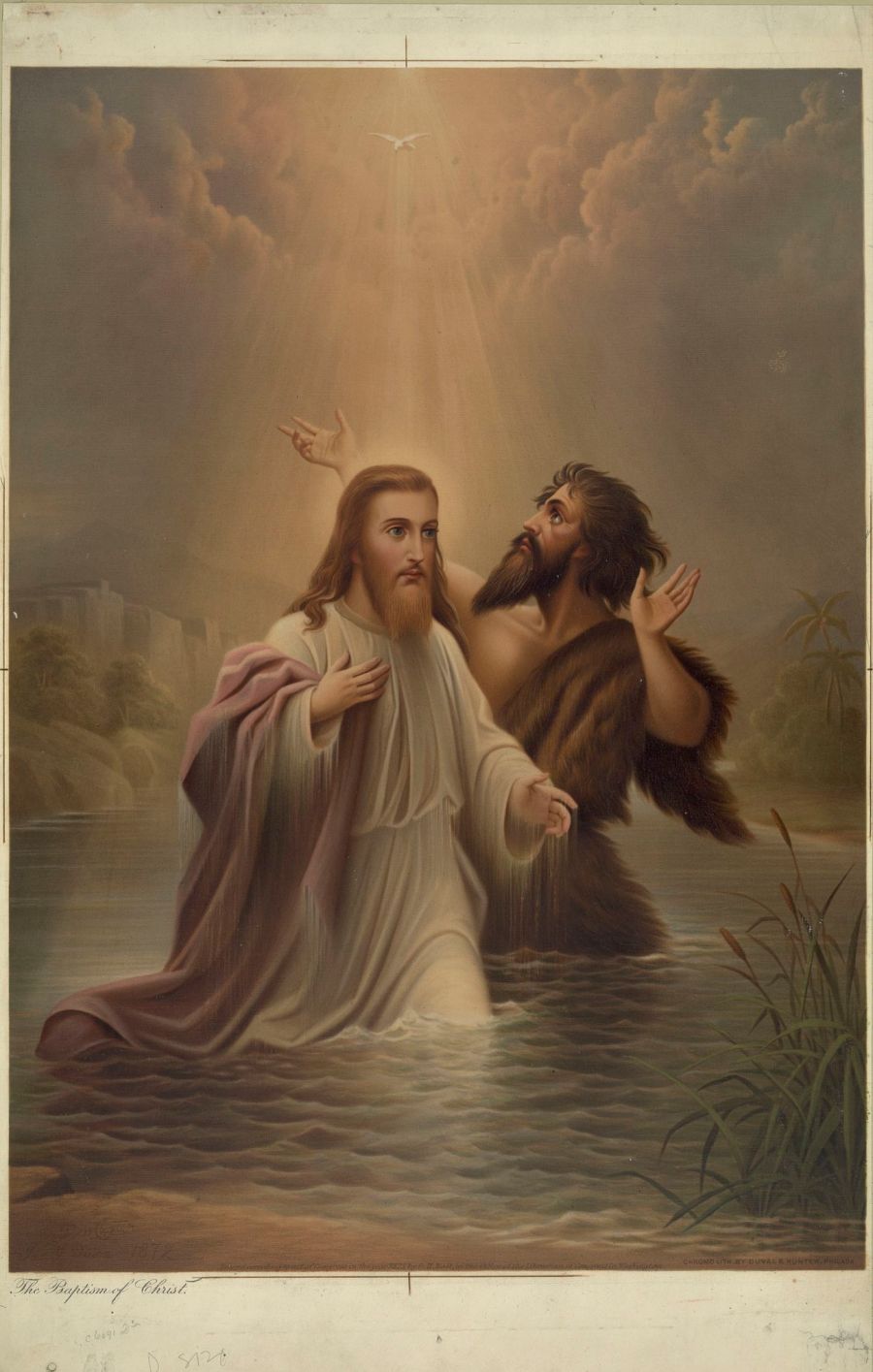
 Master's Crumbs