Noah Was Perfect in His Genes

These are the generations of Noah.
Noah was a just man and blameless among his contemporaries. Noah walked with God.

Genesis 6:9

This verse is from the Bible, which I read and use regularly. But, there is a problem with it that may go unnoticed, which is going to become apparent. I do use tools other than just reading the Bible. Because I love going beyond just reading, I understand what this verse is really getting at, despite the simplicity in translation that may obscure some facts.

To help with your understanding, I am going to give a link to a plethora of translations of this verse. I want you to look there before moving on with reading. I want to give you, the reader, an opportunity to discover the issue for yourself. When you have examined the translations, continue reading.

Here is the link to the list of Genesis 6:9. Bible Hub is a great resource. It provides a generous number of commentaries on the Bible, including cross references and other resources.

While the Modern English Version I use is reliable. Mainly, I use an electronic version. I do have a print version, and the notes in the study portion drop hints of the doctrines the translators embrace. Basically, they go along with the Sons of Seth being the sons of God in Genesis 6:1–2. The beginning of Genesis 6 provides a fork in the road to two distinctly different understandings. The Sons of Seth doctrine is fraught with many problems; there is a better understanding, as you may see by continuing. It also tends to shed light on the pressures of translating the Bible.

The sons of Seth doctrine was introduced by Augustine of Hippo in his work The City of God. He saw these as righteous men who took wives of the daughters of men. The daughters of men in this case means the daughters of Cain. This was a huge divergence from the traditional Jewish interpretation that the sons of God were fallen angels. Augustine held that the traditional Jewish idea was incredible. He didn’t like it

So, which is the better understanding?

Genesis

This is the most important part of the conversation in this part of the text. It is the usage of the Hebrew word toledot translated as correctly as generations. It properly points to the descendants of Noah.

If you were paying attention back at the link above, it was discovered that some translations use the English word generation twice. The Modern English Version above uses generations first and contemporaries second. Which does sort of convey the idea. Contemporaries is translated from the Hebrew word dor. It is used in a specific form here, which only occurs once in the Tanakh.

Some translations use the word generation twice. This idea comes from how the King James Version renders both Hebrew words. Those translators probably used the way the Septuagint translators used one Greek word for both Hebrew words.

Now these are the generations of Noah: Noah, a righteous person who was perfect among his generation. Noah was pleasing to God.

Genesis 6:9 (Lexham English Septuagint)

The Septuagint is the Greek translation of the Tanakh. It was used at the time of Jesus. In that work, both Hebrew words of different meanings were translated into the Greek word genesis. The first occurrence is plural, the second singular.

The first Septuagint usage of the Greek word genesis is from the title of the first book of the Tanakh. That is why the first book is named Genesis in English. The first usage in the text of the Greek word genesis is in Genesis 2:4, where it is translated from the Hebrew toledot, which means origins in English.

To recap, the Greek word genesis is connected to origins or beginnings. By its usage in the verse above, it includes ancestry. Ancestry brings to mind genetics and DNA. These two ideas are inherently important in the second chapter of Genesis. Then there is the real hint that DNA is important and that the seed or offspring becomes the cornerstone of the redemption.

I will put enmity
between you and the woman,
and between your offspring and her offspring;
he will bruise your head,
and you will bruise his heel.”

Genesis 3:15

What becomes clear is that this is a gene war to claim the Human Race. One side employs corruption, the Other, redemption.

Though I don’t think the language of the time had specific words for genetics like we modern folks do. The ideas are apparent. Another necessary point to understand is that the English word gene comes from the German language by way of the original Greek word genea.

It is also important to know that the Greek word genesis also conveys the idea of nativity or nature.

Perfect Character or Perfect Nature?

That is the dilemma presented between the traditional (Septuagint and KJV) understandings of what is being said and the way modern scholars tend to translate.

The traditional understanding is clear. Noah’s genealogy is perfect. Modern Bibles say Noah’s life is perfect. Compare the MEV at the beginning with a more literal translation.

These are the generations of Noah. Noah was a righteous man, without defect in his generations. Noah walked with God.

Genesis 6:9 (Lexham English Bible)

Comparing that with the former MEV reveals some seeming loss of precision in the way it handles the text. It seems to blur the distinction between righteous and perfect to make this inference about Noah’s moral character.

With a modern blurred distinction, one comes away with the idea that moral imperfection was everywhere, and Noah was perfect. But that cannot be so, as God conveys that it is all flesh, not just humanity.

The earth was corrupt before God and filled with violence. God looked on the earth and saw it was corrupt, for all flesh had corrupted their way on the earth.

Genesis 6:11–12

This idea also adds complication, as it would include animals and creeping things. It also indicates that all flesh somehow willingly participated in this corruption.

The obvious conclusion is that there was a genetic imperfection that affected all kinds of flesh. Yet Noah’s perfection hints that not all individuals were affected. Is this idea explained in the text?

Bring every living thing of all flesh, two of every kind, into the ark to keep them alive with you. They shall be male and female. Two of every kind of bird, of every kind of animal, and of every kind of creeping thing of the earth will come to you to be kept alive.

Genesis 6:19–20

What is implied there is that God chose the animals to go on the ark, not Noah. This is another indicator of which animals were genetically fit to repopulate the Earth.

With this understanding, this judgment by flood was necessary because of genetic impurity. It is not about Noah being morally righteous or blameless. Most of us know that after the deluge subsided, he planted a vineyard and got drunk. Paul writes of the simple truth of the lot of humanity, we have all missed the mark and fallen short.

For all have sinned and come short of the glory of God,

Romans 3:23

One side in this war corrupts, the Other redeems.

Politics in Translation

As much as one would like to think that translations are objective. The people who do the work are susceptible to societal pressure. They are not immune to being influenced by the zeitgeist and politics from within the cultures where they live and work.

For example, the translators of the King James Version rendered the Greek word ekklesia as church. This deviated from William Tyndale’s earlier English translation, which was foundational to the KJV. Tyndale rendered ekklesia as congregation. This is the better reading and tends to follow the Septuagint, which used the word ekklesia to describe the mixed multitude in the Exodus. Consider a modern translation that brings clarity. The better English word is congregation or assembly.

This is he who was in the congregation in the wilderness with the angel who spoke to him on Mount Sinai, and with our fathers, who received living oracles to give to us,

Acts 7:38

Here is the KJV for contrast.

This is he, that was in the church in the wilderness with the angel which spake to him in the mount Sina, and with our fathers: who received the lively oracles to give unto us:

Acts 7:38 (King James Version)

One might wonder how and why these things happen. The translators were aware of the king’s preference for the Anglican High Church. However, it was the independents (low church) who eschewed the hierarchy, preferring local control of congregations. This attitude of the king is still prevalent. There is a tendency among those who prefer high church liturgical ministrations to look down on independent congregations.

These independents and other separatists preferred to call themselves congregations and assemblies. This would create an apparent distinction between the Catholic and Anglican churches.

Remember, the KJV came about at a time when sovereign kings could still behead people who crossed them. The translators would not want to do something that would lead to beheading.

Subtle Corruption Enters

As with Augustine and the KJV, there is still a subtle inclination to dissipate the true teachings of God’s Word. Whether that dissipation is intentional or not, it is something of which a student of the Word needs to be aware. The constant barrage has been from the genesis, “Has God really said?” And it continues today.

The political pressures that stem from World War II still affect cultures today. That war pitted the Allied Powers against the Axis Powers. In an odd pairing, the Allied Powers were generally English-speaking nations with capitalist economies oddly partnering with the communists in Russia and China. These were allied to defeat the nationalists in Germany, Italy, and Japan.

The common thread amongst the leaders of the Axis Powers came from a belief that they were racially superior to other people. The Nazis in Germany claimed descent from a master race of ancients called Aryans. The foremost idea was to cleanse the Reich of genetically impure undesirables. The leaders in Italy wanted to revive the glories of the Roman Empire. In like manner, the popularity of eugenics was used to improve the quality of the Italian race. The Japanese considered themselves genetically superior to other Asian peoples and established themselves as protectors of asians against the encroachment of the Western Powers. Eugenics drove the effort to purify the Japanese race.

I must add a caveat here. I am certain there is only one race. It is Adam’s. We all share his blood and have a common Redeemer named Jesus. (Whether you actually believe it or not. Those truths remain.)

Back to World War II… The media in the nations of the Allied Powers often portrayed the driving narrative of the Axis Powers in stark racial language. Which is kind of weird because the demonic practices of eugenics were worldwide, even in the Allied Powers. This racial language stoked the hatred of the nationalist Axis Powers. It is also important to consider that the Marxist tenets of communism rejected ethnicity. Communist nations tended to avoid explicit declarations of inherent nationalist superiority. That makes for strange bedfellows.

Rejecting capitalism, communism prefers collectivism. It attempts to unite the masses of the poor of all races for the common good. Communist ideals attempt to better humanity through the proper application of social theory toward an equal outcome for all. It denies any natural inherited advantage, which tends toward celebrating mediocrity.

With time, the mass media in capitalist countries increasingly embraced the ideas of equal outcome. Those sympathetic to communism began to seek positions of influence. Eventually, the portrayal of World War II became a war against nationalism. Over time, this Marxist ideal against favoring one’s own nation or people of that nation over another subtly transformed from patriotism to nationalism and then to racism.

So the problem coming from the traditional interpretation of Genesis 6:9 becomes self-evident. With this subtle Marxism that entered the culture, it came to be preferred by the instructors in learning institutions. We can see the end result of this just by watching the news in the United States and other nations. Eventually, the Bible’s commending of Noah’s genetic purity to renew Adam’s race became quite unacceptable in academia. It is subtly embraced in many seminaries. Hence, the perfection moves from being applied to Noah’s ancestral genetic nature to his moral nature.

The Sons of God

The significance of Genesis 6:9 is subtly and increasingly obscured. With a proper understanding, Noah’s lineage becomes extremely important. The necessity of the flood is then overtly apparent. Something happened to corrupt all the kinds of flesh on Earth.

This is told immediately before Noah finds favor. And before it is revealed that God chose Noah.

When men began to multiply on the face of the earth and daughters were born to them, the sons of God saw that the daughters of men were fair and took as wives any they chose. The Lord said, “My Spirit will not always strive with man, for he is flesh; yet his days will be a hundred and twenty years.”
The Nephilim were on the earth in those days, and also after that, when the sons of God came in to the daughters of men, and they bore children to them. These were the mighty men who were of old, men of renown.
The Lord saw that the wickedness of man was great on the earth, and that every intent of the thoughts of his heart was continually only evil. The Lord was sorry that He had made man on the earth, and it grieved Him in His heart. So the Lord said, “I will destroy man, whom I have created, from the face of the earth—both man and beast, and the creeping things, and the birds of the sky, for I am sorry that I have made them.” But Noah found grace in the eyes of the Lord.

Genesis 6:1–8

This text exposes another subtly corrupted understanding of Genesis. One that I mentioned earlier. That is, that the good guys took the bad girls to wed.

The reality is that beings called the sons of God took human females as wives. This is stated in the above (Genesis 6:1–4) and parallels the apocryphal book of Enoch. I know what you might think of the apocrypha. Yet Enoch was included in the Tanakh.

And it happened that when the sons of men multiplied in those days, they begat good and beautiful daughters. And the angels, the sons of heaven, saw them and longed for them and said to one another, “Come let us choose for ourselves women from among the people and bring forth for ourselves children.”

Enoch 6:1–2 (Lexham English Septuagint)

These sons of God have transgressed in such a way that prompts God to bring certain judgment to them for their sin. Their sin involved flesh, as it is clear that flesh was condemned to perish in the flood.

The text says the sons of God found the women attractive, so they took whom they wanted as wives. There is some assumptions I make here. First, if they are marrying, it must have followed the traditions of marriage. Traditional marriage requires a bride price… A dowry. I also know from others’ testimonies that the spiritual world is legalistic. That is not a far-fetched notion, as God makes and keeps covenants.

With that, I think that the Bible shows these dowries in Genesis 4:17–24, where Cain’s progeny are lavishly endowed with technological knowledge.

Not After Their Kind

So, if the human sons of Seth took the human daughters of Cain, what is the grievous sin?

The answer is encoded in the phrase any they chose. That is, not who they chose but from where they came… Humanity.

Angels doing what was unseemly, taking daughters of men, they took strange flesh. That is, they took something that was not intended for the purposes for which the fallen wanted to use it. They made odd human-angel chimeras. These became the giants, the titans, the gods of old. Which were found in the pantheons of the Ancient Near East. Then migrating into the pantheons of Greece and Rome.

Let me explain… The purposes of reproduction are to multiply after their kind, just as established at creation. Humans reproduce humans. Angels don’t reproduce. Which probably leads to an objection some may have based on this:

Jesus answered, “You err, not knowing the Scriptures nor the power of God. For in the resurrection they neither marry nor are given in marriage, but are like the angels of God in heaven.

Matthew 22:29–30

The first thing to grasp about this passage is that Jesus is correcting the Sadducees who didn’t understand the Torah and its clear teachings on angels and resurrection. Second, Jesus did not say that angels cannot reproduce. He is saying they don’t marry, meaning there is no need for reproduction after their kind in heaven; their kind being elohim. Likewise, in the resurrection, there is no reproduction after their kind necessary. The Bible clearly states that the serpent (Shining One) of Genesis 3 has seed. It follows that other elohim (angels) do, too.

(Elohim is used as a spiritual class of being when used with lower-case e. Capitalized Elohim is the Most High God. God is Elohim, but not all elohim are God.)

When angels take humans as wives and bear children, chimeras are created. Just this act alone violates many of the guardrails God established. The resulting progeny were not from reproduction after their kind.

There are lots of technicalities wrought in this idea. But the underlying issue is that of comingled DNA. I will save you the details, but it is inherent that the same happened to the animal kinds, as they were also destroyed in the flood.

The Bible says there is nothing new under the sun. Genetic manipulation has always been around. Human technology has advanced much. We can manipulate genetics with novel tools.

Do you wonder what God thinks about technologies like CRISPR that can edit the genome?

Humanity has the technology to create chimeras. This isn’t just hybridization or selective breeding for desired traits that already exist in an organism’s genome. It is a very different practice of combining genetics from one organism to another.

Consider something so familiar as corn. Your home probably contains products made from genetically modified corn. This would probably be an organism that is called BT-Corn. It gets its name from the naturally occurring bacteria Bacillus thuringiensis. (Science cannot create bacteria.) The bacteria produce a toxin used as a pesticide. In making BT-corn, scientists take a gene that produces the toxin from the bacterium. It is then inserted into the genome of corn. The corn then produces the toxin that kills predator pests by destroying the digestive tract of the caterpillar larvae.

In effect, that corn is a chimera. There is going to be some disagreement in my distinction between chimera and hybrid. But I want to make clear that inserting traits by genetic manipulation is not traditional hybridization.

But these things don’t reproduce after their kind. Bacteria do not reproduce with corn. I know about ligers, mules, and other hybrids like them. Ligers would be a kind of feline, and mules a kind of equine. Felines don’t reproduce with canines or equines.

All that to say, when angels sire with humans, the result is something that wasn’t properly meant to be. It was seeking after strange flesh.

Stranger Danger

Does my choice of words sound familiar?

It should.

Likewise, the angels who did not keep to their first domain, but forsook their own dwelling, He has kept in everlasting chains under darkness for the judgment of the great day. Just as Sodom and Gomorrah, and the surrounding cities in like manner, gave themselves to immorality and went after different flesh, they serve as an example by suffering the punishment of eternal fire.

Jude 6-7

Jude’s epistle helps to bring understanding to what really conspired before the flood. I think the epistle also supports my opinion that the daughters of men were really the daughters of Cain. (Augustine got something right.) The angels who fell entered into a covenant by marriage with human families in the progeny of Cain. As stated previously, there was a technological explosion among the children of Cain. It seems likely that the fathers of those taken received technological knowledge as dowry. Jude tells us that the way of Cain has to do with selfish greed.

Woe to them! For they have gone in the way of Cain, have run greedily after the error of Balaam for a reward, and perished in the rebellion of Korah.

Jude 11

Noah Was Perfect

We know Noah, like Adam, sinned. We all do. He did not lead a perfect life and needed the same Redeemer we all do. But what is given is that Noah’s ancestry was genetically pure enough to be the progenitor of the renewal of the human race. All eight of those selected to be on the ark would have had untainted genetics.

The unspoken necessity is that angels intermarrying with the daughters of men imposed themselves into the genetics of humanity. Without the intervention of the deluge, all of humanity would have been changed, and redemption would have been impossible.

This gets really technical. The angel-human chimera comes from the seed of angels. Angels have no kinsman. Without a kin relationship, which is in the blood, there is no redemption. This whole idea comes from the Hebrew word goel, which is translated as kinsman, redeemer, and blood avenger in the Tanakh. The last Adam, Jesus Christ, is the Kinsman, the Redeemer, and the Blood Avenger of the entire lot of Adam’s seed.

This was the enemy’s first great incursion to stop redemption. When one considers Jude 1:6, it is clear that what happened is disorderly. I’m no Greek scholar, but when Jude writes, “the angels who did not keep to their first domain, but forsook their own dwelling.” He is saying that those angels left their sovereign domains and forsook their own dwellings (idiomatically analogous to the container we call our body).

Think like this, at creation, humanity was given a domain to master and become sovereign over. (I know the word might upset sensibilities, but the idea is important and contextual.) In Genesis 1:26, humans were given the imperative by God at creation to take dominion over the earth. This is His order He established. The underlying idea connects to the words in Jude, again by way of the Septuagint. The Hebrew word for rule is rada. It is an imperative meaning to dominate or lord over. The Septuagint translates the Hebrew rada to the Greek archo. That verb means to rule or to begin. In other words, to be first. In Jude, the Greek word arche is translated as domain. Which is a word that means power, ruler, and the sphere of authority. So the usage of sovereign fits. The angels did not keep their own sovereignty.

The next idea from Jude 1:6 is the phrase proper dwelling place. This is from a somewhat unique Greek word oiketerion. This word is used only once in another place in the New Testament.

In this one we groan, earnestly desiring to be sheltered with our house which is from heaven.

2 Corinthians 5:2

Here, oiketerion is translated as house. Paul uses it as an idiom of our physical body, which houses us.

These angels violated their proper place by insinuating themselves into another. I don’t know how to convey the stark importance of the legalities violated. The goal originated from angels to corrupt the seed of man. The sentence was immediate and everlasting confinement. Their progeny were sentenced to be destroyed in the flood. From that, it is easy to infer that there was no place on Earth for these chimeras.

Having no Redeemer, it follows that the spirits of these dead chimeras now have no dwelling place. There is much debate, and some say they roam and antagonize humanity as demons. They endlessly pursue a vicarious experience through others. They yearn for the things that they partook in with their own bodies. Essentially, they are forever searching for satiation of their lusts. The Bible does say demons have no dwelling places of their own and roam around deserted places.

I cannot help to point out how Peter seemed to consider this idea. Because these chimeras died in the flood, they went into the water and never came out. It’s a quaint euphemism for death.

Believer’s Baptism

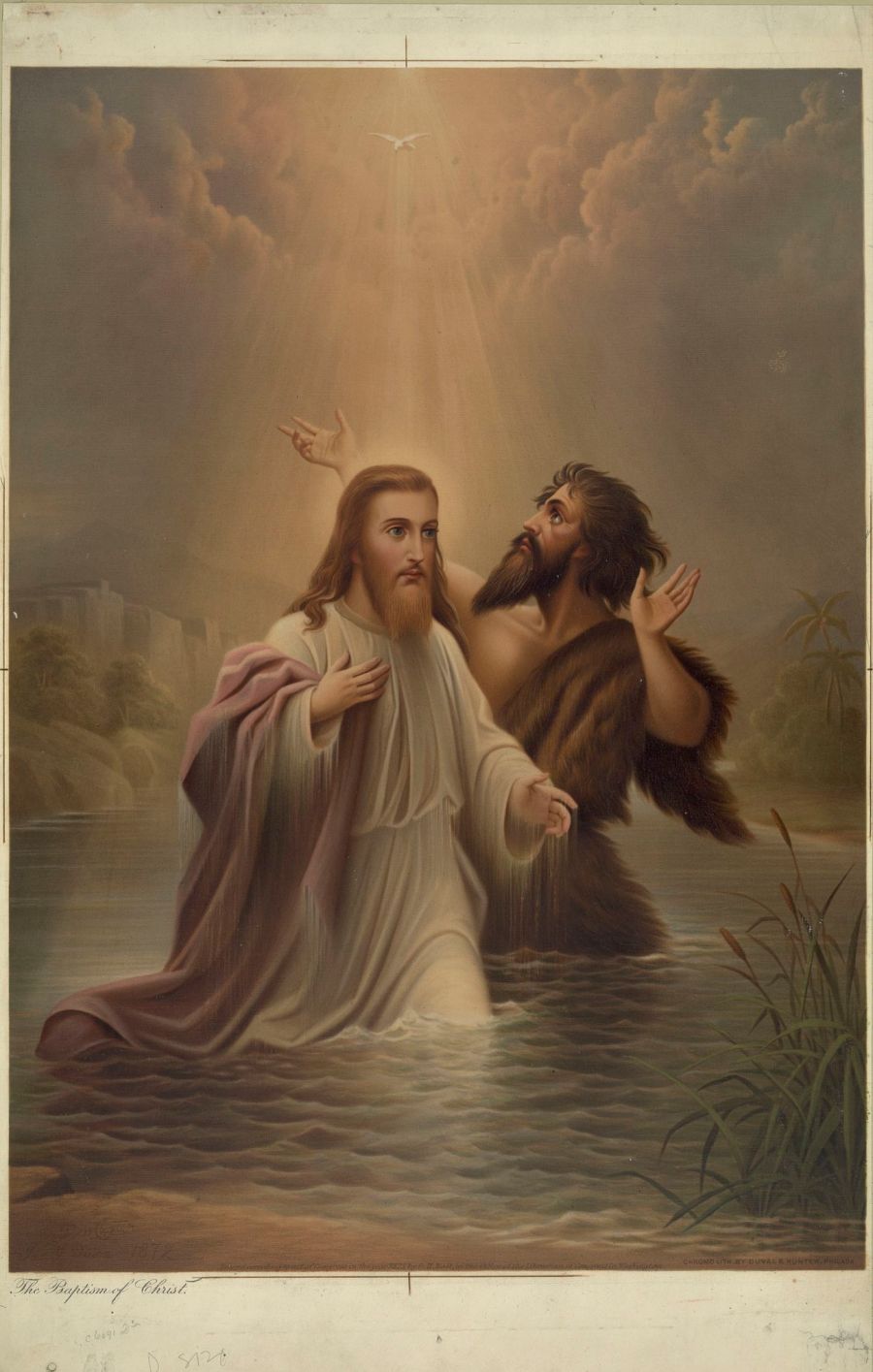
Now, picture how baptism is done. People are plunged into the water and then forcefully pulled out… Alive. It’s the antithesis of what happened to the angel-human chimeras at the flood. In essence, these ones pulled from the water are appointed to resurrection, unlike the spirits of the chimeras who perished under the water. Every single time someone is baptized, the fallen ones are reminded of their fated eternity.

Peter speaks of Jesus going into Sheol. It was to show the triumph over death He had. It was to show His triumph over all authorities and powers who are now subject to Him. Peter also likens baptism as idiomatic of the reality. It is a picture of the resurrection, proclaiming those appointed to that end.

For Christ also has once suffered for sins, the just for the unjust, so that He might bring us to God, being put to death in the flesh, but made alive by the Spirit, by whom He also went and preached to the spirits in prison, who in times past were disobedient, when God waited patiently in the days of Noah while the ark was being prepared, in which a few, that is, eight souls, were saved through water. Figuratively this is like baptism, which also saves us now. It is not washing off the dirt from the body, but a response to God from a good conscience through the resurrection of Jesus Christ, who has gone into heaven and is at the right hand of God, with angels and authorities and powers being made subject to Him.

1 Peter 3:18–22

In his second epistles, Peter uses baptism as the antithesis to those perishing beneath the waters.

For if God did not spare the angels that sinned, but cast them down to hell and delivered them into chains of darkness to be kept for judgment; and if He did not spare the ancient world, but saved Noah, a preacher of righteousness, with seven others, when He brought a flood upon the world of the ungodly; and if He condemned the cities of Sodom and Gomorrah to destruction by reducing them to ashes, making them an example to those afterward who would live ungodly lives; and if He delivered righteous Lot, who was distressed by the filthy conduct of the wicked (for that righteous man lived among them, and what he saw and heard of their lawless deeds tormented his righteous soul day after day); then the Lord knows how to rescue the godly from trial, and to keep the unrighteous under punishment for the Day of Judgment, especially those who walk after the flesh in pursuit of unclean desires, and despise authority.

2 Peter 2:4–10

The Lord knows how to rescue the godly from trial and to punish the ungodly.

Which are you?
Proving a Son of God

In our excursion, we have witnessed the Bible identify the stars as angels and angels as messengers and the army of heaven. In that, we also took the time to examine another way angels are identified by their appointed service. These are some of the sons of God. The Bible also tells us that they failed to be faithful in their assigned duties. Surprisingly, the Bible also reveals how God intends to fix that failure forever.

As circular as it may sound, the Bible proves the Bible. What I mean to say is that each of the doctrines one holds from the Bible is proven true by other doctrines. And each of these doctrines proves others to be true. Paul opens his epistle to the Romans with some interesting language that demonstrates this

Paul, a servant of Jesus Christ, called to be an apostle and set apart for the gospel of God, which He promised beforehand through His prophets in the Holy Scriptures, concerning His Son, Jesus Christ our Lord, who was born of the seed of David according to the flesh and declared to be the Son of God with power, according to the Spirit of holiness, by the resurrection from the dead.

Romans 1:1–4

As we’ve focused on angels and their identification in the Tanakh as sons of God, we also see the expansion of what it means to be a son of God. Sons of God are creations of God.

There are sticking points, and one of them is going to be Jesus. Jesus taking on the physical form of humanity shows that something happened that God is God and God is man. That is a work of God defined by how Mary became with child. I don’t know the workings of that, but know that God did it. I’m not saying God created Jesus as a person. Or that God the Son came to be at conception. The Bible describes Jesus as unique. Some translations use the words only begotten Son. I think in the biblical usage of the phrase son of God, Jesus especially fits being born of the seed of David. Only God could do that.

It’s that last phrase I want to examine. Jesus is, “declared to be the Son of God with power … by the resurrection from the dead.”

Paul is saying that the resurrection proves one a son of God. The Tanakh showed us who the sons of God were, what they were tasked to accomplish, and their abject failure.

Our Enemies Are Real

The hybrid progeny of these sons of God spoken of in Genesis 6 decimated the creation. The problem was so bad that only eight humans escaped the judgment. They rode it out above the flood waters with animals personally selected by God. All living things left on the earth were wiped out.

Imagine the scenario from the perspective of the fallen sons of God. They had to watch their own progeny drown in the flood waters. Perhaps that is fanciful speculation. But then, maybe it is not.

Suppose that the souls of those hybrid humans that perished in the flood are the disembodied demons that attack and beset humanity today. This is not my imagination, but it is the work of many scholars, one in particular. (See this article in Christianity Today.)

Those that brought death to humans now watch as their progeny die. Their spirits become disembodied, and without a proper place have no home. Just as Jesus said:

“When an unclean spirit goes out of a man, it passes through dry places seeking rest, but finds none. Then it says, ‘I will return to my house from which I came.’ And when it comes, it finds it empty, swept, and put in order. Then it goes and brings with itself seven other spirits more evil than itself, and they enter and dwell there. And the last state of that man is worse than the first. So shall it be also with this evil generation.”

Matthew 12:43–45

These spirits have no place. They seek places… Bodies… Whether human or not, just to have a place. Remember Legion who asked permission to go into a herd of pigs. Those were unclean animals… And what happened to the herd of pigs?

We don’t mess with these or give them a foothold. These have no hope and tremble.

Really, It’s Resurrection!

It is the resurrection that reunites the body and soul. Paul writes extensively on the resurrection. He cites it as of the utmost importance to a Christian in 1 Corinthians 15. He makes his case plainly and succinctly. It’s the resurrection.

When Paul writes to the Colossians, resurrection is part of a major theme. He likens our life in physical bodies as dead to our old selves and made alive in Christ… As if we are resurrected already. We are dead to the elementary principles; meaning these enemies of ours have no real claim to any believer.

And you, being dead in your sins and the uncircumcision of your flesh, He has resurrected together with Him, having forgiven you all sins. He blotted out the handwriting of ordinances that was against us and contrary to us, and He took it out of the way, nailing it to the cross. And having disarmed authorities and powers, He made a show of them openly, triumphing over them by the cross.

Colossians 2:13–15

That is the freedom every believer now has. The authorities and powers are disarmed. They’ve got nothing.

Do Not Give a Place

They trick us all by deception. And not thinking clearly or knowing any better, we entertain and eventually embrace that deception. In so doing we extend rights and privileges to those enemies of ours. Paul told us how to live.

Do not give place to the devil.

Ephesians 4:27

It’s emphatic. If the Spirit is witnessing to you now of any foothold or right you may have extended to the devil… Renounce it and revoke it. Do it out loud and in Jesus’ name. The enemy has no business with any believer at all. That is the freedom given to humanity at the cross.

Put your focus on Jesus instead of what (or who) besets us.

If you then were raised with Christ, desire those things which are above, where Christ sits at the right hand of God. Set your affection on things above, not on things on earth. For you are dead, and your life is hidden with Christ in God. When Christ who is our life shall appear, then you also shall appear with Him in glory.

Colossians 3:1–4

Peter offers us help in like manner that would put us all in the same mind. One that ought to change our behavior.

Finally, be all of one mind, be loving toward one another, be gracious, and be kind. Do not repay evil for evil, or curse for curse, but on the contrary, bless, knowing that to this you are called, so that you may receive a blessing. For “He who would love life and see good days, let him keep his tongue from evil, and his lips from speaking deceit. Let him turn away from evil and do good; let him seek peace and pursue it. For the eyes of the Lord are on the righteous, and His ears are open to their prayers; but the face of the Lord is against those who do evil.”

Who is he who will harm you if you follow that which is good?

1 Peter 3:8–13

Just like Paul, we are given instructions for how to live. It is a likemindedness in the family of God. It is not good enough just to turn away from evil, but with it to pursue doing good. Look closely, Peter says to whom it is God watches and listens. Conversely, God opposes those who do evil things. If you are doing the right things, who will harm you?

Nobody. The enemies have no rights, and God has nothing against those doing right.

But even if you suffer for the sake of righteousness, you are blessed. “Do not be afraid of their terror, do not be troubled.” But sanctify the Lord God in your hearts. Always be ready to give an answer to every man who asks you for a reason for the hope that is in you, with gentleness and fear.

1 Peter 3:14–15

Even when we do the right things and suffer, the enemy still has no rights. And we do not need to fear them. Peter is speaking about those same principalities and powers of whom Paul spoke. These are fallen angels and demons which our own testimonies expose as powerless.

Have a good conscience so that evildoers who speak evil of you and falsely accuse your good conduct in Christ may be ashamed. For it is better, if it is the will of God, that you suffer for doing good than for doing evil. For Christ also has once suffered for sins, the just for the unjust, so that He might bring us to God, being put to death in the flesh, but made alive by the Spirit,

1 Peter 3:16–18

You are in great company!

by whom He also went and preached to the spirits in prison, who in times past were disobedient, when God waited patiently in the days of Noah while the ark was being prepared, in which a few, that is, eight souls, were saved through water.

1 Peter 3:19–20

Woah! What?

Jesus went to preach to the spirits in prison, what is that?

Remember Genesis 6… Angels left their domain.

Likewise, the angels who did not keep to their first domain, but forsook their own dwelling, He has kept in everlasting chains under darkness for the judgment of the great day.

Jude 6

The Greek word is oiketerion, Paul used the word in one other place to describe our bodies. It’s in 2 Corinthians 5:2. The lesson is God will destroy the unfaithful. (This is not annihilation.)

But how is it we know that this is speaking of the fallen sons of God and that they are locked away?

Just as Sodom and Gomorrah, and the surrounding cities in like manner, gave themselves to immorality and went after different flesh, they serve as an example by suffering the punishment of eternal fire.

Jude 7

The sin of those sons of God who are chained away is carnally sensual in nature,l; they sought strange or different flesh. It compares to the sin of those infamous cities who sought different forbidden sexual satisfaction.

Saved Through Water

The apostle Peter unites all of these ideas together. He has laid out an apologetic of significance that may confuse some. That is the idea of being saved through water.

Noah and his family were safely saved through the waters of the flood in the Ark. they floated above; while the giants of old perished in the waters. Those giants never came out of the waters alive.

An Important Aspect of Baptism

Figuratively this is like baptism, which also saves us now. It is not washing off the dirt from the body, but a response to God from a good conscience through the resurrection of Jesus Christ, who has gone into heaven and is at the right hand of God, with angels and authorities and powers being made subject to Him.

1 Peter 3:21–22

The word figuratively tells us Peter is going to give us a type or analog. He is not telling us that baptism saves us. He is using it as an example. It is not cleansing sins, per se. But is a response of a good conscience. That response is through the resurrection of Jesus Christ.

Baptism is a picture of death, burial, and resurrection. The antitype is the progeny of watchers that perished in the waters never to be brought out. Baptism says, “Here is another one appointed to resurrection!” It’s a pledge of belief done publicly.

On a deeper level, the ones chained in gloomy darkness watched their children die in the water, helpless to do anything. Now, they watch God’s children come alive out of that very same water, fully noting these are appointed to resurrection!

Not only do the fallen sons of God watch, but the disembodied spirits of their children also watch. When a believer is baptized, it’s like saying aloud, “Here is another one to be raised!”

It’s Proclaiming Resurrection.

Baptism points to resurrection. Resurrection validates the children of God. Baptism points directly to that validation.

Baptism is the portrayal of the epic triumph of the children of God!

In Conclusion

I don’t want to place guilt or shame on anyone, but I have an encouragement. What stops you from getting baptized?

Seriously, if you’ve not yet been baptized in water, I encourage you to get it done. You don’t need it to be saved, but it certainly celebrates Jesus in more ways than we can ever understand. It is certainly active spiritual warfare proclaiming a believer’s triumph through the resurrection of Jesus. Resurrection proves the children of God.

The old Divine Council is powerless to affect the affairs of men. They try through deception, yet God’s ultimate plans will succeed. Their efforts are futile.

The members of the new Divine Council are being identified daily by baptism… Wherever in the world it happens.

Be ready for the next post.

Sons of God in the New Testament

In the last post, we learned of the Divine Council and the members that comprise it as it is explained in the Tanakh. These are specifically called the sons of God. We also learned that the sons of God are angels.

As always, the Tanakh provides hints to a yet future reality. Such things are often labeled as prophecies. There is part of one from Daniel that lends itself as a perfect place of transition.

Daniel was given a panoramic vision of the future. Some minute detail was given and as we’ve witnessed in history, matches exactly. In that vision, there is a group of people called the wise. This seems to be a euphemism that applies to believers. The wise will instruct many, and be persecuted for what they do. This activity will continue until the end at the appointed time. It culminates here:

Those who are wise shall shine as the brightness of the expanse of heaven, and those who turn the many to righteousness as the stars forever and ever.

Daniel 12:3

Tuck this away as we move forward in our studies. Perhaps what is said might have a deeper meaning than it does now.

Son of God

Now let’s turn our focus onto the same term sons of God as written of in the New Testament. With it, our understanding is going to become even more refined.

We will begin in the first words of the New Testament. It is the first chapter of Matthew where he records a genealogy of Jesus, the Anointed One. He is the Seed of the woman that the fallen angels worked to stop. Matthew writes after the fact to establish the identity of Jesus as that Seed. The genealogy starts with Abraham and ends at Jesus through Joseph.

In like manner, Luke provides a similar genealogy of Jesus. One that differs from Matthew’s in many ways. It is found starting at Luke 3:23. Luke begins with Jesus and works His ancestors all the way back to Adam. It is how Luke describes Adam that is essential to understand.

who was the son of Enosh, who was the son of Seth, who was the son of Adam, who was the son of God.

Luke 3:38

Adam, the son of God, stands out as a contrast to what we know from the Tanakh. Luke calls Adam the son of God. It’s almost as if what is written in the Tanakh didn’t matter. Perhaps it is better understood as a clue to a new reality.

Back to the Beginning

In the beginning was the Word, and the Word was with God, and the Word was God. He was in the beginning with God. All things were created through Him, and without Him nothing was created that was created.

John 1:2–3

The introduction of Jesus in John’s Gospel contains many truths. Some are overt, in that Jesus is not a created being. Others are subtle, Jesus could not have been created because He is the One creating. The things that exist that are not God have been created by the Word, Jesus.

He is the image of the invisible God and the firstborn of every creature. For by Him all things were created that are in heaven and that are in earth, visible and invisible, whether they are thrones, or dominions, or principalities, or powers. All things were created by Him and for Him. He is before all things, and in Him all things hold together.

Colossians 1:15–17

Paul uses similar language to describe Jesus. He also tells us Jesus created spiritual beings. The Tanakh seems to use the word elohim as a catchall type for spirit being. At least, I understand it that way. Elohim are sons of God, and by the witness of the New Testament they are direct creations of God. Just as Adam is a direct creation of God. It’s not too difficult to think that the term son of God means one created by God. Can that be tested?

Born of God

He was in the world, and the world was created through Him, yet the world did not know Him. He came to His own, and His own people did not receive Him. Yet to all who received Him, He gave the power to become sons of God, to those who believed in His name, who were born not of blood, nor of the will of the flesh, nor of the will of man, but of God.

John 1:10–13

I love that text. It pretty much needs no other explanation. He came into the world, even to His own portion, the people He chose. He was rejected by those.

But… To any who received Jesus, these He gave authority to become sons of God. This was to those who believed, and are born of God. This is where the term born again has its foundation. A believer is reborn as a son of God.

It also occurs to me that the synoptic gospels (Matthew, Mark, and Luke) all use the first instance of Son of God as a title or descriptor of Jesus Christ. Luke (the Gentile) applies the same descriptor to Adam after applying it to Jesus. I think there is some highly technical meaning there, in that Jesus had to also be a Son of God like Adam.

John calls Him the unique Son of God. The term son of God couples Jesus and Adam.

John ventures from that applying the term not to Jesus, and not to Adam… But to born of God believers. Aren’t sons of God then direct creations of God?

New Creation

It’s the Bible that best explains the Bible. Angels and Adam are called sons of God. The trait they share is being direct creations of God. Believing humans have been given the right to become sons of God. Let the Spirit lead your mind ahead.

And He died for all, that those who live should not from now on live for themselves, but for Him who died for them and rose again.
So from now on we do not regard anyone according to the flesh. Yes, though we have known Christ according to the flesh, yet we do not regard Him as such from now on. Therefore, if any man is in Christ, he is a new creature. Old things have passed away. Look, all things have become new.

2 Corinthians 5:15–17

Paul brings us full circle. A born again believer is a new creation. The text I cited has the word creature. Other texts use new creation. The idea is the same. We are made new creations when we believe.

Therefore, a born again believer is a direct new creation of God. This satisfies the idea of meaning intrinsic to what a son of God is. And it answers both questions.

I don’t mean to exclude any of the ladies from this by the language used. My goal is to laser-focus the terms to avoid ambiguity. What God has given is open to all. Though the text is silent, Eve is also a daughter of God being directly created by Him from His son Adam.

Anyone who so desires to become a child of God can be one. Children of God, male and female, are newly born-direct creations.

New Heavens and New Earth

It is throughout the Bible that we learn the corruption of creation came through human doing, but not without seditious acts and interference by some of the sons of God. Certainly, we know that the members of the old Divine Council failed. Others did not procreate, yet failed in other ways. The ones that fell all failed God. They failed themselves. They failed creation itself. But that does not mean that God failed.

Interspersed through the Bible is the promise of renewal. The New Yesrament is not excluded from that. Creation is to be restored to the way God had originally intended it to be.

But, according to His promise, we are waiting for new heavens and a new earth, in which righteousness dwells.

2 Peter 3:13

That restoration is to happen at a particular appointed time.

Therefore repent and be converted, that your sins may be wiped away, that times of refreshing may come from the presence of the Lord, and that He may send the One who previously was preached to you, Jesus Christ, whom the heavens must receive until the time of restoring what God spoke through all His holy prophets since the world began.

Acts 3:19–21

It will be at the end of the age which Jesus spoke to in the Olivet Discourse (Matthew 24.) It is a recurring theme throughout the Scriptures.

The Appearance

Believers are new creations. Believers are sons of God. Paul gives us a glimpse into the future renewal of creation. But before that, he helps us to identify the sons of God. It is not only the fact of being led by the Spirit, but that we’ve received Him inside of us. This is the same language that is used throughout many passages as it pertains to being saved. It is a new birth and new creation with a new identity.

For as many as are led by the Spirit of God, these are the sons of God. For you have not received the spirit of slavery again to fear. But you have received the Spirit of adoption, by whom we cry, “Abba, Father.” The Spirit Himself bears witness with our spirits that we are the children of God, and if children, then heirs: heirs of God and joint-heirs with Christ, if indeed we suffer with Him, that we may also be glorified with Him.

Romans 8:14–17

The Holy Spirit is the Means of adoption. It is He that brings us into that intimate relationship of a father and his children. One in which we can know our Heavenly Father just as we know our own dads.

The eager expectation of the creation waits for the appearance of the sons of God. For the creation was subjected to futility, not willingly, but by the will of Him who subjected it, in hope that the creation itself also will be set free from its slavery to corruption into the glorious freedom of the children of God.

Romans 8:19–21

God has a plan. He subjected creation to futility. To use a scientific term, creation was subject to entropy. That is the tendency of things to devolve toward chaos. He did it with the hope that creation would be set free from that bondage. Not that He hoped in something, but it is for all of creation to look toward the certain freedom for now which it can only anticipate.

So, there seems to be a new Divine Council in the future. One that is to do things rightly. There will be a new group of regents set with the task to watch and judge creation.

What Shall We Be?

I know that the apostle John wrote that it has not been yet revealed what we will be, but John says we shall be like Him when He appears.

Beloved, now are we children of God, and it has not yet been revealed what we shall be. But we know that when He appears, we shall be like Him, for we shall see Him as He is.

1 John 3:2

That fascinates me that we do not know what we will be, as believers when that time comes… I think it is far beyond our imaginings. But these are some fantastically mind-blowing hints.

Concluding Thoughts

As always, when studying, so many connections come into the mind. I hope Daniel 12:3 has a bit of new meaning for you.

This whole series will culminate, I promise. What set out to be one post, then became three, then two plus two plus two. There will be one more additional post on proving a son of God before returning to the stars and angels.

The Rapture (Part 1) – Ecclesiology

To deviate from the normal posts, I want to offer some clarity on an important doctrine. To do that requires some foundational understanding.

But I would not have you ignorant, brothers, concerning those who are asleep, that you may not grieve as others who have no hope. For if we believe that Jesus died and arose again, so God will bring with Him those who sleep in Jesus. For this we say to you by the word of the Lord, that we who are alive and remain until the coming of the Lord will not precede those who are asleep. For the Lord Himself will descend from heaven with a shout, with the voice of the archangel, and with the trumpet call of God. And the dead in Christ will rise first. Then we who are alive and remain shall be caught up together with them in the clouds to meet the Lord in the air. And so we shall be forever with the Lord. Therefore comfort one another with these words.

1 Thessalonians 4:13–18 — Modern English Version (Thinline Edition.; Lake Mary, FL: Passio, 2014)

Some may scoff that the word rapture doesn’t appear in the text. It’s true, the English word rapture does not appear in the text. But the Greek word harpazo (rapture) translated as caught up is.

The Rapture, to and for Who?

It’s specifically for those in Christ.

You are all sons of God by faith in Christ Jesus. For as many of you as have been baptized into Christ have put on Christ. There is neither Jew nor Greek, there is neither slave nor free, and there is neither male nor female, for you are all one in Christ Jesus. If you are Christ’s, then you are Abraham’s seed, and heirs according to the promise.

Galatians 3:26–29 — Modern English Version (Thinline Edition.; Lake Mary, FL: Passio, 2014)

We now have a clear understanding that the rapture is for those in Christ. To be in Christ is to be baptized into Jesus Christ.

That’s Great. But What Does it Mean?

The rapture is for the body of Christ, His church. We must have a clear understanding of what the church is. That is, we must have a proper ecclesiology.

Let’s get started.

He is the head of the body, the church. He is the beginning, the firstborn from the dead, so that in all things He may have the preeminence.

Colossians 1:18 — Modern English Version (Thinline Edition.; Lake Mary, FL: Passio, 2014)

What we learn here is exactly what the church is. The church is the body of the Messiah.

Therefore remember that formerly you, the Gentiles in the flesh, who are called the “uncircumcision” by the so-called “circumcision” in the flesh by human hands, were at that time apart from Christ, alienated from the citizenship of Israel and strangers to the covenants of promise, without hope and without God in the world. But now in Christ Jesus you who were formerly far away have been brought near by the blood of Christ.
For He is our peace, who has made both groups one and has broken down the barrier of the dividing wall, by abolishing in His flesh the enmity, that is, the law of the commandments contained in ordinances, that in Himself He might make the two into one new man, thus making peace, and that He might reconcile both to God into one body through the cross, thereby slaying the enmity.

Ephesians 2:11–16 — Modern English Version (Thinline Edition.; Lake Mary, FL: Passio, 2014)

This passage basically explains what the composition of the church is.

Paul begins by explaining the initial conditions of God’s dealing with people. There were basically two groups of people, the Israelis, and the Gentiles. There was an advantage to being Israeli because God had a special relationship with those people. One of these groups was set aside by covenants that God made with them. Of those covenants, one called the Mosaic covenant (containing the ten commandments) served as the dividing wall or partition between the two people groups. Gentiles were alienated and far off from the benefits of these covenants even though they could be saved by the same faith as the Israelis.

When Messiah died, He broke down this partitioning wall and took it out of the way. As the wall is now removed, God creates of the two separate groups one new man. The one new man is now a third entity that had not heretofore existed. It is one body through the cross. The body is the church of the Messiah.

The composition of the body is all Israelis and Gentiles who believe.

How Does One Enter this Body?

For by one Spirit we are all baptized into one body, whether we are Jews or Gentiles, whether we are slaves or free, and we have all been made to drink of one Spirit.

1 Corinthians 12:13 — Modern English Version (Thinline Edition.; Lake Mary, FL: Passio, 2014)

The way to enter the body is by baptism by Spirit. This is the one baptism. It isn’t by water.

There is one body and one Spirit, even as you were called in one hope of your calling, one Lord, one faith, one baptism, one God and Father of all, who is above all, and through all, and in you all.

Ephesians 4:4–6 — Modern English Version (Thinline Edition.; Lake Mary, FL: Passio, 2014)

One body. One God. One Spirit. One Father. One Lord. One faith. One baptism.

When did the Church Begin?

This can be a confusing point. There are many different ideas presented on exactly when the church began. Some see it in the Tanakh, thinking it started with Adam or Abraham.

Since we know that entrance into the body called the church is by Spirit baptism, let us see if we can find where Spirit baptism began.

Jesus answered him, “Blessed are you, Simon son of Jonah, for flesh and blood has not revealed this to you, but My Father who is in heaven. And I tell you that you are Peter, and on this rock I will build My church, and the gates of Hades shall not prevail against it. I will give you the keys of the kingdom of heaven, and whatever you bind on earth shall be bound in heaven, and whatever you loose on earth shall be loosed in heaven.” Then He commanded His disciples to tell no one that He was Jesus the Christ.

Matthew 16:17–20 — Modern English Version (Thinline Edition.; Lake Mary, FL: Passio, 2014)

This is the first and only occurrence of the word church in the four gospels. The setting for this is in Caesarea Philippi. It is home to the Grotto of Pan or as Jesus said the gates of Hell. Reading further on from this passage, it can be learned that the church being built is a consequence of Israel for their rejection of the Messiah. The important part is that the church is yet future… I will build my church. It is simple present tense informing us that it is not something that had existed before and will be expanded.

For John baptized with water, but you shall be baptized with the Holy Spirit not many days from now.”

Acts 1:5 — Modern English Version (Thinline Edition.; Lake Mary, FL: Passio, 2014)

Jesus promises Spirit baptism, not many days from now. It is yet future. We know now that the entrance into the church body was still yet future, therefore the church as a body was still to come. But when did Spirit baptism begin?

When the day of Pentecost had come, they were all together in one place. Suddenly a sound like a mighty rushing wind came from heaven, and it filled the whole house where they were sitting. There appeared to them tongues as of fire, being distributed and resting on each of them, and they were all filled with the Holy Spirit and began to speak in other tongues, as the Spirit enabled them to speak.

Acts 2:1–4 — Modern English Version (Thinline Edition.; Lake Mary, FL: Passio, 2014)

On the Day of Pentecost, as the disciples were gathered, the Spirit entered them. They were filled with the Spirit. This is not a new idea, many

For he will be great in the sight of the Lord, and shall drink neither wine nor strong drink, and he will be filled with the Holy Spirit, even from his mother’s womb.

Luke 1:15 — Modern English Version (Thinline Edition.; Lake Mary, FL: Passio, 2014)

But as for me, I am filled with power, with the Spirit of the LORD, and with justice and might, to declare to Jacob his transgression and to Israel his sin.

Micah 3:8 — Modern English Version (Thinline Edition.; Lake Mary, FL: Passio, 2014)

I have filled him with the Spirit of God in wisdom, in understanding, in knowledge, and in all manner of craftsmanship to devise artistic works for work with gold, with silver, and with bronze, and in the cutting of stones for settings, and in carving of wood, to work in all manner of craftsmanship.

Exodus 31:3–5 — Modern English Version (Thinline Edition.; Lake Mary, FL: Passio, 2014)

I posted these to show that being filled with the Spirit is not a new thing. It happened to John the Baptist and to Micah. It happened to Bezalel the son of Uri.

Acts 2 declares nothing about Spirit baptism. Being Spirit-filled is not the same as Spirit baptism.

To understand clearly, we need to move forward in Acts to Chapter 10.

Peter, after receiving a vision Peter was instructed there were three men looking for him. These three were sent by a centurion named Cornelius who had just previously been visited by an angel. Peter invited these three men and provided lodging for them. The next day he went to Joppa with them. Peter entered the house filled with relatives of Cornelius. He spoke to them and shared the details of the Gospel with these Gentiles. We pick it up in the text.

While Peter was still speaking these words, the Holy Spirit fell on all those who heard the word. All the believers of the circumcision who had come with Peter were astonished, because the gift of the Holy Spirit had been poured out even on the Gentiles. For they heard them speaking in other tongues and magnifying God.
Then Peter continued, “Can anyone forbid water for baptizing these, who have received the Holy Spirit as we have?” So he commanded them to be baptized in the name of the Lord. Then they asked him to stay a few days.

Acts 10:44–48 — Modern English Version (Thinline Edition.; Lake Mary, FL: Passio, 2014)

When Peter returned to Jerusalem to report on what happened, there was a bit of controversy. Peter had entered a Gentile home, something forbidden in the law.

Peter tells of his vision, and not wanting to be disobedient to the vision, he did as he was instructed to do.

“As I began to speak, the Holy Spirit fell on them, as He fell on us at the beginning. Then I remembered the word of the Lord, how He said, ‘John indeed baptized with water, but you shall be baptized with the Holy Spirit.’ If then God gave them the same gift as He gave us when we believed in the Lord Jesus Christ, who was I to be able to hinder God?”

Acts 11:15–17 — Modern English Version (Thinline Edition.; Lake Mary, FL: Passio, 2014)

He tells us succinctly that what happened with these Gentiles was the same as what happened to those Jewish disciples gathered on that beginning Pentecost. He remembered what Jesus said in Acts 1:5. The church began in Acts 2 with Spirit baptism. Because that is when Spirit baptism began.

The church is a distinct body that is not Israeli or Gentile. The church had a beginning that is clear. It was the Pentecost day described in Acts 2. That is when Spirit baptism began.

Baptism Proclaims Resurrection

For Christ also has once suffered for sins, the just for the unjust, so that He might bring us to God, being put to death in the flesh, but made alive by the Spirit, by whom He also went and preached to the spirits in prison, who in times past were disobedient, when God waited patiently in the days of Noah while the ark was being prepared, in which a few, that is, eight souls, were saved through water.

1 Peter 3:18–20 — Modern English Version (Thinline Edition.; Lake Mary, FL: Passio, 2014)

Peter is writing on the merits of suffering for doing good things. In it, there is the idea to not fear. He says earlier “Do not be afraid of their terror, do not be troubled.” He is paraphrasing something from Isaiah 8.

Jesus likewise also suffered for doing good. And like Jesus, a believer has died to themselves and already been made alive in Him. This is why Peter is saying to not be afraid of their terror. It has no real power.

Peter is going to continue to connect this to the floodwaters of Noah. Jesus goes to have words with spirits in Sheol. The latter idea is not without controversy.

It is my understanding that humanity’s genetics had been corrupted before the flood. Lots of the bodies that perished were of corrupted flesh that was the progeny of certain fallen angels. There is much to explain there and perhaps in future weeks, I may elaborate on that. Suffice it to say, the dead spirits of those progeny were disobedient as well as humans that perished. Their eternity is certain. This is why demons tremble.

What Peter is doing is pointing out that those who went into the water of Noah’s flood… Died. There was no hope for them because of their disobedience. There is no rescue after death.

Peter then uses that idea of the flood and those perishing to connect as anti-type to baptism and the eternal security of the salvation Jesus gives.

Figuratively this is like baptism, which also saves us now. It is not washing off the dirt from the body, but a response to God from a good conscience through the resurrection of Jesus Christ, who has gone into heaven and is at the right hand of God, with angels and authorities and powers being made subject to Him.

1 Peter 3:21–22 — Modern English Version (Thinline Edition.; Lake Mary, FL: Passio, 2014)

Jesus passed into the grave but rose again, ascending to His place with God in heaven. All powers and authorities are subject to Him. What a terrifying thought to those spirits that perished. There is no help for them.

Baptism isn’t like the floodwaters. A believer goes into the water not to be made clean. That has already been done. The believer goes into the water to demonstrate there is no claim death can have on them, whether past, present, or future. This is proclaimed as the believer is raised up out of the water. It is a sure demonstration that the watery grave, or any grave for that matter, has no power whatsoever over the believer.

Don’t fear their terror.

Every single time a soul is baptized it is a public announcement that another soul is set aside for resurrection. The grave has no business with that one.

For me, I explain baptism with a similar metaphor. An athlete may sign a contract to play for a team. The moment he agrees, he is part of that team. A public proclamation may be made to celebrate that signing. But it is real when that athlete dons the identity of that team, putting on the uniform and walking on the field of play.

That is baptism for a believer!

He has already been saved by belief and confession. We rightly celebrate such things when they happen. At baptism, the believer dons the uniform, that is he takes on the identity of the team. in this case, it’s the death, burial, and resurrection of Jesus. For all intents and purposes, when a believer comes out of the water, he is on the field of play!

Hallelujah! It is serious!

Just as death has no claim on Jesus, death has no claim on a believer!

Those that went into the water of Noah’s flood perished. They did not come out of it. It bears repeating. Baptism proclaims Jesus’ victory over death in showing an already saved person is set aside for resurrection and is brought into and then out of the water.