
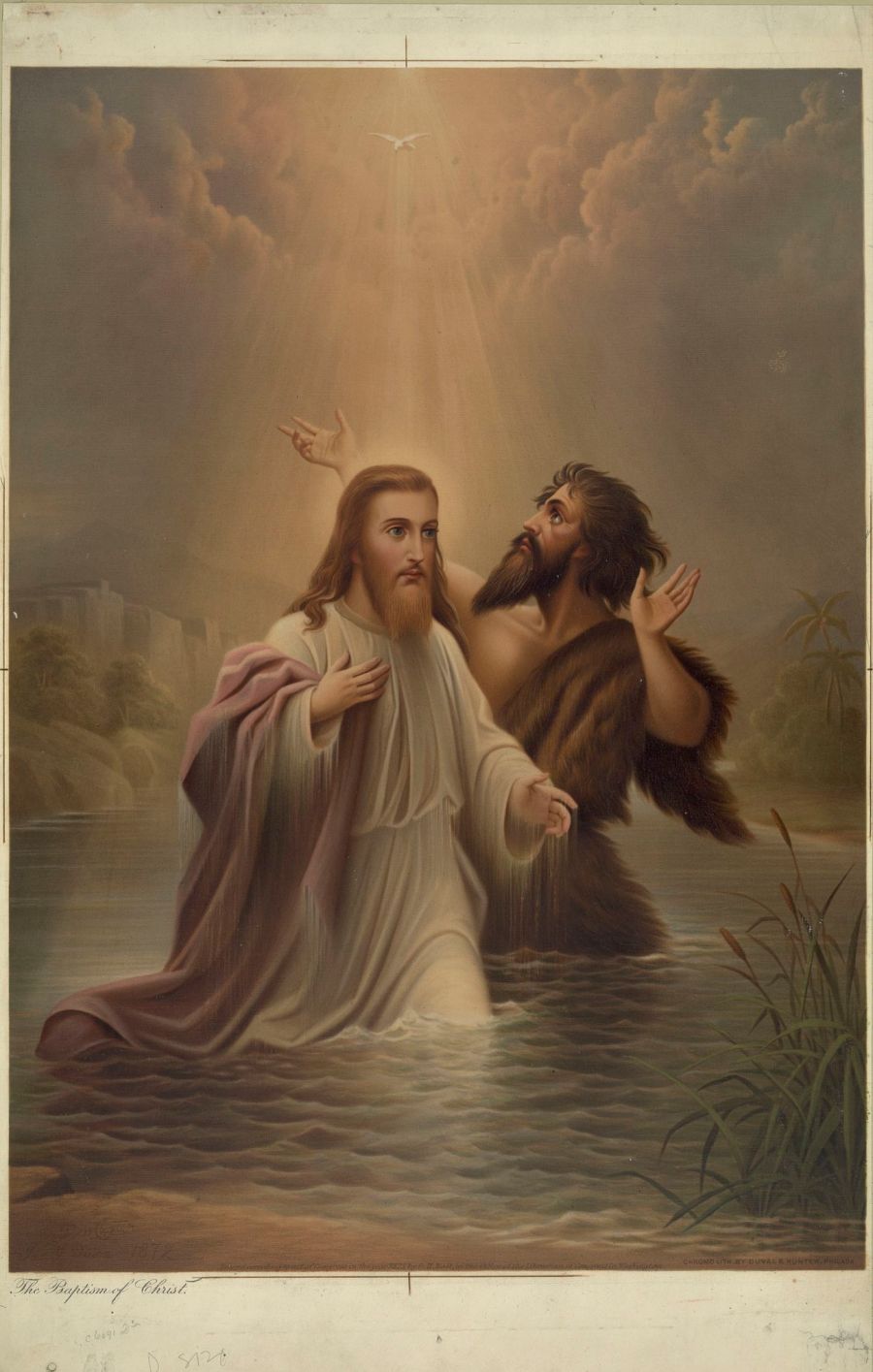
Proving a Son of God

In our excursion, we have witnessed the Bible identify the stars as angels and angels as messengers and the army of heaven. In that, we also took the time to examine another way angels are identified by their appointed service. These are some of the sons of God. The Bible also tells us that they failed to be faithful in their assigned duties. Surprisingly, the Bible also reveals how God intends to fix that failure forever.

As circular as it may sound, the Bible proves the Bible. What I mean to say is that each of the doctrines one holds from the Bible is proven true by other doctrines. And each of these doctrines proves others to be true. Paul opens his epistle to the Romans with some interesting language that demonstrates this

Paul, a servant of Jesus Christ, called to be an apostle and set apart for the gospel of God, which He promised beforehand through His prophets in the Holy Scriptures, concerning His Son, Jesus Christ our Lord, who was born of the seed of David according to the flesh and declared to be the Son of God with power, according to the Spirit of holiness, by the resurrection from the dead.

Romans 1:1–4

As we’ve focused on angels and their identification in the Tanakh as sons of God, we also see the expansion of what it means to be a son of God. Sons of God are creations of God.

There are sticking points, and one of them is going to be Jesus. Jesus taking on the physical form of humanity shows that something happened that God is God and God is man. That is a work of God defined by how Mary became with child. I don’t know the workings of that, but know that God did it. I’m not saying God created Jesus as a person. Or that God the Son came to be at conception. The Bible describes Jesus as unique. Some translations use the words only begotten Son. I think in the biblical usage of the phrase son of God, Jesus especially fits being born of the seed of David. Only God could do that.

It’s that last phrase I want to examine. Jesus is, “declared to be the Son of God with power … by the resurrection from the dead.”

Paul is saying that the resurrection proves one a son of God. The Tanakh showed us who the sons of God were, what they were tasked to accomplish, and their abject failure.

Our Enemies Are Real

The hybrid progeny of these sons of God spoken of in Genesis 6 decimated the creation. The problem was so bad that only eight humans escaped the judgment. They rode it out above the flood waters with animals personally selected by God. All living things left on the earth were wiped out.

Imagine the scenario from the perspective of the fallen sons of God. They had to watch their own progeny drown in the flood waters. Perhaps that is fanciful speculation. But then, maybe it is not.

Suppose that the souls of those hybrid humans that perished in the flood are the disembodied demons that attack and beset humanity today. This is not my imagination, but it is the work of many scholars, one in particular. (See this article in Christianity Today.)

Those that brought death to humans now watch as their progeny die. Their spirits become disembodied, and without a proper place have no home. Just as Jesus said:

“When an unclean spirit goes out of a man, it passes through dry places seeking rest, but finds none. Then it says, ‘I will return to my house from which I came.’ And when it comes, it finds it empty, swept, and put in order. Then it goes and brings with itself seven other spirits more evil than itself, and they enter and dwell there. And the last state of that man is worse than the first. So shall it be also with this evil generation.”

Matthew 12:43–45

These spirits have no place. They seek places… Bodies… Whether human or not, just to have a place. Remember Legion who asked permission to go into a herd of pigs. Those were unclean animals… And what happened to the herd of pigs?

We don’t mess with these or give them a foothold. These have no hope and tremble.

Really, It’s Resurrection!

It is the resurrection that reunites the body and soul. Paul writes extensively on the resurrection. He cites it as of the utmost importance to a Christian in 1 Corinthians 15. He makes his case plainly and succinctly. It’s the resurrection.

When Paul writes to the Colossians, resurrection is part of a major theme. He likens our life in physical bodies as dead to our old selves and made alive in Christ… As if we are resurrected already. We are dead to the elementary principles; meaning these enemies of ours have no real claim to any believer.

And you, being dead in your sins and the uncircumcision of your flesh, He has resurrected together with Him, having forgiven you all sins. He blotted out the handwriting of ordinances that was against us and contrary to us, and He took it out of the way, nailing it to the cross. And having disarmed authorities and powers, He made a show of them openly, triumphing over them by the cross.

Colossians 2:13–15

That is the freedom every believer now has. The authorities and powers are disarmed. They’ve got nothing.

Do Not Give a Place

They trick us all by deception. And not thinking clearly or knowing any better, we entertain and eventually embrace that deception. In so doing we extend rights and privileges to those enemies of ours. Paul told us how to live.

Do not give place to the devil.

Ephesians 4:27

It’s emphatic. If the Spirit is witnessing to you now of any foothold or right you may have extended to the devil… Renounce it and revoke it. Do it out loud and in Jesus’ name. The enemy has no business with any believer at all. That is the freedom given to humanity at the cross.

Put your focus on Jesus instead of what (or who) besets us.

If you then were raised with Christ, desire those things which are above, where Christ sits at the right hand of God. Set your affection on things above, not on things on earth. For you are dead, and your life is hidden with Christ in God. When Christ who is our life shall appear, then you also shall appear with Him in glory.

Colossians 3:1–4

Peter offers us help in like manner that would put us all in the same mind. One that ought to change our behavior.

Finally, be all of one mind, be loving toward one another, be gracious, and be kind. Do not repay evil for evil, or curse for curse, but on the contrary, bless, knowing that to this you are called, so that you may receive a blessing. For “He who would love life and see good days, let him keep his tongue from evil, and his lips from speaking deceit. Let him turn away from evil and do good; let him seek peace and pursue it. For the eyes of the Lord are on the righteous, and His ears are open to their prayers; but the face of the Lord is against those who do evil.”

Who is he who will harm you if you follow that which is good?

1 Peter 3:8–13

Just like Paul, we are given instructions for how to live. It is a likemindedness in the family of God. It is not good enough just to turn away from evil, but with it to pursue doing good. Look closely, Peter says to whom it is God watches and listens. Conversely, God opposes those who do evil things. If you are doing the right things, who will harm you?

Nobody. The enemies have no rights, and God has nothing against those doing right.

But even if you suffer for the sake of righteousness, you are blessed. “Do not be afraid of their terror, do not be troubled.” But sanctify the Lord God in your hearts. Always be ready to give an answer to every man who asks you for a reason for the hope that is in you, with gentleness and fear.

1 Peter 3:14–15

Even when we do the right things and suffer, the enemy still has no rights. And we do not need to fear them. Peter is speaking about those same principalities and powers of whom Paul spoke. These are fallen angels and demons which our own testimonies expose as powerless.

Have a good conscience so that evildoers who speak evil of you and falsely accuse your good conduct in Christ may be ashamed. For it is better, if it is the will of God, that you suffer for doing good than for doing evil. For Christ also has once suffered for sins, the just for the unjust, so that He might bring us to God, being put to death in the flesh, but made alive by the Spirit,

1 Peter 3:16–18

You are in great company!

by whom He also went and preached to the spirits in prison, who in times past were disobedient, when God waited patiently in the days of Noah while the ark was being prepared, in which a few, that is, eight souls, were saved through water.

1 Peter 3:19–20

Woah! What?

Jesus went to preach to the spirits in prison, what is that?

Remember Genesis 6… Angels left their domain.

Likewise, the angels who did not keep to their first domain, but forsook their own dwelling, He has kept in everlasting chains under darkness for the judgment of the great day.

Jude 6

The Greek word is oiketerion, Paul used the word in one other place to describe our bodies. It’s in 2 Corinthians 5:2. The lesson is God will destroy the unfaithful. (This is not annihilation.)

But how is it we know that this is speaking of the fallen sons of God and that they are locked away?

Just as Sodom and Gomorrah, and the surrounding cities in like manner, gave themselves to immorality and went after different flesh, they serve as an example by suffering the punishment of eternal fire.

Jude 7

The sin of those sons of God who are chained away is carnally sensual in nature,l; they sought strange or different flesh. It compares to the sin of those infamous cities who sought different forbidden sexual satisfaction.

Saved Through Water

The apostle Peter unites all of these ideas together. He has laid out an apologetic of significance that may confuse some. That is the idea of being saved through water.

Noah and his family were safely saved through the waters of the flood in the Ark. they floated above; while the giants of old perished in the waters. Those giants never came out of the waters alive.

An Important Aspect of Baptism

Figuratively this is like baptism, which also saves us now. It is not washing off the dirt from the body, but a response to God from a good conscience through the resurrection of Jesus Christ, who has gone into heaven and is at the right hand of God, with angels and authorities and powers being made subject to Him.

1 Peter 3:21–22

The word figuratively tells us Peter is going to give us a type or analog. He is not telling us that baptism saves us. He is using it as an example. It is not cleansing sins, per se. But is a response of a good conscience. That response is through the resurrection of Jesus Christ.

Baptism is a picture of death, burial, and resurrection. The antitype is the progeny of watchers that perished in the waters never to be brought out. Baptism says, “Here is another one appointed to resurrection!” It’s a pledge of belief done publicly.

On a deeper level, the ones chained in gloomy darkness watched their children die in the water, helpless to do anything. Now, they watch God’s children come alive out of that very same water, fully noting these are appointed to resurrection!

Not only do the fallen sons of God watch, but the disembodied spirits of their children also watch. When a believer is baptized, it’s like saying aloud, “Here is another one to be raised!”

It’s Proclaiming Resurrection.

Baptism points to resurrection. Resurrection validates the children of God. Baptism points directly to that validation.

Baptism is the portrayal of the epic triumph of the children of God!

In Conclusion

I don’t want to place guilt or shame on anyone, but I have an encouragement. What stops you from getting baptized?

Seriously, if you’ve not yet been baptized in water, I encourage you to get it done. You don’t need it to be saved, but it certainly celebrates Jesus in more ways than we can ever understand. It is certainly active spiritual warfare proclaiming a believer’s triumph through the resurrection of Jesus. Resurrection proves the children of God.

The old Divine Council is powerless to affect the affairs of men. They try through deception, yet God’s ultimate plans will succeed. Their efforts are futile.

The members of the new Divine Council are being identified daily by baptism… Wherever in the world it happens.

Be ready for the next post.
Sons of God in the New Testament

In the last post, we learned of the Divine Council and the members that comprise it as it is explained in the Tanakh. These are specifically called the sons of God. We also learned that the sons of God are angels.

As always, the Tanakh provides hints to a yet future reality. Such things are often labeled as prophecies. There is part of one from Daniel that lends itself as a perfect place of transition.

Daniel was given a panoramic vision of the future. Some minute detail was given and as we’ve witnessed in history, matches exactly. In that vision, there is a group of people called the wise. This seems to be a euphemism that applies to believers. The wise will instruct many, and be persecuted for what they do. This activity will continue until the end at the appointed time. It culminates here:

Those who are wise shall shine as the brightness of the expanse of heaven, and those who turn the many to righteousness as the stars forever and ever.

Daniel 12:3

Tuck this away as we move forward in our studies. Perhaps what is said might have a deeper meaning than it does now.

Son of God

Now let’s turn our focus onto the same term sons of God as written of in the New Testament. With it, our understanding is going to become even more refined.

We will begin in the first words of the New Testament. It is the first chapter of Matthew where he records a genealogy of Jesus, the Anointed One. He is the Seed of the woman that the fallen angels worked to stop. Matthew writes after the fact to establish the identity of Jesus as that Seed. The genealogy starts with Abraham and ends at Jesus through Joseph.

In like manner, Luke provides a similar genealogy of Jesus. One that differs from Matthew’s in many ways. It is found starting at Luke 3:23. Luke begins with Jesus and works His ancestors all the way back to Adam. It is how Luke describes Adam that is essential to understand.

who was the son of Enosh, who was the son of Seth, who was the son of Adam, who was the son of God.

Luke 3:38

Adam, the son of God, stands out as a contrast to what we know from the Tanakh. Luke calls Adam the son of God. It’s almost as if what is written in the Tanakh didn’t matter. Perhaps it is better understood as a clue to a new reality.

Back to the Beginning

In the beginning was the Word, and the Word was with God, and the Word was God. He was in the beginning with God. All things were created through Him, and without Him nothing was created that was created.

John 1:2–3

The introduction of Jesus in John’s Gospel contains many truths. Some are overt, in that Jesus is not a created being. Others are subtle, Jesus could not have been created because He is the One creating. The things that exist that are not God have been created by the Word, Jesus.

He is the image of the invisible God and the firstborn of every creature. For by Him all things were created that are in heaven and that are in earth, visible and invisible, whether they are thrones, or dominions, or principalities, or powers. All things were created by Him and for Him. He is before all things, and in Him all things hold together.

Colossians 1:15–17

Paul uses similar language to describe Jesus. He also tells us Jesus created spiritual beings. The Tanakh seems to use the word elohim as a catchall type for spirit being. At least, I understand it that way. Elohim are sons of God, and by the witness of the New Testament they are direct creations of God. Just as Adam is a direct creation of God. It’s not too difficult to think that the term son of God means one created by God. Can that be tested?

Born of God

He was in the world, and the world was created through Him, yet the world did not know Him. He came to His own, and His own people did not receive Him. Yet to all who received Him, He gave the power to become sons of God, to those who believed in His name, who were born not of blood, nor of the will of the flesh, nor of the will of man, but of God.

John 1:10–13

I love that text. It pretty much needs no other explanation. He came into the world, even to His own portion, the people He chose. He was rejected by those.

But… To any who received Jesus, these He gave authority to become sons of God. This was to those who believed, and are born of God. This is where the term born again has its foundation. A believer is reborn as a son of God.

It also occurs to me that the synoptic gospels (Matthew, Mark, and Luke) all use the first instance of Son of God as a title or descriptor of Jesus Christ. Luke (the Gentile) applies the same descriptor to Adam after applying it to Jesus. I think there is some highly technical meaning there, in that Jesus had to also be a Son of God like Adam.

John calls Him the unique Son of God. The term son of God couples Jesus and Adam.

John ventures from that applying the term not to Jesus, and not to Adam… But to born of God believers. Aren’t sons of God then direct creations of God?

New Creation

It’s the Bible that best explains the Bible. Angels and Adam are called sons of God. The trait they share is being direct creations of God. Believing humans have been given the right to become sons of God. Let the Spirit lead your mind ahead.

And He died for all, that those who live should not from now on live for themselves, but for Him who died for them and rose again.
So from now on we do not regard anyone according to the flesh. Yes, though we have known Christ according to the flesh, yet we do not regard Him as such from now on. Therefore, if any man is in Christ, he is a new creature. Old things have passed away. Look, all things have become new.

2 Corinthians 5:15–17

Paul brings us full circle. A born again believer is a new creation. The text I cited has the word creature. Other texts use new creation. The idea is the same. We are made new creations when we believe.

Therefore, a born again believer is a direct new creation of God. This satisfies the idea of meaning intrinsic to what a son of God is. And it answers both questions.

I don’t mean to exclude any of the ladies from this by the language used. My goal is to laser-focus the terms to avoid ambiguity. What God has given is open to all. Though the text is silent, Eve is also a daughter of God being directly created by Him from His son Adam.

Anyone who so desires to become a child of God can be one. Children of God, male and female, are newly born-direct creations.

New Heavens and New Earth

It is throughout the Bible that we learn the corruption of creation came through human doing, but not without seditious acts and interference by some of the sons of God. Certainly, we know that the members of the old Divine Council failed. Others did not procreate, yet failed in other ways. The ones that fell all failed God. They failed themselves. They failed creation itself. But that does not mean that God failed.

Interspersed through the Bible is the promise of renewal. The New Yesrament is not excluded from that. Creation is to be restored to the way God had originally intended it to be.

But, according to His promise, we are waiting for new heavens and a new earth, in which righteousness dwells.

2 Peter 3:13

That restoration is to happen at a particular appointed time.

Therefore repent and be converted, that your sins may be wiped away, that times of refreshing may come from the presence of the Lord, and that He may send the One who previously was preached to you, Jesus Christ, whom the heavens must receive until the time of restoring what God spoke through all His holy prophets since the world began.

Acts 3:19–21

It will be at the end of the age which Jesus spoke to in the Olivet Discourse (Matthew 24.) It is a recurring theme throughout the Scriptures.

The Appearance

Believers are new creations. Believers are sons of God. Paul gives us a glimpse into the future renewal of creation. But before that, he helps us to identify the sons of God. It is not only the fact of being led by the Spirit, but that we’ve received Him inside of us. This is the same language that is used throughout many passages as it pertains to being saved. It is a new birth and new creation with a new identity.

For as many as are led by the Spirit of God, these are the sons of God. For you have not received the spirit of slavery again to fear. But you have received the Spirit of adoption, by whom we cry, “Abba, Father.” The Spirit Himself bears witness with our spirits that we are the children of God, and if children, then heirs: heirs of God and joint-heirs with Christ, if indeed we suffer with Him, that we may also be glorified with Him.

Romans 8:14–17

The Holy Spirit is the Means of adoption. It is He that brings us into that intimate relationship of a father and his children. One in which we can know our Heavenly Father just as we know our own dads.

The eager expectation of the creation waits for the appearance of the sons of God. For the creation was subjected to futility, not willingly, but by the will of Him who subjected it, in hope that the creation itself also will be set free from its slavery to corruption into the glorious freedom of the children of God.

Romans 8:19–21

God has a plan. He subjected creation to futility. To use a scientific term, creation was subject to entropy. That is the tendency of things to devolve toward chaos. He did it with the hope that creation would be set free from that bondage. Not that He hoped in something, but it is for all of creation to look toward the certain freedom for now which it can only anticipate.

So, there seems to be a new Divine Council in the future. One that is to do things rightly. There will be a new group of regents set with the task to watch and judge creation.

What Shall We Be?

I know that the apostle John wrote that it has not been yet revealed what we will be, but John says we shall be like Him when He appears.

Beloved, now are we children of God, and it has not yet been revealed what we shall be. But we know that when He appears, we shall be like Him, for we shall see Him as He is.

1 John 3:2

That fascinates me that we do not know what we will be, as believers when that time comes… I think it is far beyond our imaginings. But these are some fantastically mind-blowing hints.

Concluding Thoughts

As always, when studying, so many connections come into the mind. I hope Daniel 12:3 has a bit of new meaning for you.

This whole series will culminate, I promise. What set out to be one post, then became three, then two plus two plus two. There will be one more additional post on proving a son of God before returning to the stars and angels.

The Divine Council in the Tanakh

In the last post I introduced a term called The Divine Council. The members of the Divine Council are close advisors to God. Those are the ones that carry out the desires of God in the affairs of His creation. At least, that is what is supposed to happen.

We also know that there is none like God. He is El Elyon, the Most High God. He did introduce these lesser gods in His word.

God stands among the divine council; He renders judgment among the gods.
“How long will you all judge unjustly and accept partiality of the wicked? Selah
Defend the poor and fatherless; vindicate the afflicted and needy. Grant escape to the abused and the destitute, pluck them out of the hand of the false.
“They have neither knowledge nor understanding; they walk in darkness: all the foundations of the earth are shaken.”
I have said, “You are gods, sons of the Most High, all of you, but you all shall die like men, and fall like a man, O princes.”
Arise, O God, judge the earth, for You shall inherit all nations.

Psalm 82:1–8

To review, the Hebrew in the first verse uses the word elohim twice. It’s saying: Elohim stands among the divine council; He renders judgment among the elohim. Some of us have been taught that Elohim is the name of God Himself. I think the term is much broader than the name of God. It is similar to the English word God. Meaning it is used as a proper title of the Most High and it is also a descriptor of a class of beings.

This practice is seen with a different word as a similar concept. It comes in another Psalm.

Let the heavens praise Your wonders, O Lord;
Your faithfulness also in the assembly of the holy ones. For who in the skies can be compared to the Lord? Who among the heavenly sons is like the Lord? God is greatly to be feared in the assembly of the holy ones and awesome to all those who surround Him.

Psalm 89:5–7

As before, the juxtaposition of the word El translated to God and the word elim (the Hebrew plural of el) translated as heavenly sons is striking. It is also notable that there are many uses of the Tetragrammaton, that unspeakable name of God. Some say Jehovah, others say Yahweh.

Yet… This is where things start to get a bit blurry. It is not that they don’t make sense, but they tend to stretch the bounds of what we think we know.

As we saw in Psalm 89, Jehovah is in the midst of the assembly of the holy ones… The Divine Council. The text above provides us another descriptor of this assembly as heavenly sons. From these words, we bound off to a deeper truth.

Sons of God

Leave it to the Septuagint to help make a connection. The Septuagint was commissioned in the third century before the advent of Jesus. Tradition tells us 72 translators were tasked with transcribing the Hebrew Scriptures into the common language of the day… Koine Greek. Here is how those have translated this portion of the Psalm:

The heavens will confess your wondrous things, O Lord, and your truth in the assembly of holy ones. For who in the clouds will be likened to the Lord?
And who will be likened to the Lord among the sons of God?
God is glorified in the counsel of holy ones.
He is great and awesome upon all those who are around him.

Psalm 88:6–8 (Lexham English Septuagint)

The counting of the Psalms in the Septuagint is a bit different than it is in our Bibles. Those translators understood the Jewish mindset. The thinking at the time was Thai was an assembly of angelic beings. They were literally sons of God. In that Psalm, some of our modern translations use that exact phrase sons of God.

When examining the phrase sons of God in the Tanakh, the rare occurrences draw our attention. Those places where it is used have some importance in trying to understand what is being conveyed by the term. Many modern translations have incorporated the higher definition of meaning from an understanding of the Jewish texts. Texts and ideas which were in use long before the advent of Jesus.

For this endeavor, I am going to employ a different translation than I would normally use. It is the Lexham English Bible. This is a favorite study tool I use, because of the constant scholarship employed in translating it. The Bible is a product exclusive to Logos.

There are eight occurrences we will examine. So let’s go!

For who in the sky is equal to Yahweh? Who is like Yahweh among the sons of God.

Psalm 89:6 (Lexham English Septuagint)

This is our previous text. Let’s focus on the phrase sons of God. It is a literal translation from the Hebrew phrase bene elim. There is another, like it:

Ascribe to Yahweh, O sons of God,
ascribe to Yahweh glory and strength.

Psalm 29:1 (Lexham English Septuagint)

This psalm again translates the Hebrew phrase bene elim into the English sons of God. The phrase sons of God is the binding tie leading us to a seemingly synonymous Hebrew phrase.

Bene Ha Elohim

The majority of the appearances of the phrase sons of God is translated from the Hebrew bene ha Elohim. (I’m not a scholar in ancient languages, and don’t think the capital letter applies but I added it for clarity.) It occurred five times. These passages are examined next.

We are introduced to the phrase sons of God by its first usage in the Bible. The writer did not provide any definition. It’s as if he expected us to know what he meant. It would be akin to us writing, “I wrote a text to a friend on my phone.” Someone who has not ever encountered cell phone would have no idea behind the meaning the author assumes his audience has. It is like that here:

And it happened that, when humankind began to multiply on the face of the ground, daughters were born to them. Then the sons of God saw the daughters of humankind, that they were beautiful. And they took for themselves wives from all that they chose. And Yahweh said, “My Spirit shall not abide with humankind forever in that he is also flesh. And his days shall be one hundred and twenty years.” The Nephilim were upon the earth in those days, and also afterward, when the sons of God went into the daughters of humankind, and they bore children to them. These were the mighty warriors that were from ancient times, men of renown.

Genesis 6:1–4 (Lexham English Bible)

The phrase sons of God appears twice in this citation. The Hebrew it is translated from is bene ha Elohim. The author writes assuming his audience knows who the sons of god are. There are three more times the phrase is used. They are in the Book of Job. And the usage there helps us to understand who the sons of God are.

And it happened one day that the sons of God came to present themselves before Yahweh, and Satan also came into their midst.

Job 1:6 (Lexham English Bible)

And then one day the sons of God came to present themselves before Yahweh, and Satan also came into their midst to present himself before Yahweh.

Job 2:1 (Lexham English Bible)

when the morning stars were singing together and all the sons of God shouted for joy?

Job 38:7 (Lexham English Bible)

These are the three places where bene ha Elohim appears in Job. From this, our understanding of who they are becomes a bit more refined. These sons of God are clearly angels. This is the pattern that develops, sons of God as used in the Tanakh, is a term applied exclusively to angels.

The Septuagint offers more corroboration.

And Noah lived five hundred years, and Noah fathered three sons: Shem, Ham, and Japheth.
And it happened, when humans began to become numerous upon the land, and they had daughters, the angels of God, having seen the daughters of humans, that they were beautiful, took for themselves women from all whom they picked out. The Lord God said, “My breath will not at all reside.in these humans for very long because they are flesh, but their days will be one hundred and twenty years.” Now giants were upon the land in those days, and after that, whenever the sons of God visited the daughters of humans, they fathered children for themselves; those were the giants who were from long ago, the people of renown.

Genesis 6:1–4 (Lexham English Septuagint)

The underlying Greek is literal in the English. The difference is in the first translation of the Hebrew bene into the Greek angeloi (from which we get the English word angel.) The Septuagint moves the idea of sons to angels. The second usage literally translates the word bene to the Greek huioi (sons.) The 72 translators of the Septuagint rendered a faithful glimpse into the third-century BCE Judaism. In that mindset, these sons were angels.

Going back to the passage in Genesis 6 with some better background information, it stands out as weird, angels procreated with humans.. The language in Hebrew is far more coarse than what is translated. The word translated took using women as objects (to the verb) always has sexual connotations. It is used in Genesis 34 to describe Shechem’s rape of Dinah. The word translated as wives can also be translated as women regardless of their marital status. These angels took women as they desired.

Here is where what we know may be a bit blurry. We know the sons of God are angels. We know some of the sons of God acted immorally. We know that some (maybe all) of these sons of God were part of the Divine Council. These are collectively called fallen angels.

Circling back to Psalm 82 we see that this is an account where God judges the fallen angels. Fallen angels that were His viziers failed. Judgment is pronounced.

“They have neither knowledge nor understanding; they walk in darkness: all the foundations of the earth are shaken.”

Psalm 82:5

What happened with these fallen angels that were a part of the Divine Council had far-reaching consequences. The sin mentioned in Genesis 6 had ramifications affecting all of the Earth. There are other sins of other fallen angels that had the same far-reaching implications with the same consequences. All will be judged and more is said about this elsewhere in the Bible, that will come up in a bit. For now, we see God’s judgment toward these.

I have said, “You are gods, sons of the Most High, all of you, but you all shall die like men, and fall like a man, O princes.”

Psalm 82:6–7

There are things to note in the text here. The word fall is translated from the Hebrew word napal. The Hebrew language is consonantal. Vowels are inferred. Each word is based on a root word. In this case, our root for napal is the three transliterated consonants NPL. Looking back at the Genesis 6 passage, the Hebrew word nephilim is translated into the English giants. The word nephilim shares the same common root as napal. Nephilim are the hybrid progeny of angels and humans.

In Psalm 82 judgment comes. It seems as if God is saying something akin to, “Y’all caused humans to fall and die, now you will know what it is like to fall and die.” In other words, they will encounter the same bondage they inflicted on Adam’s race, from the garden on.

Arise, O God, judge the earth, for You shall inherit all nations.

Psalm 82:8

This closing verse in this psalm leads us to the last verse on the series of eight connecting the term sons of God.

Bene Yisrael

When the Most High apportioned⌋ the nations, at his dividing up of the sons of humankind, he fixed the boundaries of the peoples, according to the number of the sons of God.

Deuteronomy 32:8 (Lexham English Bible)

Here we have the final usage of the phrase sons of God. It is translated from the Hebrew bene yisrael. There are some versions of the Bible that render this as the sons of Israel. Again, the Septuagint helps us to understand. It translates the phrase to angels of God.

Using the immediate context of this passage, let us consider what Moses is saying.

Remember the days of old, consider the years of previous generations. Ask your father, and he will show you; your elders, and they will tell you: When the Most High gave the nations their inheritance, when He separated the sons of man, He set the boundaries of the peoples according to the number of the children of Israel. For the Lord’s portion is His people; Jacob is the allotment of His inheritance.

Deuteronomy 32:7–9

Moses admonishes the people to remember the days of old when God gave the nations their inheritance. He separated the sons of man and placed boundaries around them. But when was that?

The Inheritance of Nations

God gave the nations their inheritance after the flood when Noah’s sons had sons descendants. These are recorded in detail for us in Genesis 10. That chapter is referred to as the Table of Nations. It shows all people descend from Noah and his three sons. The Table of Nations is summed up with this:

These are the families of the sons of Noah, according to their generations, in their nations. From these were the nations divided in the earth after the flood.

Genesis 10:32

As is often the way it works in the Bible, we are given a high-level overview, sort of like an executive summary. What follows the overview can contain details into the minutiae. This is the case here.

We encounter another one of those notable occasions where something weird happened. The people of one language and one accord were led by a world leader named Nimrod (which means we will rebel) to build a tower. God came to see what they were doing (that language is for us to understand, it’s not meant to be intimate He had to learn.) He came down to stop the work and scatter the people.

So the Lord scattered them abroad from there over the face of all the earth, and they stopped building the city. Therefore the name of it was called Babel, because there the Lord confused the language of all the earth. From there the Lord scattered them abroad over the face of all the earth.

Genesis 11:8–9

That is how the nations got their inheritance. And this occurred long before Abraham was born. Which was long before Jacob was born. Which was long before God changed his name to Israel. It makes no sense for the term bene yisrael to literally refer to the sons of Israel when Israel did not yet exist. It seems as if those ancient translators knew this.

Now, some of us have a question. What is the inheritance?

It included the lands and languages given by God as already has been shown. There was another allotment to the nations.

Give good care to yourselves, for you saw no form on the day that the Lord spoke to you in Horeb from the midst of the fire, lest you corrupt yourselves and make a graven image for yourselves in the form of any figure, the likeness of male or female, the likeness of any beast that is on the earth, the likeness of any winged fowl that flies in the air, the likeness of anything that creeps on the ground, the likeness of any fish that is in the waters beneath the earth. And beware, lest you lift up your eyes to heaven, and when you see the sun, and the moon, and the stars, even all the host of heaven, you are led astray and worship them, and serve them, that which the Lord your God has allotted to all nations under the whole heaven. But the Lord has taken you and brought you out of the iron furnace, from Egypt, to be to Him a people of inheritance, as you are today.

Deuteronomy 4:15–20

Wait, isn’t that saying there were stars of heaven allotted to other nations?

That’s like the earlier posts in this series on stars and angels which demonstrate that stars are angels. God allotted angels to the nations. The role they serve is inferred from many ideas, namely that angels are messengers. Most likely they were to shepherd the nations they had been allotted. This inference comes chiefly from God’s relationship to Israel. God chose His portion as Jacob (Dt 32:9.) He is the shepherd of Israel. It follows that His desire would be for goodness toward those people.

He assigned other angels to steward the other nations. These were called to mete out justice. They were appointed to represent God and do His work among the people they shepherded.

Something happened, though. It seems to have occurred quickly. At some point, these stars took on the worship of men. Instead of pointing men to the Most High God, they took that worship to themselves.

If there be found among you, within any of your gates which the Lord your God gives you, man or woman, who has acted wickedly in the sight of the Lord your God, by transgressing His covenant, and has gone and served other gods and worshipped them, either the sun, or moon, or any of the host of heaven, which I have not commanded,

Deuteronomy 17:2–3

It is this continuous polluting of Adam. First in the garden. Soon after it was by genetics which had to be rectified by the flood. Then it came by ritualistic workings to corrupt the seed yet again at the tower incident. It is probably through the same old lie, “You shall be as gods.” It’s a recurring theme.

Now, these beings are polluting Adams’s race with false worship. I’m assuming to know that God would respond. Polluting other nations by taking the worship of men would become a stumbling stone for Israel. (I cannot help but think Rachel stealing Laban’s teraphim is more significant than we think.) It would be to pollute the Chosen incurring God’s wrath on them. It is a ploy to stop the Anointed One, the Seed of the Woman.

Conclusion

I know this was long. It is necessary foundational information. What we know so far, the Divine Council failed. The Divine Council consists of sons of God… Angels. There are fallen angels who work to pollute the seed of Adam… Chiefly the Seed of the Eve.

In the next post, we will examine these things in the New Testament. The understanding of what makes a son of God will become clearer. There will be new members of the Divine Council. God’s Master Plan has not yet been thwarted.

Stars: They Watch Over Adam’s Race

The wisdom gained from the scriptures in the last post witnesses to us that there is more to the glittering diamonds in the night sky than we may consider. The stars reveal information to us.

As cited in the last post, Isaiah 40 seems like a good place to begin here. Isaiah is loaded with prophetic references to Jesus. It also relates to us an important aspect of God… There is none like Him. In that sheer magnitude of strength, we encounter the tenderness of a shepherd with the weakest of the flock.

O Zion, bearer of good news, get yourself up onto a high mountain; O Jerusalem, bearer of good news, lift up your voice with strength, lift it up, do not be afraid; say to the cities of Judah, “Here is your God!” See, the Lord GOD will come with a strong hand, and His arm shall rule for Him; see, His reward is with Him, and His recompense before Him. He shall feed His flock like a shepherd; He shall gather the lambs with His arm, and carry them in His bosom, and shall gently lead those that are with young.
Who has measured the waters in the hollow of His hand, and meted out heaven with the span, and calculated the dust of the earth by the measure, and weighed the mountains in scales, and the hills in a balance? Who has directed the Spirit of the LORD, or as His counselor has taught Him? With whom did He take counsel, and who instructed Him, and taught Him in the path of justice, and taught Him knowledge, and showed to Him the way of understanding?

Isaiah 40:9–14

We see clearly that God has no teacher. He reports to nobody. He is taught by nobody. In other parts of the Bible, the term used to describe Him is the Most High God.

Thus says the Lord the King of Israel,
and his Redeemer the Lord of Hosts:
I am the first, and I am the last;
besides Me there is no God.

Isaiah 44:6

The prophet Isaiah continues this theme in another place. It is also witnessed elsewhere:

You alone are the Lord. You have made heaven, the heaven of heavens, with all their host, the earth and all that is on it, the seas and all that is in them; and You preserve them all. And the host of heaven worships You.

Nehemiah 9:6

It would be a difficult task to provide all of the Scriptures that attest to God’s position as above any and all of creation.

For the Lord Most High is awesome; He is a great King over all the earth.

Psalm 47:2

He is El Elyon, the Most High God.

The employment of that particular title hints to us that there may indeed be other lesser gods. Does the Bible tell us about lesser Gods?

God stands among the divine council; He renders judgment among the gods.

Psalm 82:1

The Hebrew in that verse literally uses the word elohim twice. It’s saying: Elohim stands among the divine council; He renders judgment among the elohim. This is an important concept to grasp. One that is a comprehensive theme that makes the Bible and what it says more clear.

I know Jesus cited this portion of the Scriptures in John 10. He used it as a defense of His own claim, which is obviously understood by the people who heard Him. They wanted to stone Him for likening Himself to God.

Suffice it to say… Yes, there are lesser gods. Not that Jesus is one of those. Yet those other gods were tasked with a distinctive service to the Most High God and to Adam’s progeny.

The Divine Council

As it were, these tasked with representing God are His imagers. (This term is borrowed from the late Dr. Michael A. Heiser. His work on what is called the Divine Council Worldview is extensive.) The term suffices for anyone tasked with serving God as His representative. Humans are also imagers. But the lesser gods, as imagers, were to mete out justice.

God stands among the divine council; He renders judgment among the gods.
“How long will you all judge unjustly and accept partiality of the wicked? Selah
Defend the poor and fatherless; vindicate the afflicted and needy. Grant escape to the abused and the destitute, pluck them out of the hand of the false.
“They have neither knowledge nor understanding; they walk in darkness: all the foundations of the earth are shaken.”
I have said, “You are gods, sons of the Most High, all of you, but you all shall die like men, and fall like a man, O princes.”
Arise, O God, judge the earth, for You shall inherit all nations.

Psalm 82:1–8

These members of the Divine Council failed to properly image God to men. They were to watch over them to ensure justice everywhere. There are many places in the Bible that show the other gross failures of these gods. There is another title that hints to what they were called to do.

“I saw in the visions of my head upon my bed, and there was a holy watcher coming down from heaven. He cried aloud and said thus: ‘Hew down the tree and cut off its branches, shake off its leaves and scatter its fruit. Let the animals get away from under it, and the fowl from its branches. Nevertheless leave the stump of its roots in the earth, even with a band of iron and bronze, in the tender grass of the field.
“ ‘And let it be wet with the dew of heaven, and let its portion be with the animals in the grass of the earth. Let its heart be changed from that of a man, let him be given the heart of an animal. And let seven periods of time pass over it. “ ‘This matter is by the decree of the watchers, and the demand by the word of the holy ones, in order that the living may know that the Most High rules over the kingdom of men and gives it to whomever He wills and sets up over it the basest of men.’

Daniel 4:13–17

These gods are holy watchers. They mete out decrees of justice. The task assigned was to be guardians of the creatures that bore the image of God Himself. Creatures that were made of dust.

Their failure has everything to do with what happened in the garden and the millennia after.

The next post will delve more into this Divine Council and why understanding it is important.